Political figures love a simple story. It usually goes like this: we are the good guys, they are the bad guys, and everything wrong with the world is their fault. It works great for winning elections, but it's wrecking our ability to solve actual problems.
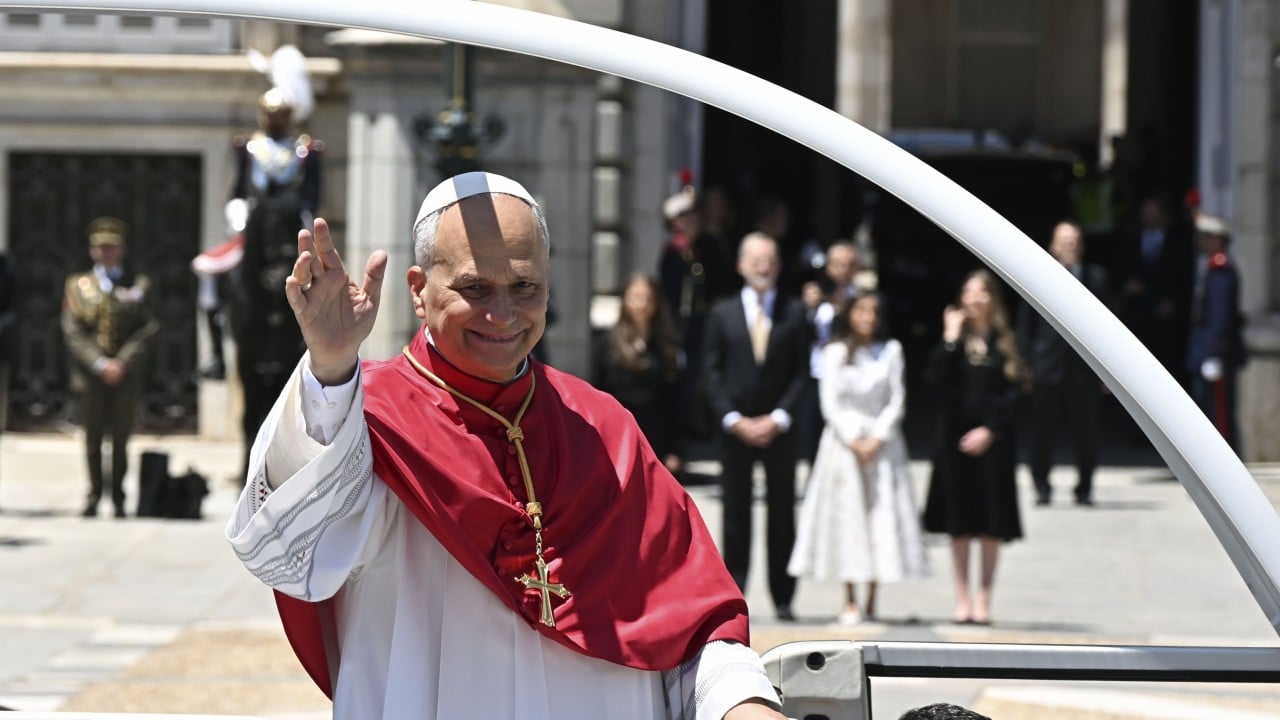
Pope Leo XIV just landed in Madrid and immediately went after this exact style of tribal politics.
On his first official papal visit to Spain, the pontiff didn't stick to safe, polite platitudes. He delivered a blunt critique of the way modern leaders use division to build power. He called out the temptation to gain popularity by fanning the flames of polarization, warning that this style of leadership directly threatens human dignity.
This isn't just about Spain. The American-born pope is using the Iberian Peninsula as a megaphone to warn the entire Western world about the dangers of ideological echo chambers.
The Illusion of Simple Answers
We live in an era where public debate gets reduced to a shouting match. Nuance is dead, and complexity is treated like a weakness. Pope Leo addressed this head-on during his speech at the Royal Palace in Madrid, standing alongside King Felipe VI and Queen Letizia.
He urged the Spanish people and their leaders to set aside what he called polarizing narratives of history and current reality. The goal? To move past sterile simplifications and learn how to appreciate complexity again.
"For the love of truth, I invite everyone to set aside the divisive and polarizing narratives of your societal reality and history, so as to overcome sterile simplifications through the fruitful appreciation of complexity."
Think about that phrase: sterile simplifications. It perfectly describes how we talk about massive, thorny issues today. Whether it's immigration, economic policy, or the role of technology, our public discourse treats complicated human crises like team sports. You're either entirely for us or entirely against us.
The pope warned that this identity-based approach seems to explain everything on the surface, but it actually fills the world with ghosts and enemies. When you reduce every issue to a black-and-white battle, you stop seeing your political opponents as neighbors. You start seeing them as existential threats.
Why Spain Matters to the Vatican Right Now
Leo didn't pick Spain by accident for this major address. The country is currently a pressure cooker of the exact tensions tearing through Europe and the Americas.
The Socialist-led government of Prime Minister Pedro Sánchez is facing intense political heat. The administration is dealing with a series of high-profile corruption allegations, and conservative opposition parties like Vox are hammering the government over its domestic policies.
At the same time, Spain is taking a radically different approach to migration than most of its neighbors. While the rest of Europe builds higher walls and embraces nationalist rhetoric, Madrid recently announced a mass regularization program. This plan will grant legal status to roughly 500,000 undocumented immigrants living and working in the country. Sánchez argues this is a pragmatic move to support an aging workforce and a low birth rate, but the policy has deeply divided the Spanish electorate.
The pope is leaning heavily into this specific debate. His itinerary includes a trip to the Canary Islands, where he will meet with migrants and humanitarian groups to honor the thousands of people who have died trying to cross from Africa to Europe. It's a clear signal that the Vatican views the migration crisis through a humanitarian lens, not a geopolitical one.
But Leo isn't just lecturing politicians. He's also walking into a deeply fractured house. The Spanish Catholic Church is going through its own severe credibility crisis. The institution is finally confronting decades of clergy sexual abuse and cover-ups. A 2023 report from the country's national ombudsman estimated that hundreds of thousands of minors have suffered abuse within the church since 1940.
Leo admitted before landing that these abuses remain an open wound. By scheduling private meetings with abuse survivors during his trip, the pope is acknowledging that the church can't call for social reconciliation without addressing its own institutional sins.
The Digital Echo Chamber
Politicians aren't the only ones driving us apart. Leo also pointed a finger at the structural forces shaping how we think. Expanding on ideas from his recent encyclical, Magnifica humanitas, the pontiff warned that modern digital ecosystems and social media are actively degrading our ability to communicate.
These platforms are built to maximize engagement. And nothing drives engagement quite like anger. Algorithms feed us content that confirms our worst prejudices, tracks our anxieties, and weakens our capacity for critical thinking.
To fight this darkness, the pope argued that societies need to stop pouring all their energy into building walls and buying weapons. Instead, he called for a massive reinvestment in culture, interiority, and free, high-quality education. True security doesn't come from isolating ourselves behind ideological borders. It comes from teaching the next generation how to navigate a diverse world without fearing it.
He pointed to Spain's own medieval history as proof that this is possible. He referenced the School of Translators in Toledo, where Christians, Muslims, and Jews worked together to translate Arabic, Greek, and Hebrew texts into Latin and Spanish. That historical co-habitation wasn't perfect, but it showed that collaboration across deep religious and cultural divides can drive human progress.
Looking Past the Shouting Match
What makes this visit uniquely critical is what happens next. On Monday, Leo will become the first pope in history to address both chambers of the Spanish Parliament, Las Cortes Generales.
He'll be speaking to a room full of politicians who are deeply divided, many of whom have built their entire careers on the exact polarizing narratives he's denouncing. It's going to be an uncomfortable room.
If we want to take the pope's message seriously, the next steps don't belong to the politicians or the church hierarchy. They belong to us. Breaking the cycle of polarization means changing how we engage with information and each other every day.
- Audit your media diet. Notice when an article or video is designed to make you furious rather than informed. If a piece of content makes you hate your political opponents a little bit more, step back.
- Reject the easy narrative. When someone tries to explain a massive societal problem with a single scapegoat, don't buy it. Demand the details. Ask about the trade-offs.
- Engage in local civics. It's easy to get cynical watching national politics on a screen. It's much harder to hate people when you're working alongside them in your own community to fix a local park or help a neighborhood school.
The message coming out of Madrid isn't naive optimism. It's a practical warning. If we keep letting leaders use sterile simplifications to divide us, we lose the ability to solve the actual crises facing our communities. It's time to grow up, accept that the world is complicated, and start doing the hard work of listening again.