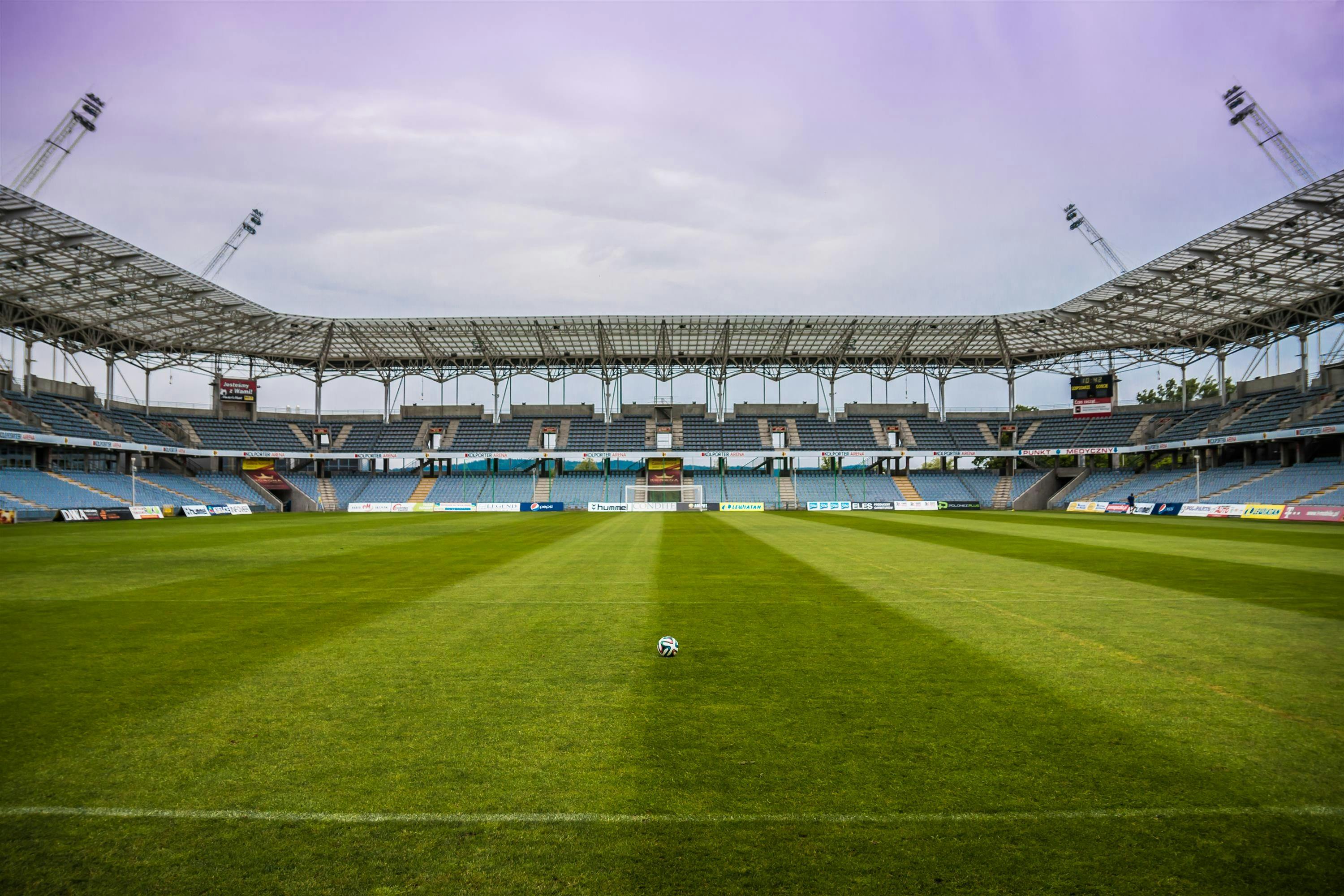
The leather of a football absorbs sweat, dirt, and the frantic energy of ninety minutes under a relentless sun. For a player wearing the bright leopard-spotted jersey of the Democratic Republic of Congo’s national team, that ball represents survival. It represents a ticket out of poverty, a moment of fleeting national unity, and the pinnacle of athletic ambition: the World Cup.
But a few thousand miles away, in an office chilled by industrial air conditioning, a bureaucrat sees that same ball as a potential vector.
When the United States Department of State issued a travel warning regarding an Ebola outbreak in the eastern provinces of the DR Congo, it did so with the clinical precision of modern geopolitics. The advisory was stark. It warned citizens of the lethal danger lurking in the soil and fluid exchange of a region plagued by conflict and hemorrhagic fever. It was a document designed to trigger caution, to freeze movement, and to draw a protective boundary around American interests.
The response from Kinshasa? A collective, defiant shrug.
The Congolese Football Federation (FECOFA) made it clear that World Cup preparations would not pause, would not shift, and would not bow to the alarm bells ringing across the Atlantic. To understand why requires stepping off the manicured lawns of international diplomacy and onto the red dust of the Congolese pitches.
The Two Realities
Imagine a young midfielder named Jean-Luc. He is a composite of a dozen young men currently fighting for a spot on the national squad, Les Léopards. Jean-Luc grew up in the shadow of continuous conflict, where the threat of violence is as ordinary as the morning rain. For him, risk is not a theoretical calculation printed on a government website. It is the texture of daily life.
When news of the American travel warning reaches the training camp, Jean-Luc doesn't check the CDC guidelines. He checks his boots.
To the outside world, an Ebola outbreak is an apocalyptic event that demands immediate isolation. To the people of the DR Congo, it is a familiar tragedy, a recurring demon they have fought and contained multiple times before. The country has survived more than a dozen distinct outbreaks of the virus since its discovery near the Ebola River in 1976. They possess some of the most experienced epidemiologists on the planet. They know the geography of containment. They know that a flare-up in the dense forests of North Kivu or Equateur province is separated from the capital city of Kinshasa by vast expanses of impenetrable terrain and hundreds of miles of the Congo River.
Stopping a national sports program because of a localized outbreak in a nation larger than Western Europe makes as much sense to them as canceling a marathon in New York because of a health crisis in Miami.
The American warning is viewed through a lens of deep frustration. It feels like a blanket condemnation, a broad brush stroke that paints an entire sub-continent as a zone of perpetual plague. It ignores the sophisticated medical protocols the country has developed. It ignores the sheer resilience of a population that refuses to let its cultural life be dictated by fear.
The Invisible Stakes of the Pitch
Football in the DR Congo is never just a game. It is a massive social engine. When the national team plays, the political divisions that fracture the country temporarily dissolve. The lingering trauma of the eastern conflicts is pushed aside for ninety minutes. The stadium becomes a sanctuary of shared hope.
Consider what happens if the federation capitulates to the panic.
If preparations are halted, friendly matches are canceled. International scouts stay home. The complex, fragile ecosystem of sports development collapses. For the players, the World Cup is the ultimate showcase, a chance to secure contracts with European clubs that can alter the financial trajectory of entire extended families for generations. A canceled camp isn't just a missed practice; it is a stolen future.
The federation’s leadership understands that the psychological cost of surrender is far higher than the calculated risk of continuing to train. They are operating under a different matrix of necessity. In Kinshasa, the stadiums remain open, the whistles blow, and the tactics boards are covered in chalk.
The national team staff has implemented its own rigorous health protocols, working quietly behind the scenes with local health authorities to ensure the safety of the squad. They are monitoring player movements, controlling environments, and relying on the robust public health infrastructure that the country has built out of sheer necessity over the last five decades. They do this without fanfare, without the need for international validation.
The Friction of Distance
The disconnect between the Western warning and the Congolese reality exposes a deeper truth about how the world perceives crisis. From a distance, danger looks uniform. It looks like a red stain on a map, swallowing everything within a nation's borders. But up close, life is granular.
The people of the DR Congo have learned to live in the spaces between the red stains. They have mastered the art of continuation under pressure.
The ball is kicked. It flies true across the pitch, caught by the wind coming off the river. Jean-Luc leaps, his chest trapping the leather before it hits the ground. His focus is entirely on the goalpost, on the defender closing the gap, on the roar of the local crowd filtering through the gates.
The warning from across the ocean remains a distant murmur, unable to pierce the noise of twenty-two men chasing a dream on a patch of earth they refuse to abandon.