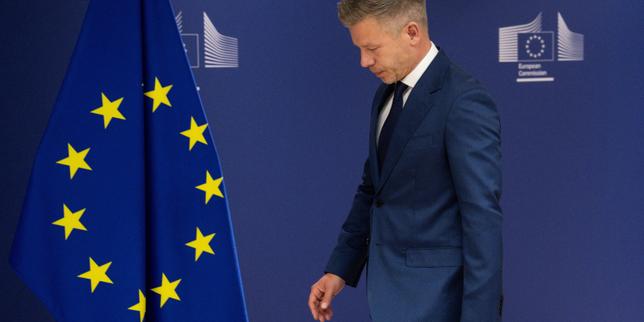
The political tectonic plates in Central Europe have shifted, but the surface remains deceptively calm. Péter Magyar, the man who did the unthinkable by dismantling Viktor Orbán’s sixteen-year grip on power, is currently walking the corridors of Brussels with the confidence of a conquering hero. He promises a "new dawn" for Hungary, a return to European values, and, most importantly for his voters, the immediate release of €18 billion in frozen EU funds. To the casual observer, it looks like a simple restoration of order. To anyone who has watched the brutal machinery of Hungarian politics for decades, it looks like a high-stakes gamble where Magyar is betting he can outmaneuver both his domestic base and the European Commission simultaneously.
Magyar’s victory in the April 2026 elections was not just a win; it was an eviction. His Tisza party secured a two-thirds supermajority, 138 seats out of 199, leaving the once-invincible Fidesz in a state of fractured shock. But the euphoria in Brussels, where officials are treating Magyar’s arrival as if Hungary is "rejoining" the Union, ignores a gritty reality. Magyar is not an outsider coming to clean house. He is a defector from the very system he destroyed. He knows where the bodies are buried because he helped dig the graves. This insider knowledge is his greatest asset and his most dangerous liability as he attempts to pivot Hungary back toward the West without losing the populist fire that fueled his rise. For an alternative view, read: this related article.
The Eighteen Billion Euro Deadline
The clock is the primary enemy. Magyar has until the end of August 2026 to push through a massive legislative overhaul or risk losing €10 billion in Covid recovery funds forever. This isn't just about "playing the game"; it's a frantic race against administrative expiration. Brussels has made it clear that, unlike the lenient treatment recently afforded to Poland, Hungary will not get a "trust me" pass. The Commission is demanding concrete, irreversible progress on judicial independence, media pluralism, and anti-corruption safeguards before a single cent crosses the border.
Magyar’s strategy is a radical departure from Orbán’s "stop Brussels" rhetoric. He has already committed to joining the European Public Prosecutor’s Office (EPPO), a move Orbán fought for years to protect his inner circle from independent oversight. By doing so, Magyar is signaling that he is willing to sacrifice the old guard’s protection for the sake of national liquidity. Similar insight on this trend has been shared by BBC News.
However, there is a fundamental tension in this approach. To unlock the funds, Magyar must dismantle the very supermajority powers he currently wields. He is being asked to weaken the office he just fought to win. The "why" behind his haste is simple: the Hungarian economy is gasping. With stagnant growth and a legacy of record-high inflation, Magyar needs that €18 billion to fund his promised "Voice of the Nation" reforms, including massive injections into healthcare and education. Without the cash, his "new dawn" will look a lot like the old stagnation, and his voter base is famously impatient.
The Shadow of Policy Continuity
While the tone in Brussels has changed, the policy substance remains surprisingly familiar in key areas. Magyar is a populist at heart, and he knows that a total surrender to the "Brussels mainstream" would be political suicide in the Hungarian heartland. This is why he continues to align with Fidesz on sensitive issues like migration and certain aspects of agricultural policy.
The Ukraine Paradox
The most glaring friction point is Ukraine. While Magyar has moved to normalize relations with Kyiv, he remains cautious. His party’s internal polling, which saw over a million responses, showed that Ukraine’s EU accession is still a deeply contested issue among Hungarians, with only 58% in favor. Magyar is treading a fine line—supporting the European consensus enough to satisfy the Commission, but resisting "accelerated" accession to satisfy his own voters. He is not a "Brussels puppet," and he is using that distinction as a shield against the inevitable Fidesz-led accusations of betrayal.
The Risks of a Two-Party System
Hungary has effectively moved from a one-party autocracy to a two-party collision course. By absorbing the voters of the old, fragmented opposition, Magyar has created a streamlined political landscape. This makes for a more stable government, but it also means there is no one left to blame.
The "Tisza Islands"—the network of local supporter groups Magyar built to bypass state-controlled media—are now expecting a direct dividend from his Brussels trip. If the funds don't flow by late summer, these grassroots supporters will begin to question if the "insider" simply traded one form of elite control for another.
Magyar’s current charm offensive is a masterclass in tactical diplomacy. He has met with Ursula von der Leyen and Antonio Costa, promising a "constructive" partnership. But "constructive" is a diplomat’s word for "we are still negotiating." The real test will come in June, when the first set of rule-of-law bills hits the Hungarian Parliament. If Magyar uses his supermajority to truly independentize the courts and the media, he will have proven his critics wrong. If he keeps those powers for himself while merely rebranding the corruption, Brussels will find itself in a familiar, agonizing stalemate with a different face.
The reality of the post-Orbán era is that the "European game" is no longer about ideology; it is about survival. Magyar knows that to save Hungary, he must first satisfy the very institution his predecessor spent a decade demonizing. It is a cynical, necessary, and incredibly dangerous maneuver. The victory in April was the easy part. The actual governing—and the inevitable compromises required to get the check cleared—starts now.