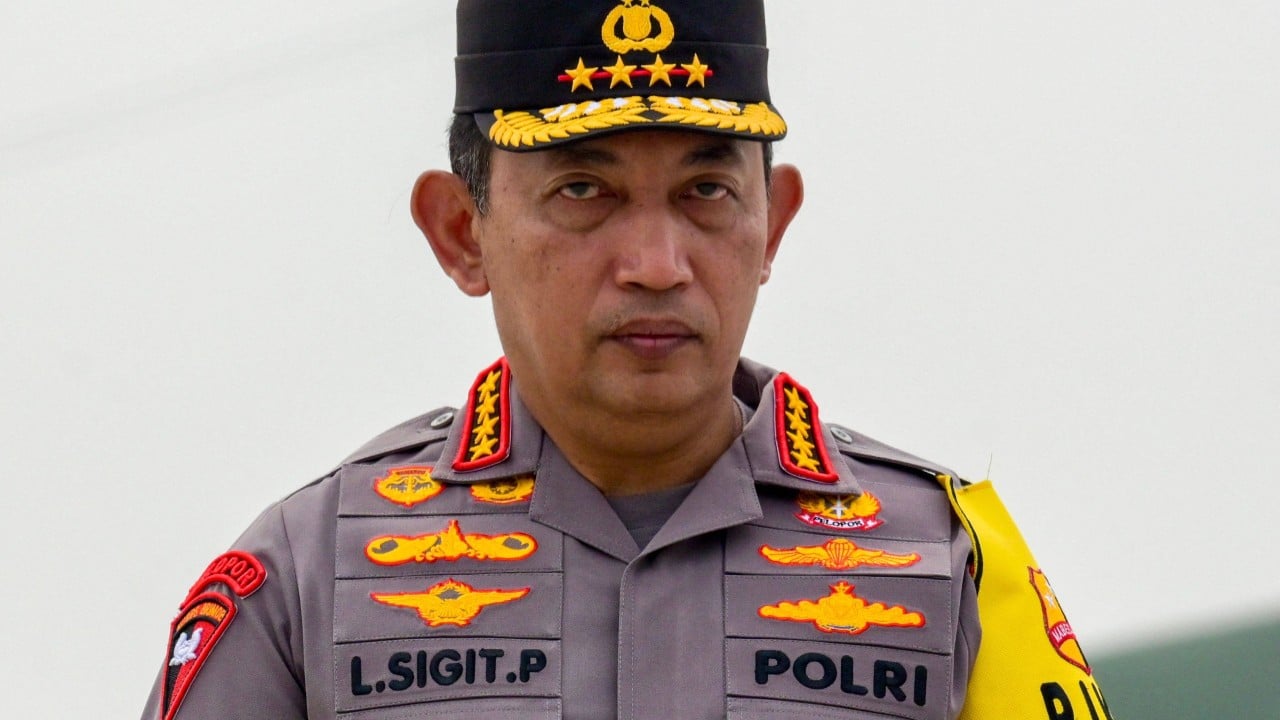
When Indonesian President Prabowo Subianto abruptly fired his newly minted chief of staff, Listyo Sigit Prabowo, in early November 2026, the international press immediately framed it as a rogue surveillance story. They missed the real plot.
This isn't just about tapped phones. It's the sharpest stress test yet for the fragile political marriage between Prabowo and his predecessor, Joko Widodo.
If you've followed Jakarta politics since the 2024 transition, you know the alliance between Prabowo and Widodo—widely known as Jokowi—was built on mutual convenience rather than deep ideological loyalty. Listyo Sigit Prabowo (who shares a last name with the president, though no family ties) was the ultimate symbol of that arrangement. He wasn't Prabowo's guy. He was a staunch Jokowi loyalist who had led the Indonesian National Police (Polri) since 2021. When Prabowo shifted him from police chief to presidential chief of staff in October 2026, it looked like a classic political compromise to keep Jokowi's inner circle close.
Weeks later, Listyo was in handcuffs.
How a Cabinet Reshuffle Became a Treason Investigation
Most casual observers assume a chief of staff gets fired over policy clashes or bad press. Not in Jakarta. Not like this.
On November 4, 2026, the Presidential Palace announced Listyo's dismissal just hours after police confirmed his arrest alongside senior officers. The initial charge was explosive enough: running an unauthorized wiretapping operation between 2025 and 2026—while Listyo still commanded the national police—that intercepted calls belonging to President Prabowo himself, alongside cabinet ministers, journalists, and business leaders.
Then the floor dropped out.
By late November 2026, the National Police's Criminal Investigation Agency (Bareskrim), led by Commissioner General Asep Safrudin, escalated the case from illegal surveillance to full-blown treason. Investigators raided 14 locations across Jakarta, Tangerang, and Bogor, questioning 71 witnesses and seizing mobile phones, hard drives, and Rp 735 million in cash. Six current and former police officials, including Listyo and four police generals—Ahrie Sonta Nasution, Eko Hadi Santoso, Slamet Uliandi, and Tedjo Kusumo—plus senior officer Iman Imanuddin, now face treason charges.
Here's the detail that changes everything. According to Bareskrim investigators, the alleged conspiracy didn't start in the middle of a policy dispute. It allegedly began on October 3, 2024—roughly two weeks before Prabowo was even inaugurated. Police allege the group assessed the incoming administration's policy direction, studied the 1998 political crisis that toppled Suharto, mapped out impeachment scenarios, and mobilized street demonstrations to erode public trust in Prabowo's government—all to protect their grip on the police chief's office.
Under Indonesia's Criminal Code, treason carries penalties up to the death sentence. You don't throw that word around in Indonesian politics unless the palace wants to send an unmistakable message to every power broker in the archipelago.
Why the Prabowo and Jokowi Alliance Is Cracking
To understand why this scandal matters beyond a courtroom, you have to look at what happened around the same time in the vice president's office.
Jokowi's political insurance policy for his post-presidency was his eldest son, Gibran Rakabuming Raka, serving as Prabowo's vice president. For two years, that arrangement kept the peace. Jokowi lent Prabowo his massive grassroots popularity and institutional networks; Prabowo protected Jokowi's legacy and family.
That bargain is visibly unraveling.
- The police foothold vanished. Listyo wasn't merely an administrator; he was Jokowi's most trusted institutional anchor inside the security apparatus. Removing him from Polri in October and arresting him in November stripped Jokowi's camp of its strongest leverage inside the state security forces.
- The vice presidency imploded. Just days after Listyo's arrest, Gibran resigned from the vice presidency amid mounting parliamentary pressure and court scrutiny over his overseas education credentials and eligibility. Indonesia's vice presidency hasn't sat vacant since July 2001.
- Public neutrality masks quiet tension. There is zero public evidence linking Jokowi directly to the wiretapping plot, and investigators haven't implicated him. When cornered by reporters outside court hearings, Jokowi offered a textbook deflection: "We should all respect the ongoing legal process. Let us wait and see."
Honestly, nobody in Jakarta buys that everything is business as usual. When a former president's handpicked police chief is accused of plotting treason before inauguration day and his son exits the vice presidency in the same month, the "two suns" theory of Indonesian politics—the idea that Jokowi and Prabowo could share power indefinitely—is officially dead.
The Military Shadow Over Jakarta
One detail from the initial November 4 crackdown deserves closer attention than it got. As news of Listyo's arrest broke, troop deployments around Jakarta sparked immediate alarm among diplomatic observers and foreign investors.
The Indonesian Navy's spokesperson, Tunggul, quickly framed the movements as routine security stabilization and scheduled training exercises around the capital. Associated Press reporters on the ground noted there wasn't an overt, heavy-handed military blockade on central streets. Still, optics matter in a country with Indonesia's history.
Prabowo is a former military general who spent decades in the armed forces before entering politics. Under Jokowi's decade in power, the National Police grew enormously in budget, domestic intelligence reach, and political clout—often rivaling or eclipsing the military (TNI) in internal security matters. Many analysts in Jakarta saw the police force as Jokowi's personal institutional counterweight to the military.
Now flip that equation around. If Prabowo genuinely believes senior police generals tapped his phone and tried to manufacture street protests against him, where does he turn for protection? Straight back to the military. Political risk analysts have already warned that perceived threats to Prabowo's personal security give him every excuse to lean heavier on the armed forces, shifting Indonesia's civil-military balance back toward the barracks.
What Investors and Observers Get Wrong
If you're watching Southeast Asian markets or tracking regional geopolitics, it's tempting to read this crisis as proof that Indonesia is descending into chaos. That's a misreading of how Prabowo operates.
Prabowo's approval ratings have faced headwinds, and currency markets have shown jitters, especially with Indonesia working to avoid market downgrades during talks with global index providers like MSCI. Yet consolidating power is something Prabowo has prepared for his entire adult life. By purging the police leadership and preparing to submit new vice-presidential nominees to the People's Consultative Assembly (MPR), he isn't losing control of the state—he's centralizing it under his own loyalists rather than sharing it with his predecessor's network.
There is a massive catch, though.
Removing rivals is easy when you control the levers of prosecution. Governing without Jokowi's massive voter base and parliamentary coalition mechanics is much harder. Jokowi didn't just hand Prabowo a cabinet; he handed him political legitimacy across Java's heartland and an informal network of regional power brokers. If Jokowi feels his family and allies are being systematically dismantled rather than protected, he still holds enough informal sway to make legislative life miserable for Prabowo's economic agenda.
How to Track What Happens Next in Jakarta
Don't get distracted by daily rumor mills on Indonesian social media. If you want to know whether this wiretap scandal turns into a full-blown political rupture or a controlled consolidation of power, watch three concrete indicators over the coming weeks:
- The Vice Presidential Replacement Vote in the MPR. Watch who Prabowo nominates to replace Gibran. If he picks a figure from his own Gerindra party or a traditional coalition partner like Golkar without consulting Jokowi's camp, the alliance is functionally over.
- The Scope of the Bareskrim Treason Trials. Pay attention to whether prosecutors keep the treason case strictly contained to Listyo and the five police officers, or if witness summonses start reaching civilian politicians and business figures tied to the previous administration.
- Police Ethics Hearings and Institutional Restructuring. Listyo and his co-accused face internal police ethics hearings alongside criminal prosecution. Watch whether Prabowo uses this scandal to strip Polri of its sweeping domestic intelligence and cyber-surveillance powers—and whether those powers get handed to military intelligence instead.
Check the official Bareskrim press briefings and MPR session schedules rather than anonymous political commentary. In Jakarta, the real power shifts rarely happen in the speeches; they happen in who controls the surveillance apparatus and who fills the empty chairs.


