When high-ranking government officials stop speaking in diplomatic code, it's time to listen closely. Recent declarations from Israeli defense leadership haven't left much room for interpretation. Statements about plans to finish military operations and empty the Gaza Strip of its remaining population have laid bare a stark objective. Yet, much of the international commentary treats these remarks as isolated political rhetoric rather than a window into a calculated strategy unfolding in real-time.
To understand where this conflict is heading, you have to look past the daily back-and-forth of ceasefire talks and examine the structural realities on the ground.
The Rhetoric Versus the Reality on the Ground
For months, public discourse has fixated on diplomatic breakthroughs, temporary pauses, and post-war governance models. But inside the Israeli security establishment, a different calculation has taken root. When Defense Minister Israel Katz stated that resuming full-scale operations to push out the territory's population is merely a matter of timing, he wasn't just tossing red meat to a domestic political base. He was signaling an institutional commitment.
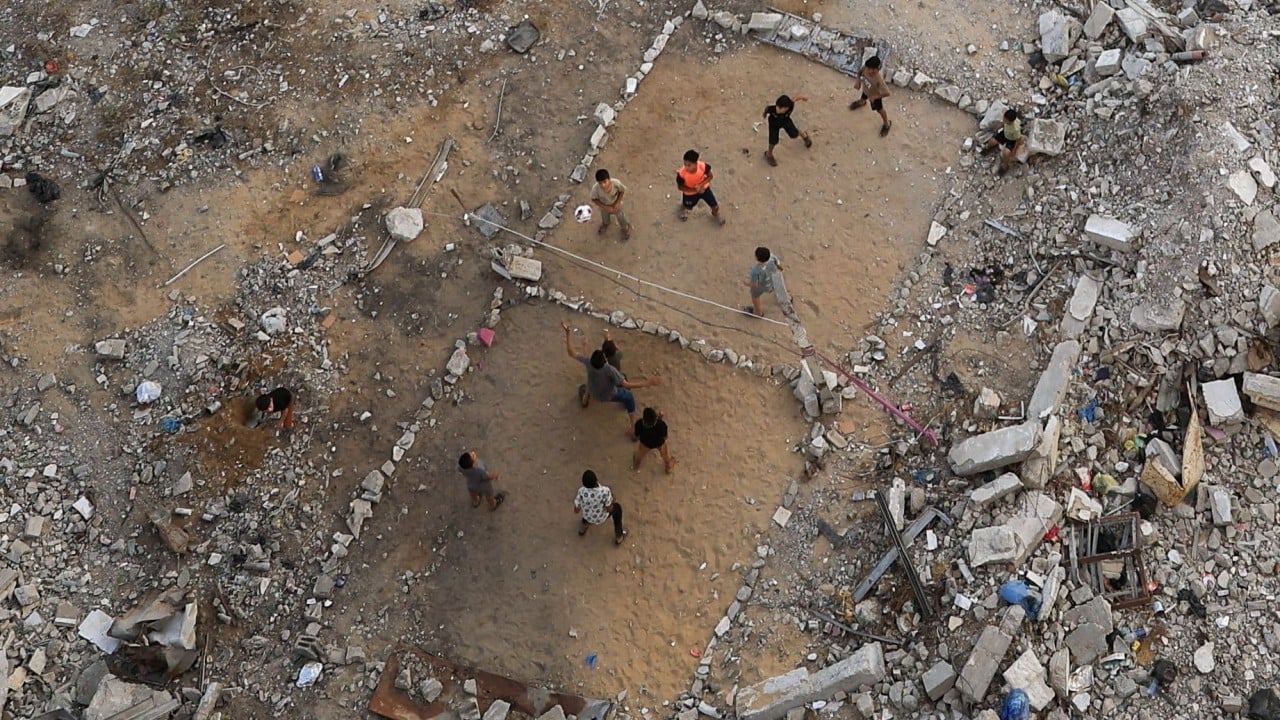
The strategy relies on a familiar mechanism of prolonged pressure. When civilian infrastructure is flattened, healthcare systems collapse, and daily survival becomes nearly impossible, displacement ceases to look like a sudden decree. Instead, it gets reframed as a humanitarian exodus driven by necessity. Far-right ministers have openly championed these removal schemes as concrete policy proposals, stripping away any lingering ambiguity about the government's long-term endgame for the enclave.
Why the Two-State Framework Is Dead in the Water
You hear analysts on television still invoking the two-state solution like a sacred mantra. Don't buy it. That framework is completely dead, buried beneath millions of tons of concrete rubble across Gaza and an accelerating expansion of settlements in the West Bank.
When Prime Minister Benjamin Netanyahu insists that the military will maintain permanent control over large swathes of the strip and rejects phased withdrawals without total disarmament, he's drawing permanent red lines. The objective isn't temporary security administration. It's the permanent alteration of demographic and geographic realities. The plan to shrink, fragment, and eventually empty Palestinian population centers isn't hidden anymore. It's being debated openly in Knesset sessions and nightly news broadcasts.
The International Community's Powerless Stance
Global condemnation has become predictable background noise. Human rights organizations and United Nations bodies issue urgent warnings about policies matching the legal thresholds of forced displacement and ethnic cleansing. Foreign ministers express deep concern.
Nothing changes because the structural asymmetry of power remains untouched. Western allies issue cautious reprimands while continuing to supply the diplomatic cover and military logistics that keep the machinery running. Without concrete economic or political consequences, statements from foreign capitals register in Jerusalem as little more than diplomatic theater.
What Comes Next for the Region
The trajectory points toward a grim, managed permanent crisis. As the military controls the majority of the strip and the remaining civilian population is compressed into shrinking, isolated tent camps, the pressure valve of voluntary or forced migration remains wide open in official policy discussions.
Don't look for sudden diplomatic miracles. The stated intent to finish the operation means the squeeze on Gaza won't let up until the demographic architecture of the region is fundamentally rewritten.