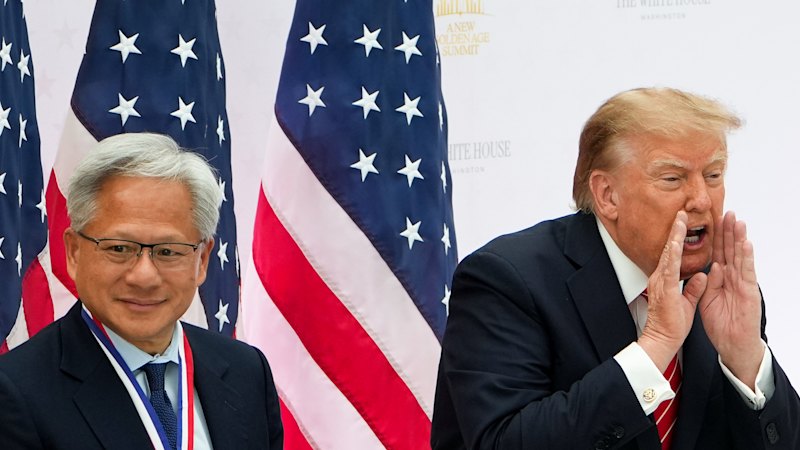
Hold up before you share that viral headline about Nvidia launching a foreign intelligence investigation after its CEO admitted to an affair. It sounds like the plot of a mid-tier corporate thriller, right?
Except there's one massive problem with the story. It isn't true. Meanwhile, you can find similar stories here: Synthetic Voice Fraud and the $129 Million Executive Impersonation Deficit.
Let's get the facts straight immediately. Jensen Huang, the co-founder and longtime CEO of Nvidia, hasn't admitted to an affair, and Nvidia's board hasn't launched a foreign intelligence investigation into him. If you saw this circulating on social media feeds or shady aggregator sites, you stumbled onto a textbook piece of corporate disinformation—or a confused mashup of completely different corporate scandals from years past.
When a company sits at the absolute center of the global AI hardware boom, it becomes a magnet for weird rumors, stock manipulation attempts, and clickbait bots. Nvidia isn't just another Silicon Valley chipmaker anymore. It's a multi-trillion-dollar geopolitical powerhouse whose GPUs determine which nations lead in artificial intelligence. Because the stakes are so absurdly high, any rumor mixing executive personal scandal with national security spreads like wildfire before anyone bothers to check an actual SEC filing or reputable newsroom. To see the complete picture, we recommend the recent article by Wired.
Where Do Rumors Like This Come From?
Honestly, internet disinformation rarely invents things out of thin air. Instead, it usually blends real corporate tropes, unrelated scandals from other companies, and genuine geopolitical anxieties into one sticky, believable-sounding lie.
Think back to the real executive scandals that dominated tech and business news over the past decade. Remember when McDonald's fired CEO Steve Easterbrook over a consensual relationship with an employee? Or when Intel's CEO Brian Krzanich stepped down in 2018 after the company discovered a past relationship with a subordinate that violated non-fraternization rules? Those were real, verified boardroom events.
Now mix that familiar boardroom drama with the very real—and very intense—national security scrutiny surrounding Nvidia's chips. Over the last few years, the U.S. Department of Commerce has tightened export controls on high-end AI processors going to China, prompting federal investigations into smuggling networks and shell companies trying to bypass trade restrictions.
Put those two ingredients into a blender on a low-quality content farm, and suddenly you get a fabricated mashup claiming Nvidia's CEO is under a "foreign intelligence" probe over a personal affair. It hits every psychological trigger at once. Sex, power, espionage, and a trillion-dollar stock ticker.
Why Nvidia Is Such an Easy Target for Disinformation
If you've spent any time watching financial markets or tech media lately, you know how jumpy investors get around semiconductor stocks. A single headline can wipe out—or add—hundreds of billions of dollars in market value before lunch.
That volatility creates a massive financial incentive for bad actors to push fake news. Short-sellers, algorithmic trading scrapers, and engagement-farming accounts thrive on sudden panic. And Nvidia sits right in the crosshairs for a few specific reasons.
First, Jensen Huang is uniquely tied to Nvidia's identity. Unlike companies where CEOs rotate out every five years, Huang has led Nvidia since he co-founded it in 1993. He's married to his college sweetheart, Lori Mills, whom he met in an engineering lab at Oregon State University, and he's famously private outside of his leather-jacket keynote appearances. Because his public image is remarkably scandal-free, a sudden tabloid-style bombshell feels shocking enough to make people click without thinking.
Second, the phrase "foreign intelligence" sounds plausible because Nvidia actually operates in a heavily policed geopolitical zone. The U.S. government views advanced AI compute as a strategic national asset. Nvidia has had to design specific, throttled-down chips like the H20 just to comply with American export rules while still selling to overseas markets. When readers already associate Nvidia with international trade tension and government oversight, slapping the words "foreign intelligence" onto a fake scandal doesn't trigger their BS detector the way it should.
How Real Corporate Investigations Actually Work
If a major publicly traded U.S. tech company did face a legitimate national security or foreign intelligence issue involving a top executive, you wouldn't first hear about it from a sketchy link with an "undefined" source URL. You'd see concrete, legally mandated paper trails immediately.
Here's what actually happens in the real world when a board investigates a CEO for misconduct or national security compromises:
- Form 8-K Filings with the SEC. Under U.S. securities law, public companies must disclose material events—including sudden executive investigations, leadership changes, or major compliance breaches—within four business days. You can look these up for free on the SEC's EDGAR database in about thirty seconds.
- Outside Counsel Appointments. Boards don't run espionage or executive misconduct probes through internal HR. They hire heavy-hitting white-collar law firms like WilmerHale, Gibson Dunn, or Cravath to run independent inquiries, and those appointments almost always leak to outlets like The Wall Street Journal, Bloomberg, or Reuters within hours.
- Immediate Trading Halts or Formal Statements. When a rumor threatens material damage to shareholders, investor relations teams issue crisp, on-the-record denials or clarifications to wire services so institutional funds don't dump shares based on thin air.
None of that happened here. There's no Form 8-K, no outside counsel report, and zero coverage from any credible financial newsroom.
How to Spot Fake Tech Scandals Before You Share Them
We're living through an era where AI-generated scrapers and automated news sites copy-paste hallucinations off each other until a complete fabrication starts showing up in search results. Once three or four low-tier blogs repeat the same fake headline, casual readers assume there must be smoke because they keep seeing fire.
You don't need an investigative journalism degree to protect yourself from falling for—or spreading—garbage like this. Run a quick mental checklist whenever a wild corporate headline crosses your screen.
Check the primary source first. If an article claims a CEO "admitted" to something, where did that admission happen? Was it in a press release, a court deposition, an internal memo leaked to a named reporter, or an interview? If the story doesn't name the exact venue or document where the admission occurred, walk away.
Look at the headline structure and URL trail. Fake or spun stories frequently use sensational buzzwords in single quotes—like 'foreign intelligence'—without attributing who actually used that phrase. If you trace the link back and hit dead URLs, circular citations, or sites you've never heard of, you're looking at synthetic clickbait.
Verify against tier-one business wire services. For a company of Nvidia's size, real news hits Reuters, Bloomberg, CNBC, and the Financial Times simultaneously. If a story this massive hasn't been touched by a single major newsroom after even an hour, it isn't an exclusive scoop. It's fiction.
Keep your skepticism sharp when reading breaking tech drama, verify major corporate claims directly through the SEC's public EDGAR filings or established wire services, and never let an unverified viral headline dictate how you view a company or your portfolio.