When headlines started screaming that Volodymyr Zelensky issued an ultimatum to Western Europe, half the internet took the bait. People pictured the Ukrainian president pounding a podium, threatening to walk away from his biggest financial backers unless they obeyed him.
That isn't what happened. Not even close. If you enjoyed this post, you should read: this related article.
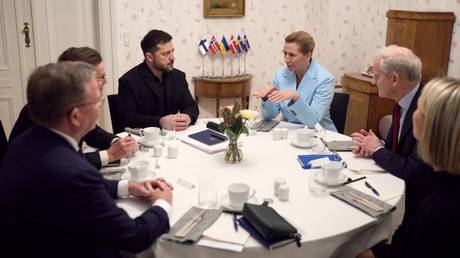
What actually went down in Copenhagen on November 10 and 11, 2026, wasn't a tantrum aimed at Brussels or Berlin. It was a blunt wake-up call. Zelensky told European leaders they had until the end of November to stop bickering and pick who would actually speak for them at the Ukraine-Russia peace talks. If they didn't, Washington and Moscow were going to carve up Europe's security architecture without a single European in the room.
You've probably seen Russian state outlets like RT frame this as desperate bullying by a "former actor". Western commentators, meanwhile, treated it like a sudden diplomatic rift. Both takes miss the real story. Let's look at why Zelensky set that November deadline, how Europe scrambled to answer it, and why the hardest part of getting a seat at the table isn't convincing Brussels—it's getting Moscow to pull up a chair. For another angle on this event, refer to the recent update from NBC News.
Why Zelensky Forced Europe's Hand in Copenhagen
To understand why Zelensky gave Western Europe a ticking clock, you have to look at what was happening three thousand miles away in Abu Dhabi.
In early November 2026, trilateral negotiations kicked off in the United Arab Emirates. Representatives from the United States, Russia, and Ukraine sat down to hash out potential terms to end the war. Notice who wasn't at the main table? Europe. Diplomats from Britain, France, and Germany were hovering in nearby meetings, basically waiting in the hallway for updates while U.S. envoys Steve Witkoff and Jared Kushner shuttled between Kyiv and Moscow.
Think about how absurd that is. By late 2026, Europe was carrying the lion's share of Ukraine's financial and military burden. Just days after the Copenhagen speech, the European Commission put forward another 45 billion-euro ($49.3 billion) loan package for 2027—up to 25 billion euros for weapons and 20 billion for keeping Ukraine's government running. Europe also holds the vast majority of the economic sanctions that Vladimir Putin desperately wants lifted.
Yet when the actual peace talks started in Abu Dhabi, Europe didn't have a voice because Europe couldn't decide who held the microphone.
Speaking at a press conference in Copenhagen and later addressing the Danish Parliament at Christiansborg Castle, Zelensky laid out the cold reality. He warned European leaders that Washington and Moscow weren't just talking about ceasefire lines in Donbas. They were discussing broader security arrangements for the entire European continent. "In November... we need to accept who will represent Europe in negotiations," Zelensky said. He pointed straight toward the upcoming meetings in Dublin and Berlin as the drop-dead moment for Europe to get its act together.
It wasn't an ultimatum against Europe. It was an ultimatum for Europe's own survival as a serious geopolitical player.
The Diplomatic Mess Inside Western Europe
If you've ever tried to get twenty-seven neighbors to agree on who should speak at a zoning board meeting, multiply that headache by a factor of a hundred and hand everyone a nuclear umbrella or a veto pen. That's European foreign policy on a good day.
Even Jared Kushner, after wrapping up the Abu Dhabi discussions, pointed out the obvious. He noted that getting European governments to agree on a single representative might actually be harder than convincing Russia to accept that person at the table. Harsh? Yes. Accurate? Completely.
Here is why Western Europe was paralyzed before Zelensky's November push:
- Institutional turf wars. Who has the legal right to speak for Europe on war and peace? European Commission President Ursula von der Leyen controls trade, sanctions, and massive financing packages. European Council President António Costa represents the heads of state. Meanwhile, actual militaries, intelligence agencies, and nuclear deterrents belong to individual nations and NATO. No single bureaucrat in Brussels can promise security guarantees on behalf of Paris or London.
- Clashing strategies toward Moscow. European leaders agree they want the war to end, but they disagree wildly on how to talk to the Kremlin. French President Emmanuel Macron has warned loudly against rationing aid to force what he called an "unjust peace". Italian Prime Minister Giorgia Meloni has publicly blasted the lack of a unified European front. At the same time, separate diplomatic outreach by leaders like Finnish President Alexander Stubb and Norwegian Prime Minister Jonas Gahr Støre sparked friction over whether opening side channels helps or hurts Ukraine's leverage.
- The fear of a U.S.-Russia side deal. Behind closed doors, European capitals have been terrified that President Donald Trump's administration might push Kyiv toward painful territorial concessions—such as withdrawing from parts of Donbas—in exchange for a quick ceasefire. If Washington and Moscow strike a framework deal alone, Europe gets stuck paying the reconstruction bill while living next door to an emboldened Russia.
Zelensky saw this paralysis up close. He knew that if he went into the next round of talks without European heavyweights backing him up, he'd be facing Russian and American pressure on his own. So he forced Europe to pick a lineup.
How Europe Answered With the E5 Plus Format
And honestly? The tactic worked faster than almost anyone in Brussels expected.
Within days of Zelensky's Copenhagen warning, European leaders gathered on the sidelines of the European Political Community summit in Dublin on November 12. Instead of picking one solitary envoy—which would have triggered endless jealousy between Paris, Berlin, and London—they compromised on a compact heavyweight squad.
Diplomats call it the E5+. By November 13 and 16, both European officials and Zelensky confirmed the exact lineup that would represent Europe in negotiations with Russia:
- Five major European powers: France, Germany, the United Kingdom, Italy, and Poland.
- Two top EU institutions: European Commission President Ursula von der Leyen and European Council President António Costa.
- Alliance coordination: NATO representatives working alongside the team to align security guarantees.
Look at that roster for a second. It's actually pretty smart. Including the UK solves the post-Brexit headache of leaving one of Europe's two nuclear powers out of the room. Putting Poland at the table satisfies the eastern flank countries that sit right on the frontline and refuse to be sold out in a backroom deal. Keeping von der Leyen and Costa involved ties Europe's financial firepower and sanctions leverage directly to the diplomatic talks.
Following talks with Kushner and Witkoff in Dublin, Zelensky announced that Europe would join the next round of negotiations. Kushner backed him up publicly, stating flatly that Washington cannot conclude a peace deal without the Europeans at the table. On November 19, leaders of this "Coalition of the Willing" met in Berlin to coordinate their position ahead of the next diplomatic push.
On paper, Zelensky got exactly what he demanded before his November deadline even expired.
The Catch Nobody in Brussels Wants to Talk About
Here is where things get messy. Naming a negotiating team is one thing. Getting the other side to actually negotiate with them is a whole different ballgame.
While Washington and Kyiv agreed that the E5+ should become part of a quadrilateral peace track, Moscow immediately threw cold water on the idea. After the Abu Dhabi talks wrapped up, Russia's lead negotiator Vladimir Medinsky sneered to reporters that Europeans would only become full participants "when they grow a conscience". By mid-November, the Kremlin made it clear it had not agreed to let European representatives join the main table with Ukraine and the United States.
Then came an even sharper twist. Following a trilateral summit between Donald Trump, Xi Jinping, and Vladimir Putin in Shenzhen on November 19, Putin floated a counter-move. He invited EU representatives to come to Moscow separately so he could "better understand Europe's position" before deciding what format future talks should take.
See what Putin is doing there? It's classic divide-and-rule diplomacy.
Russia knows that a unified front of Kyiv, Washington, and the E5+ creates massive leverage. Together, Europe and the U.S. control the weapons flowing to Ukraine, the frozen Russian central bank assets, the 22nd EU sanctions package, and the security guarantees Kyiv needs. By refusing to seat Europe at the main table while dangling separate bilateral invitations to Moscow, the Kremlin is testing whether the E5+ will crack under pressure.
As of late November 2026, Zelensky has stated that Ukraine is waiting on Washington to lock in the date for the next round of talks, insisting that Kyiv has done everything possible to bring Europe fully into the process. Meanwhile, Russia continues hammering Ukrainian cities like Pavlohrad, Odesa, and Zaporizhzhia with missile and drone strikes while demanding that NATO pull troops back from its borders and bar any European peacekeeping forces from Ukraine.
Why This Matters Even If You Don't Follow European Politics
You might be tempted to write all of this off as typical diplomatic theater. Don't. What happens with the E5+ over the next few weeks will decide three concrete things that affect global markets, energy prices, and security far beyond Eastern Europe.
First, who pays for peace. The EU is already staring at a 25 billion-euro financing gap for Ukraine in 2027 even if its massive new loan package passes. European voters won't tolerate footing a multi-hundred-billion-euro reconstruction and defense bill if their leaders were locked outside the room when the terms were signed.
Second, whether a ceasefire actually holds. Zelensky has repeatedly warned that surrendering territory like Donbas without ironclad security guarantees only buys Russia time to rearm and attack again, just like after Crimea in 2014 and the Minsk agreements. Only European nations—backed by American deterrence—have the geographic proximity and troop capacity to police a long-term settlement on the continent.
Third, the future of the transatlantic alliance. If Washington cuts a bilateral deal with Moscow over Europe's head, NATO's credibility takes a hit it may never recover from. Conversely, if the E5+ holds together and forces its way into the main negotiating room, Europe finally proves it can act like a geopolitical adult rather than an ATM.
How to Read the Next Phase of Ukraine Peace Talks
If you want to cut through the spin from both Russian state media and Western political handlers over the coming weeks, ignore the loud press conferences and watch three specific signals instead:
- Watch the seating chart, not the speeches. When the U.S. announces the date and location for the next round of negotiations, check whether E5+ diplomats are in the primary room with Ukrainian, American, and Russian envoys—or relegated to "consultations on the sidelines" like they were in Abu Dhabi. If they're still in the hallway, Putin's stalling tactic is working.
- Track whether any E5+ leader takes Putin's bait. If a major European capital accepts Moscow's offer for separate bilateral talks outside the joint U.S.-Ukraine-E5+ framework, European unity is fracturing in real time.
- Follow the money and sanctions votes in Brussels. Keep an eye on the EU's 22nd sanctions package and final approval of the 45 billion-euro 2027 loan. Diplomatic leverage at the negotiating table only exists as long as Europe backs its envoys with real cash and hard economic pressure.
Zelensky's November deadline wasn't a hostile threat against Western Europe. It was a mirror held up to a continent that spent years funding a war while hesitating to claim a seat at the peace table—and the clock on whether Europe can actually use that seat is still ticking.