Blaming video games for real-world violence is the oldest trick in the political playbook. It's lazy. It's predictable. And right now in the Philippines, it's masking a much deeper, more terrifying reality.
Following the horrific attack at San Jose National High School in Tacloban City, where two teenagers opened fire, killing three students and wounding 20 others, the government didn't waste any time. The Cybercrime Investigation and Coordinating Center quickly ordered a temporary block on GoreBox, a violent sandbox mobile game played by the 14-year-old suspect. Investigators found gun-related content on the boys' social media accounts and immediately pointed the finger at algorithms and digital gore. Read more on a related topic: this related article.
It makes for a great headline. It gives terrified parents an immediate scapegoat. But if you think banning a mobile app will fix the rot that led to the country's worst school shooting, you're entirely missing the point.
The Easy Scapegoat
Let's look at what actually happened. Two close friends, ages 14 and 15, walked into their own school with functional handguns. They opened fire in a classroom, chased fleeing, screaming girls into a second room, and left the campus covered in blood and 40 spent shell casings. It was a calculated, brutal act of violence. Additional analysis by BBC News explores comparable perspectives on this issue.
The immediate government reflex? Ban the game.
GoreBox is undeniably violent. It features dismemberment, realistic ragdoll physics, and a tool called the "Reality Crusher" meant for pure destruction. It's definitely not something a young teenager should spend hours playing. But millions of kids around the world play violent games every single day. They don't walk into classrooms and execute their peers.
When authorities focus purely on the pixelated violence of a mobile app, they ignore the physical realities of the environment. The 14-year-old suspect didn't just learn how to shoot from a touchscreen. Police later admitted the boy had real-world exposure to actual firearms. He had been taken to a physical shooting range. He knew how to chamber a round, eject a magazine, and reload ammunition.
A mobile game didn't hand those boys guns. The real question we should ask is how two minors under the age of 16 managed to secure loaded handguns in a country with supposedly strict firearms laws. That's a failure of adult supervision, a failure of local gun enforcement, and a failure of community security. Pinning it all on an app is a cop-out.
The Nihilism Breeding Online
If we want to talk about online influence, we need to move past the outdated "video games cause violence" debate and look at the actual digital subcultures capturing Filipino youth. The Department of Justice hinted at this when they opened an investigation into "nihilistic extremism" surrounding the Tacloban case.
There's a massive difference between playing a shooter game and sinking into online communities that celebrate real-world destruction. The Philippine National Police found that the suspects weren't just playing games; they were actively posting shooting techniques and gun content on social media. They were building an identity around violence.
The internet doesn't create these impulses out of thin air, but it acts as a massive echo chamber for isolated, angry kids. The suspects claimed they were heavily bullied at school. In the physical world, they felt powerless. Online, they found a digital space that validated their rage, taught them how to handle real weapons, and offered a twisted path to notoriety.
We saw a version of this digital radicalization during the 2022 Ateneo de Manila University shooting. The gunman in that incident, Chao Tiao Yumol, wasn't some kid playing video games. He was an adult doctor who spent years inside hyper-partisan Facebook echo chambers, feeding on political rage, spreading hate, and radicalizing himself until he finally walked onto a campus and assassinated three people.
Whether it's a doctor consumed by political Facebook groups or a bullied 14-year-old lost in nihilistic chat groups, the root issue is the same. The danger isn't the entertainment medium. It's the unmonitored, toxic radicalization that happens when lonely, angry people look for a target for their rage.
A Systemic Crimson Wave
The Tacloban tragedy didn't happen in a vacuum. It's part of a sudden, deeply disturbing wave of violence inside Filipino schools that has caught everyone off guard.
Just days before the shooting, a Grade 8 student stabbed seven Grade 5 students inside a school in General Trias City, Cavite. Three days after that, another senior high school student wounded a classmate in Cavite City. Then came the gunfire in Tacloban.
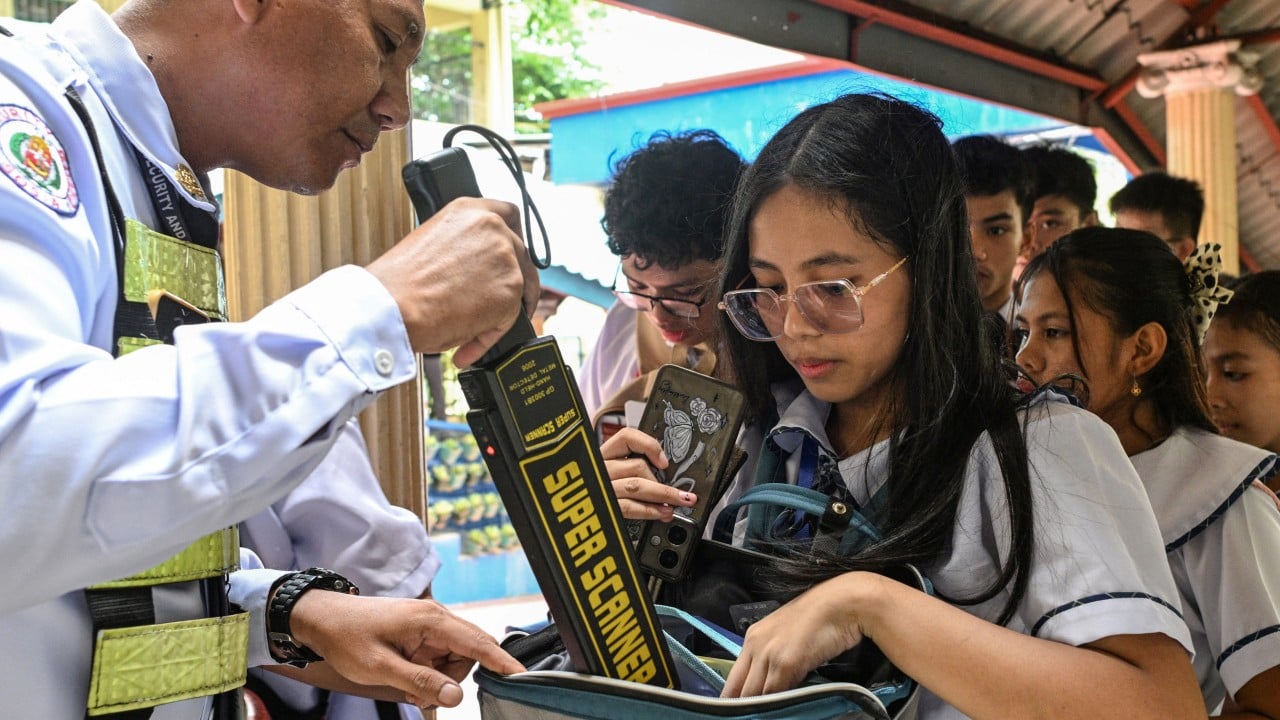
Our schools are visibly struggling, and the response from leadership has been utterly superficial. The current strategy relies on panic-induced optics. The police are demanding that people stop sharing graphic videos of the school attacks on TikTok and Facebook to stop the cycle of trauma. The government bans a game. School security guards check backpacks a little more thoroughly at the gate for a week or two.
None of this addresses the actual breakdown occurring inside the classrooms. Bullying in Philippine schools is rampant, structural, and rarely dealt with effectively. Guidance counseling offices are understaffed, underfunded, and often treated as a place for punishment rather than mental health support. When a student is pushed to the brink, there's no safety net to catch them before they look for a weapon.
Where We Go From Here
If we want to stop the next school tragedy, we have to drop the moral panic and focus on actions that actually move the needle. Pretending a digital ban solves real-world violence won't save a single life.
First, we need real accountability regarding firearm access. If a minor gets their hands on a gun, the adult who owned, stored, or failed to secure that weapon needs to face severe criminal liability. We have to stop treating loose firearms in the home as a normal part of Filipino household security.
Second, schools have to completely revamp how they handle bullying and mental health. A single, overwhelmed guidance counselor for a school of 1,500 students is a recipe for disaster. We need active peer-monitoring systems and accessible mental health support that catches signs of severe social isolation and radicalization before it turns into violence.
Lastly, parents need to look at what their kids are doing online, but not just to check what games they've downloaded. Look at the communities they belong to. Look at who they talk to when they feel rejected by their classmates. The digital world is a symptom, not the cause. Until we fix the physical isolation, the bullying, and the easy access to deadly weapons, no amount of blocked apps will keep our classrooms safe.