Military analysts keep throwing around the phrase "World War I-level casualties" when talking about Russia's war in Ukraine, and honestly, the comparison isn't just media hyperbole. Western intelligence agencies, including the UK Ministry of Defence and the Pentagon, have tracked Russian losses climbing past the 700,000 to 800,000 mark when you combine the dead and wounded. That's a staggering figure for a modern European conflict. Yet if you read most news headlines, you'd think the Russian military is on the verge of immediate collapse.
It isn't.
Understanding Russian casualties in Ukraine requires looking past the raw shock value of the death toll and examining how Moscow actually absorbs these losses. When I look at the data compiled by open-source intelligence groups like Mediazona and BBC News Russian alongside Western defense estimates, a very different picture emerges. Russia isn't fighting a 21st-century precision war anymore. They've deliberately reverted to an attrition model where human lives are traded for a few hundred meters of ruined terrain in the Donbas.
Why The World War I Comparison Actually Holds Up
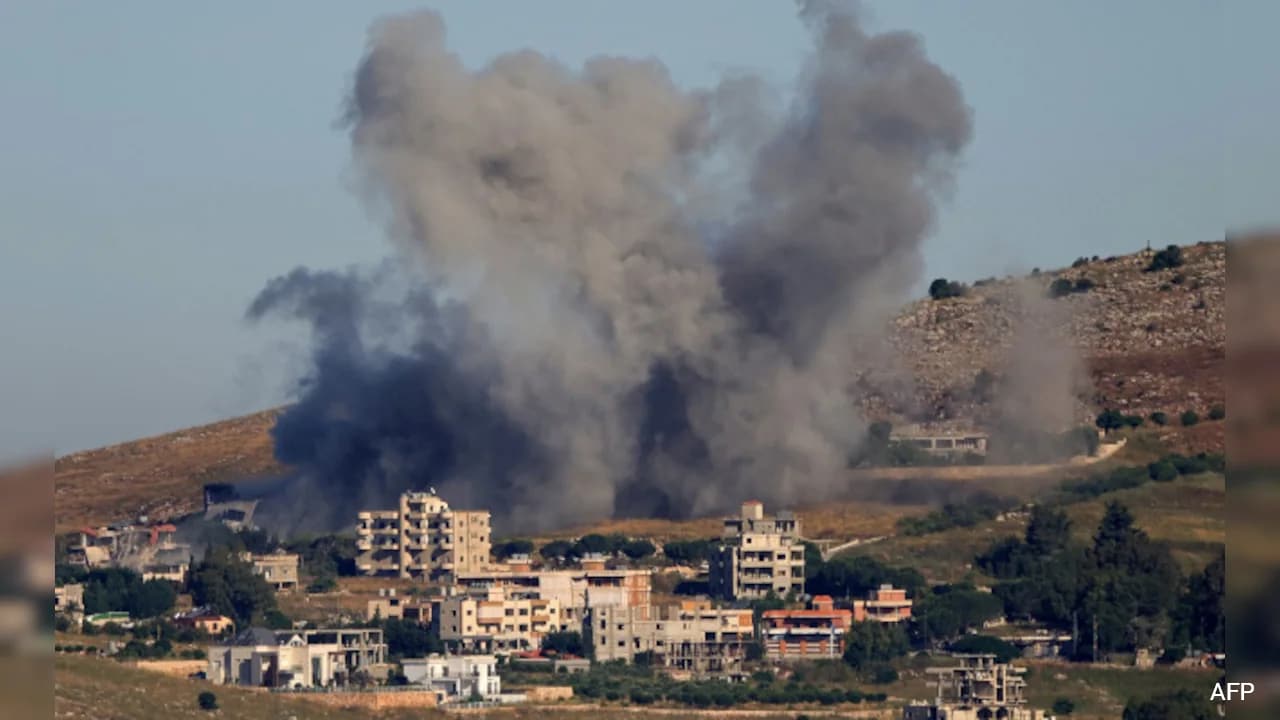
When defense officials compare the fighting in eastern Ukraine to the Western Front of 1916, they aren't exaggerating the tactical reality on the ground. Walk through the satellite imagery of towns like Bakhmut, Avdiivka, or Chasiv Yar. There's nothing left standing. Every treeline is splintered, every basement is a bunker, and every open field is watched by cheap commercial drones carrying mortar shells.
In World War I, generals threw waves of infantry across no-man's-land into machine-gun fire, hoping to exhaust the enemy's ammunition and morale before their own ranks ran dry. Russia has adapted that exact logic for the drone age. Instead of massive tank columns—which Ukrainian anti-tank teams and artillery shredded during the first year of the invasion—Russian commanders now rely on small, dismounted assault groups. Sometimes it's just five or ten men sent forward on foot, or even on dirt bikes and golf carts, to draw Ukrainian fire.
Once Ukrainian positions reveal themselves by shooting at these forward squads, Russian artillery and glide bombs pound the coordinates. Then another small group goes in. And another.
You don't need advanced military training to see why this drives casualties through the roof. The UK Ministry of Defence noted several months during 2024 and 2025 where average daily Russian casualties—killed and wounded combined—consistently topped 1,000 to 1,500 men per day. To put that in perspective, during the entire ten-year Soviet war in Afghanistan, the USSR lost roughly 15,000 soldiers killed. Russia has routinely lost more men than that in a single month in Ukraine.
Counting The Dead When Moscow Hides The Numbers
If you're trying to figure out the exact number of dead Russian soldiers, you're going to hit a wall of state secrecy. The Kremlin hasn't released an official casualty update since September 2022, when Defense Minister Sergei Shoigu claimed fewer than 6,000 troops had died. Nobody outside Russian state television took that seriously then, and it's laughable now.
So how do we know the losses are so massive? We have to triangulate from three distinct buckets of evidence:
- Open-source confirmation by name. Journalists at BBC News Russian and the independent outlet Mediazona have spent years scraping local newspapers, social media posts from grieving relatives, regional government announcements, and cemetery expansions. By late 2025, they had confirmed well over 80,000 individual names of dead Russian soldiers. Because not every death is publicly announced, researchers treat this number as an absolute floor, not a ceiling.
- Probate registry spikes. Mediazona and Meduza cross-referenced Russia's national inheritance registry against excess male mortality data. When a man dies, his family eventually files probate paperwork. By tracking the sudden, unnatural surge in inheritance cases among men aged 18 to 50, statisticians estimated that actual combat deaths were roughly double the publicly named count.
- Western intelligence ratios. Defense officials in London and Washington look at hospital admissions, intercepted military communications, satellite imagery of field morgues, and battlefield attrition rates. In modern warfare, the ratio of wounded to killed usually sits around three-to-one or four-to-one. Because Russian battlefield medicine is notoriously poor—troops often bleed out waiting for evacuation under drone surveillance—their ratio skews closer to two-to-one or three-to-one.
When you put those three methods together, the math gets grim fast. Even conservative estimates put Russian fatalities somewhere between 150,000 and 200,000, with total casualties easily clearing 700,000.
Who Is Actually Dying In The Trenches
Here's the part most Western commentators miss when they ask why Russians haven't risen up against Vladimir Putin over these casualties. If you live in Moscow or St. Petersburg, the war feels surprisingly distant. Cafes are full, businesses operate normally, and the police rarely snatch young men off the subway anymore.
Putin learned a hard lesson from the chaotic partial mobilization of September 2022, when hundreds of thousands of educated, urban Russians fled the country to Georgia, Kazakhstan, and Armenia. The Kremlin realized that drafting middle-class kids from major cities creates immediate political blowback. So they changed the recruitment model entirely.
Instead of a politically risky second wave of forced conscription, Moscow turned the war into a massive wealth-transfer program aimed at Russia's poorest regions.
If you live in an impoverished republic like Buryatia, Tuva, or Dagestan, or in a decaying industrial town in Siberia, average monthly wages might hover around 30,000 to 40,000 rubles. Suddenly, the Ministry of Defense offers a signing bonus that can reach two or three million rubles upfront—enough to buy an apartment or clear a lifetime of family debt—plus a monthly salary several times higher than anything available locally.
The result is a stark demographic skew. A soldier from Tuva or Buryatia is dozens of times more likely to die in Ukraine than a resident of Moscow. Add to that tens of thousands of prison inmates recruited first by the Wagner Group and later directly by the Defense Ministry, plus foreign recruits lured from Nepal, Cuba, Central Asia, and North Korea, and you start to understand the Kremlin's insulation. The people dying in the mud of eastern Ukraine are largely invisible to the urban elites whose political loyalty Putin actually needs to maintain.
The Myth Of Russian Manpower Exhaustion
Every few months, an armchair general on social media declares that Russia is about to run out of soldiers. I've seen this prediction fail repeatedly since 2022. While Russia's equipment stockpiles—specifically Soviet-era tanks, infantry fighting vehicles, and artillery barrels—are visibly shrinking on satellite images of storage depots, their manpower pipeline has proven stubbornly resilient.
Russia has a population of roughly 144 million people, more than three times the population of Ukraine. Every year, hundreds of thousands of young Russian men turn 18. While regular conscripts aren't legally supposed to be sent into combat zones in Ukraine (though plenty were caught in Kursk when Ukraine launched its cross-border incursion), commanders relentlessly pressure them to sign professional contracts once their mandatory year of service ends.
By continuously hiking signing bonuses, Moscow has managed to recruit around 25,000 to 30,000 contract soldiers every single month. That number barely covers their monthly casualty rate, which explains why the Russian military isn't growing dramatically in quality or launching sweeping, hundred-mile armored breakthroughs. Instead, they're running on a demographic treadmill—replacing dead and crippled veterans with hastily trained recruits who get two or three weeks of basic instruction before being sent to plug a hole in the line.
It's a brutal, inefficient system that destroys unit cohesion. Veteran officers are dead, non-commissioned officers are scarce, and surviving squads rarely trust the new arrivals. Yet for grinding down Ukrainian defenders who face their own severe manpower shortages, sheer volume still works.
What These Losses Mean For Russia After The Shooting Stops
Even if Putin manages to keep feeding men into the grinder without triggering a domestic revolt today, he's creating a demographic and economic time bomb that will detonate across Russia for decades.
Russia already had a terrible demographic problem before February 2022. A low birth rate, high male mortality from alcoholism and cardiovascular disease, and the lingering echo of World War II population drops meant the working-age population was already shrinking. Now, remove three-quarters of a million young and middle-aged men from the productive economy—either because they're dead, permanently disabled with missing limbs and traumatic brain injuries, or living in exile abroad.
The labor shortage inside Russia is already acute. Factories making artillery shells and drones are poaching workers from civilian industries by offering inflated wages, which in turn fuels stubborn inflation and forces the Russian Central Bank to keep interest rates near 20 percent. There simply aren't enough truck drivers, welders, mechanics, or engineers to keep the civilian economy running smoothly while sustaining a massive war effort.
There's also the social cost of hundreds of thousands of traumatized veterans returning home. When Russia pardoned violent criminals—including murderers and rapists—in exchange for surviving six months on the front lines, crime rates immediately ticked upward in the regions those men returned to. Combine untreated PTSD, physical disabilities, economic stagnation, and widespread access to smuggled weapons, and Russia is setting itself up for a repeat of the violent social instability that followed the Afghan war in the late 1980s and 1990s.
How To Read Future Casualty Reports Without Getting Misled
If you want to follow this conflict accurately without falling for propaganda from either side, stop looking at daily casualty counters in isolation. A single day with 1,200 Russian losses doesn't mean the front is collapsing, and a week of quieter numbers doesn't mean Moscow is running out of troops.
Pay attention to three real indicators instead:
- Changes in regional signing bonuses. When Russian governors suddenly double or triple the cash payout for signing a military contract, it's a reliable signal that voluntary recruitment is drying up and local officials are panicking to meet Kremlin quotas.
- The age and medical fitness of prisoners of war. Videos and reports of captured Russian soldiers increasingly featuring men in their late 50s, or recruits with chronic illnesses like hepatitis and HIV, tell you far more about the degrading quality of the Russian army than any press release.
- Equipment-to-infantry ratios. Watch whether Russian assaults are backed by armored vehicles or rely entirely on unarmored civilian cars, motorcycles, and foot soldiers. High casualty rates paired with shrinking armor support show an army trading human bodies to compensate for lost hardware.
Numbers like 700,000 or 800,000 casualties are hard for the human brain to process because they turn individual tragedies into abstract statistics. Just remember that behind those World War I-style figures isn't an invincible war machine—it's a political system betting that it can outlast Western patience by burning through an entire generation of its own citizens.