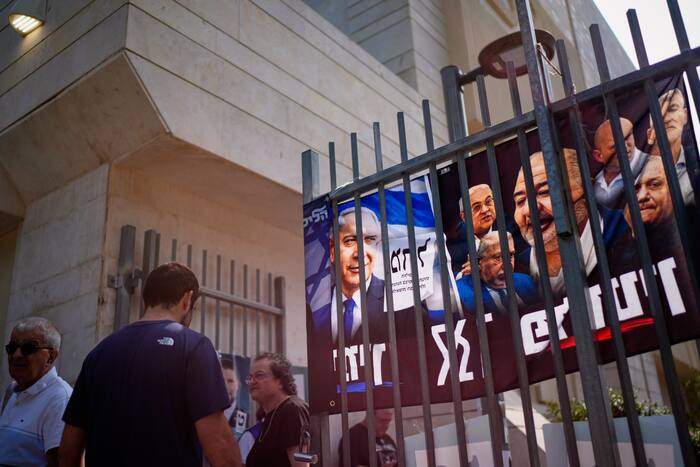
Counting the ballots is the easy part. In Israel, election night doesn't actually give you a winner—it just hands out poker chips for a month-long backroom brawl.
If you're watching Israel election results from abroad, it's tempting to look at whoever finishes first and assume they'll be the next Prime Minister. That's a classic mistake. Because of Israel's hyper-proportional parliamentary system, finishing first means very little if you can't cobble together 61 seats in the 120-member Knesset. I've followed Israeli political cycles for years, and the gap between what voters think they decided on Tuesday night and what actually emerges from Jerusalem hotel suites three weeks later never stops catching international observers off guard.
Right now, the raw numbers are only the opening whistle. Here is how the post-election machinery actually grinds forward, why the initial headlines mislead people, and the specific legal and political bottlenecks that will determine who governs next.
Why First Place Often Loses in the Knesset
Israel uses a pure proportional representation system with a single nationwide district. Every ballot cast across the country goes into one giant pool, and any party clearing the 3.25% electoral threshold gets seats roughly matching its share of the national vote.
Sounds democratic. In practice, it creates a fractured parliament where no single party has ever won an outright majority in the country's history. Not once since 1948.
When a party wins 28 or 32 seats, media outlets outside the region frequently frame that leader as the "presumptive winner." That framing misses the entire game. You don't need the biggest party; you need a blocking majority. If the second-place party only wins 22 seats, its leader can still become Prime Minister tomorrow if three or four smaller ideological allies bring 40 more seats to the table.
The real magic number isn't first place. It's 61.
The Electoral Threshold Trap
Before anyone even starts adding up coalitions, the 3.25% threshold acts like a guillotine. Under Israel's Basic Law, a party that gets 3.24% of the vote gets zero seats. Those votes don't just disappear—they mathematically inflate the seat counts of the parties that survived via the Bader-Ofer method, a complex formula that rewards larger party alliances with leftover seats.
You've probably seen elections where two blocs are deadlocked in the popular vote, yet one side walks away with a comfortable parliamentary majority. Almost every time, that happens because a small party on the losing side fell a few thousand votes short of 3.25%, burning tens of thousands of ballots in the process. When reading post-election breakdowns, check the "wasted vote" tally first. It explains way more than the exit polls do.
The President's Role After the Ballots Close
Once the Central Elections Committee certifies the official tally—usually within eight days of the vote—the spotlight shifts from voters to the President of Israel. While the presidency is largely ceremonial, this specific constitutional duty carries massive leverage.
The President invites representatives from every faction elected to the Knesset for televised consultations at Beit HaNasi in Jerusalem. Each party leader walks in, sits down, and formally recommends one Knesset member to form the next government.
They don't have to pick the leader of the largest party. They don't even have to pick someone they plan to sit with in a coalition. Sometimes a party recommends nobody at all just to deny a rival momentum.
The 28-Day Clock
After tallying those recommendations, the President assigns the mandate to form a government to the candidate with the highest realistic chance of assembling a 61-seat coalition. From that moment, a strict legal countdown begins:
- The designated candidate gets 28 days to negotiate coalition agreements and present a cabinet to the Knesset.
- If they can't close the deal in time, the President can grant a single extension of up to 14 days, though presidents have occasionally withheld the full extension if talks look hopelessly deadlocked.
- If the first candidate fails completely, the President can either hand the mandate to a second candidate (who gets another 28 days) or throw the decision straight to the Knesset itself.
- Should the Knesset receive the mandate, any member who gathers 61 signatures within 21 days gets a shot at forming the cabinet.
If every single one of those steps fails? The Knesset automatically dissolves, and Israelis head right back to the ballot box. Between 2019 and 2022, that exact failure loop triggered five national elections in less than four years.
Coalition Deals Are Where Policy Actually Gets Written
Western democracies usually treat party platforms like rough promises. In Israel, coalition agreements are granular, quasi-legal contracts that dictate everything from ministerial budgets to specific legislation scheduled for the first 90 days.
Honestly, this is where small parties wield absurd power. If a Prime Minister-designate sits at 58 seats and a four-seat faction holds the keys to 61, that tiny faction can demand key ministries—Finance, Interior, Defense, or Public Security—plus billions of shekels in targeted funding.
And those agreements aren't secret. Under Israeli law, coalition deals must be submitted to the Knesset Secretariat and published publicly at least 24 hours before the new government faces its confidence vote. Watch that 24-hour window closely. That's when the real policy shifts show up in black and white, often contradicting what the larger parties promised on the campaign trail a week earlier.
The Rotation Trap
When two major rivals can't beat each other—and neither wants another election—they sometimes invent a rotation government. Two leaders agree to split the four-year term, with one serving as Prime Minister for two years and the other taking over for the remaining two as "Alternate Prime Minister."
It sounds clever on paper. In reality, rotation governments rarely survive long enough for the second guy to move into the Prime Minister's office on Balfour Street. The first Prime Minister almost always finds a budget dispute or a security crisis to collapse the coalition right before the handover date. Whenever post-election pundits start floating a rotation deal, treat it as a temporary truce, not a stable four-year government.
Four Flashpoints That Make or Break Negotiations
Every Israeli coalition negotiation looks chaotic from the outside, yet the gridlock almost always boils down to the same four structural fault lines. If you want to predict whether talks will succeed or collapse, ignore the daily press leaks and track these four issues instead.
1. Judicial Authority and Governance
The balance of power between the Knesset and Israel's Supreme Court remains one of the sharpest dividers in Israeli politics. Because Israel lacks a formal, single-document constitution—relying instead on a series of Basic Laws—the Supreme Court exercises broad judicial review over government actions and legislation.
Right-wing and religious factions frequently demand legislation to curb judicial intervention, alter the Judicial Selection Committee, or pass an "override clause" allowing a simple 61-seat Knesset majority to reinstate laws struck down by the court. Center and left-wing parties treat judicial independence as a non-negotiable red line. If a potential coalition bridges both camps, this single issue usually blows up the negotiating room before dinner.
2. Ultra-Orthodox Military Conscription
For decades, the question of whether Haredi (ultra-Orthodox) yeshiva students should be drafted into the Israel Defense Forces has toppled governments. Secular and national-religious voters increasingly demand equal burden-sharing, especially during periods of prolonged military mobilization. Meanwhile, Haredi parties view state-protected Torah study as existential and refuse to join any coalition that enforces strict draft quotas or cuts stipends for non-enlisting students.
The Supreme Court has repeatedly struck down blanket exemptions, forcing politicians to draft new conscription laws every few years. Any math that relies on Haredi factions requires solving this puzzle first.
3. The State Budget Deadline
Forming a government is only step one. Under Israel's Basic Law, a newly sworn-in government must pass a state budget within a strict statutory timeframe—usually around 100 to 145 days depending on the exact calendar timing. If the budget fails to pass by midnight on the deadline, the Knesset dissolves automatically. No confidence vote required. No presidential consultations. Just instant elections.
Savvy Prime Ministers know this rule inside out. If a Prime Minister wants to escape a rotation agreement or force a reset without taking the blame for firing ministers, stalling the budget is the cleanest exit ramp in Israeli politics.
4. Security Policy and Regional Diplomacy
Foreign policy often takes a back seat to domestic identity politics during campaign season, yet security realities crash the party the second coalition talks begin. Decisions over military operations, hostage negotiations, West Bank settlement construction, and diplomatic coordination with Washington quickly test whether disparate coalition partners can sit in the same security cabinet.
A narrow 61-seat coalition gives every single backbencher veto power over major strategic moves. If just two members of Knesset threaten to bolt over a ceasefire framework or territorial concession, the government loses its majority overnight.
What Happens If Nobody Reaches 61 Seats
Deadlock isn't an anomaly in Jerusalem; it's a built-in feature of a fragmented electorate. When the 28-day clock runs out and nobody has 61 hands raised in the plenum, Israel enters a transitional phase that catches many observers off guard.
The Caretaker Government Paradox
If talks fail and another election is called, the outgoing Prime Minister doesn't pack up and leave. Instead, the existing cabinet becomes a caretaker government—a legal limbo where ministers remain in office until a new coalition wins a Knesset confidence vote.
Here's the catch: a caretaker government cannot be brought down by a no-confidence vote because the Knesset has already dissolved. While the Attorney General restricts caretaker cabinets from making irreversible appointments or massive last-minute spending spree decisions right before an election, an incumbent Prime Minister can legally stay in power for months during repeated election cycles without holding a parliamentary majority.
Defectors and Split Factions
Because nobody wants to run a sixth or seventh election campaign on depleted party funds, the final days of a mandate deadline trigger intense poaching. Under Knesset rules, an individual MK who quits their party to join a rival coalition faces harsh penalties—they're barred from running with any existing Knesset faction in the next election and can't be appointed as a minister.
However, if at least one-third of a party's MKs break away together, they are legally recognized as an independent parliamentary faction. They keep their campaign financing, avoid the defection penalties, and can freely join a coalition. Whenever a party holds six, nine, or twelve seats, watch the backbenchers closely during the final week of negotiations. A sudden two- or three-person split is often how an impossible coalition suddenly hits 61.
How to Follow the Post-Election Fallout Without Getting Misled
If you're tracking the aftermath of an Israeli election over the coming weeks, tune out the cable news chyrons declaring winners and losers. Instead, watch the mechanics that actually move the needle:
- Verify the official Central Elections Committee numbers, not the TV exit polls. Exit polls routinely miss by two or three seats once the "double envelopes"—ballots cast by soldiers, diplomats, hospital patients, and prisoners—are counted 48 hours after polls close.
- Count the concrete recommendations at Beit HaNasi. Ignore what politicians say in studio interviews; only the names formally handed to the President determine who gets the first 28-day mandate.
- Read the published coalition agreements before the swearing-in vote. Look specifically at committee chairmanships—especially the Knesset Finance Committee and the Constitution, Law and Justice Committee—because whoever controls those gavels controls the legislative bottleneck.
- Watch the clock on the state budget. Until that budget passes its third and final reading in the Knesset plenum, any new Israeli government is living on borrowed time.