When a French Prime Minister moves up a minimum wage hike to quiet street protests, most international headlines treat it like a simple surrender to angry crowds. That reading misses the entire mechanical reality of how French labor economics actually work.
You've probably seen the pattern play out before. Protests erupt over inflation, purchasing power, or pension reforms, and Matignon suddenly announces that the SMIC—France's statutory minimum wage—will go up earlier than scheduled. On paper, it looks like a massive political concession. In practice, it's often a carefully calibrated pressure valve that relies on automatic inflation triggers already baked into French law, paired with political timing designed to split union coalitions before a general strike takes root. If you liked this post, you should read: this related article.
Let's strip away the cable-news drama and look at what happens under the hood when the French government accelerates a minimum wage increase.
How the French SMIC Actually Works
Unlike the United States, where the federal minimum wage can sit frozen for over a decade while Congress argues, France doesn't leave its wage floor purely to political whims. The Salaire Minimum Interprofessionnel de Croissance (SMIC) is governed by strict statutory rules under the French Labor Code. For another angle on this event, see the latest update from Associated Press.
By law, the SMIC automatically adjusts every year on January 1. That annual calculation isn't arbitrary. It combines two specific metrics tracked by INSEE (France's National Institute of Statistics and Economic Studies):
- The annual consumer price inflation rate measured for the lowest-income 20% of households.
- Half of the annual gain in purchasing power of the basic hourly wage for blue-collar and white-collar workers.
Here's the part foreign commentators constantly overlook. France also has a mandatory mid-year trigger. Whenever inflation for that lowest-income quintile rises by at least 2% since the last SMIC adjustment, the government is legally required to raise the minimum wage automatically the following month.
So when a Prime Minister steps up to a podium during intense demonstrations and announces an "accelerated" minimum wage hike, you have to ask a crucial question. Is this a genuine discretionary boost (coup de pouce), or is the government simply pulling forward an automatic inflation adjustment by a few weeks to claim political credit?
Honestly, it's usually the latter. And French union leaders know it immediately, even if the broader public takes a few days to catch on.
Why Matignon Uses Wage Timing as a Political Pressure Valve
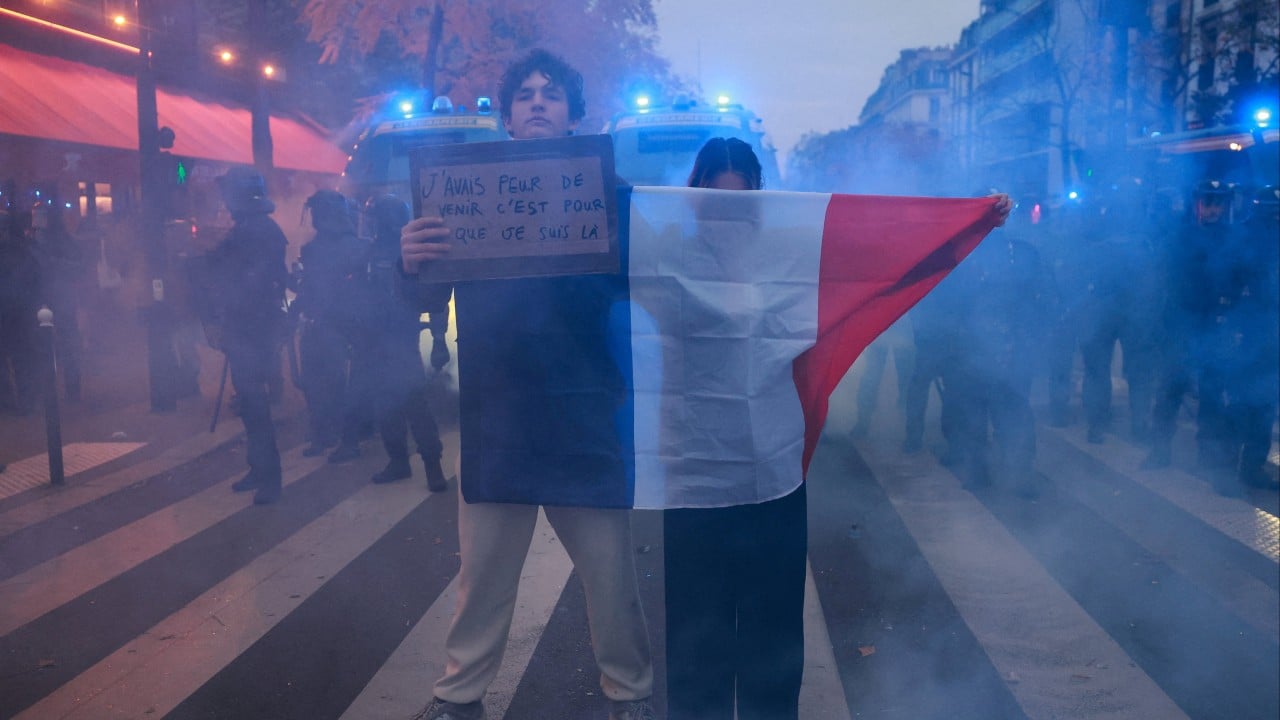
French street protests operate on momentum. Whether you're looking at the Gilets Jaunes (Yellow Vests) movement that paralyzed roundabouts in late 2018 or the massive trade union mobilizations over purchasing power and retirement ages in recent years, the French executive branch faces a recurring tactical problem. Once demonstrations cross a certain threshold, police deployments and tear gas only harden public sympathy for the protesters.
Money talks faster than riot shields.
When a Prime Minister brings forward a minimum wage hike, the goal isn't necessarily to make every protester go home happy. That rarely works. Instead, the move targets three distinct groups at once:
- Moderate unions like the CFDT. Unlike more combative confederations such as the CGT, moderate unions negotiate constantly with the state and employer federations. Giving them a concrete wage win allows their leadership to tell members that pressure worked, creating daylight between unions that want to keep striking and those ready to return to the bargaining table.
- Unorganized, working-class commuters. Many protesters aren't hardcore union militants. They're outer-ring suburban workers getting crushed by fuel, grocery, and energy bills. Seeing an immediate bump on next month's pay stub lowers the temperature at the kitchen table.
- Small-business anxiety. By announcing the timeline early—or pairing the wage bump with targeted employer social-contribution exemptions—the government tries to stop small business owners from joining the revolt over rising payroll costs.
It's a classic Parisian balancing act. Give just enough to fracture the opposition, without blowing up the national budget deficit that Brussels and bond markets are watching like hawks.
The Hidden Catch in French Minimum Wage Hikes
If you've ever managed payroll in France or studied European labor markets, you know that raising the SMIC triggers a chain reaction that doesn't happen in Anglo-Saxon economies.
In France, a huge portion of employers' social security contributions (cotisations sociales) are heavily subsidized for workers earning right at the minimum wage. Those reductions taper off sharply as wages climb toward 1.6 times the SMIC.
Think about what happens when the government pushes the SMIC upward faster than median wages.
First, you get wage compression (smicardisation). According to data repeatedly flagged by France's independent SMIC expert group (Groupe d'experts sur le SMIC), the share of French private-sector employees paid at the minimum wage jumped significantly during high-inflation periods, climbing from roughly 12% in 2021 to over 17% by 2023. When the floor rises rapidly, workers earning 10% or 15% above the minimum suddenly find themselves right back on the floor. Their relative skill premium vanishes overnight.
Second, employers face a steep marginal cost wall. Giving a minimum-wage worker a modest raise above the new SMIC doesn't just cost the employer the gross wage increase; it also strips away state payroll tax exemptions. Businesses get trapped. They can't afford to give mid-tier staff commensurate raises, which fuels resentment among experienced workers who feel their seniority no longer counts for anything.
Third, the coup de pouce trap. For well over a decade, successive French administrations—spanning both center-left and center-right governments—have largely avoided granting discretionary coups de pouce above the legal formula. Even when governments announce headline-grabbing packages to calm protesters, they often rely on tax-free employer bonuses (like the Prime de partage de la valeur), energy vouchers, or pulling forward scheduled revaluations rather than permanently altering the statutory wage formula.
Why? Because permanent statutory hikes lock in higher public-sector pay scales, inflate state-subsidized payroll exemptions, and erode export competitiveness against neighbors like Germany.
Why Protesters Rarely Stop Marching After a Wage Announcement
If bringing forward a wage hike is such a clever political maneuver, why do protests in France so often keep rolling anyway?
Because inflation eats nominal gains before the ink dries on the decree in the Journal Officiel.
When grocery prices, electricity tariffs, and rent are climbing fast, a 1.5% or 2% bump in the monthly net SMIC translates to roughly twenty or thirty euros in a worker's bank account. Nobody turns down thirty euros. Yet if your weekly supermarket run just went up by twenty-five euros, that early wage adjustment feels less like generosity and more like running up a down escalator.
There's also a deep-seated skepticism toward executive announcements in France. French voters have long memories. They remember the December 2018 televised address during the Yellow Vests crisis, when President Emmanuel Macron announced a 100-euro monthly boost for minimum-wage earners—only for citizens to later dissect how much of that sum came from an accelerated expansion of the existing Prime d'activité (in-work tax credit) rather than a pure base-wage increase from employers.
Once people feel the government is playing accounting games with their paychecks, trust evaporates. Protests stop being strictly about a specific euro figure and morph into a broader referendum on respect, purchasing power, and democratic legitimacy.
What Employers and Workers Should Watch Next
Whenever Paris accelerates a minimum wage adjustment during civil unrest, don't stop at the headline percentage. If you're tracking the economic fallout—or running a business with French payroll exposure—focus on three specific details in the official decree:
- Gross vs. Net Impact: Check whether the boost comes from an actual increase in the hourly gross SMIC (SMIC horaire brut) or through state-funded in-work benefits. Only a gross increase lifts overtime rates and sector-wide collective bargaining minimums (minima de branche).
- Sectoral Wage Grids (Grilles de classification): In France, dozens of industry-level collective agreements routinely fall behind the statutory SMIC whenever inflation spikes. Watch how quickly the Labor Ministry pressures employer federations to renegotiate entry-level pay scales so skilled workers aren't stuck at the legal floor.
- Payroll Tax Relief Thresholds: Look closely at the Finance Bill (Projet de loi de finances) adjustments to employer social contributions. If Matignon raises the SMIC early without adjusting the exemption curve, labor-intensive sectors like hospitality, retail, and construction will immediately pass those costs onto consumers—feeding the exact inflation cycle the protesters were angry about in the first place.
To read past the political spin on any French wage announcement, go straight to the source: check the official monthly revaluation notices published by the French Ministry of Labor (Ministère du Travail) alongside the household inflation breakdowns from INSEE, where the gap between political theater and actual purchasing power shows up in plain numbers.