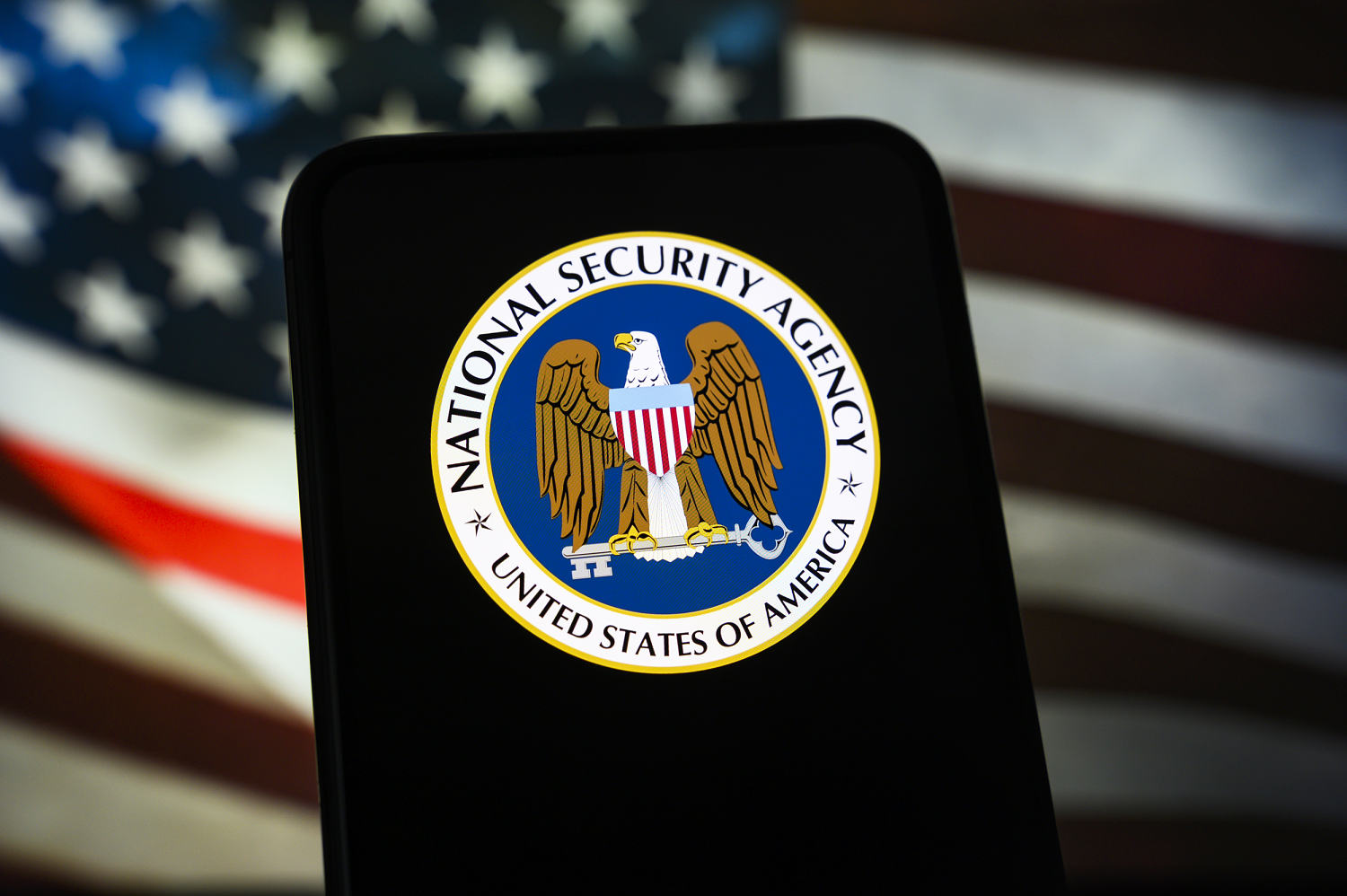
When news breaks that a classified NSA network went down, everyone immediately screams "cyberattack." It's the obvious reflex. We've all watched too many thrillers where a hooded hacker in a dark basement types furiously and brings an intelligence agency to its knees.
Here's the reality. Most high-profile outages inside top-secret government infrastructure aren't caused by foreign adversaries at all. Recently making waves recently: Why Diehard Print Readers Are Finally Buying E-Readers And Which Six Devices Actually Earn Their Trust.
According to multiple sources familiar with federal cybersecurity incidents, when a classified National Security Agency network experiences a major disruption, initial forensics routinely show zero indication of an external attack. Instead, the culprit is usually something far more mundane, yet equally terrifying for enterprise engineers. A bad configuration push. A failing core router. An expired certificate buried deep inside an air-gapped architecture.
Honestly, the panic around these events tells us more about public misconceptions than actual intelligence vulnerabilities. If you work in infrastructure or security engineering, you already know that complexity is the real enemy. Further insights on this are detailed by TechCrunch.
Why Classified NSA Networks Are Built Differently
To understand how an NSA network drops offline without a single malicious packet crossing a firewall, you have to understand how these systems are actually built. They don't look anything like the commercial cloud environments you and I manage on AWS or Azure.
The NSA operates multiple tiers of classified environments. The most well-known across the broader intelligence community are SIPRNet (Secret Internet Protocol Router Network) and JWICS (Joint Worldwide Intelligence Communications System), which handles Top Secret and Sensitive Compartmented Information. Beyond those sit the agency's own internal, compartmentalized networks—like NSANet—designed specifically for signals intelligence processing and cryptographic analysis.
These systems are physically isolated from the public internet. Air-gapped. You can't just send a phishing email to an analyst sitting at a JWICS terminal and expect to pivot from their workstation to a core database.
Because they're isolated, they can't rely on automatic cloud updates or standard third-party SaaS telemetry. Everything has to be manually vetted, imported across strict cross-domain guards, and deployed internally. That isolation protects them from external hackers. It also creates massive operational friction.
When something breaks inside an air-gapped environment, engineers can't just Google the error code from the affected terminal or pull a quick patch from a vendor's repository. Troubleshooting happens in high-security facilities, often under strict compartmentalization where one engineering team isn't even allowed to see the full topology managed by another team.
The Anatomy of a Non-Attack Outage
If foreign intelligence services aren't pulling the plug, what actually takes down a classified network? Having spent years dealing with large-scale enterprise outages, I can tell you the failure modes in hyper-secure environments follow a very specific pattern.
Cascading Configuration Errors
In massive, tightly coupled networks, a single mistyped BGP (Border Gateway Protocol) route or an overly aggressive firewall rule doesn't just block traffic. It creates a routing black hole. Because classified networks prioritize security over availability—a concept known in security architecture as failing closed—defensive systems will instantly sever connections if they detect anomalous state changes.
Think about that for a second. Your commercial ISP wants to keep your Netflix streaming even if a router is acting weird. They fail open. The NSA does the exact opposite. If a cryptographic module loses sync or a routing table looks corrupted, the system locks the doors and drops the link to prevent potential data leakage.
Hardware and Cryptographic Attrition
Classified traffic isn't just encrypted with standard TLS. It relies on specialized hardware encryption devices—known as Type 1 encryptors—certified by the NSA itself. These physical boxes sit between network segments and handle high-speed link encryption.
Like any physical hardware, they fail. Power supplies burn out. Optical transceivers degrade. Sometimes a firmware update intended to patch a theoretical side-channel vulnerability introduces a timing bug that causes the encryptors to drop synchronization across an entire backbone link. When those boxes lose sync, traffic stops dead. Instantly.
The Certificate and Key Expiry Trap
You'd be shocked how often multi-billion-dollar infrastructures trip over basic Public Key Infrastructure (PKI) hygiene. Every device, server, and user session on a classified network requires valid cryptographic certificates.
In an air-gapped world, automating certificate rotation without introducing a single point of failure is notoriously difficult. If a root or intermediate certificate expires unnoticed over a weekend, authentication servers reject every handshake. To the end user sitting at their desk, the network simply vanishes.
What Happens Behind Closed Doors During an Outage
When a classified network goes dark, the incident response protocol kicks into overdrive immediately. Even when telemetry screams "hardware failure" or "bad config," intelligence agencies can't afford to assume innocence. They have to prove a negative.
First, incident responders isolate the affected enclaves. They pull full packet captures and system logs from out-of-band management networks—separate, low-bandwidth channels used exclusively by administrators to monitor gear when the main pipes are clogged or dead.
Second, counterintelligence and defensive cyber teams run parallel investigations. While network engineers are frantically rolling back recent changes or swapping out line cards, threat hunters are scrubbing firmware hashes and checking physical access logs. They're looking for any sign that a supply-chain implant or an insider threat triggered the crash to cover up data exfiltration.
Only after those logs are verified clean do officials feel comfortable telling reporters or lawmakers that there's "no indication it was an attack." It isn't PR spin. It's the result of a grueling, methodical elimination process.
Why Reporting on NSA Outages Always Misses the Mark
Mainstream coverage of intelligence community tech failures almost always gets the framing wrong. Headlines focus on the drama of whether Russia, China, or Iran breached the perimeter. When sources confirm it wasn't a hack, the story quietly dies the next day.
That's a huge mistake. A non-malicious outage at the NSA is actually a fascinating case study in systemic risk.
When an intelligence agency loses internal connectivity, real-world operations slow down. Analysts can't query databases. Field reports sit in queues. Military commanders waiting on signals intelligence have to rely on alternative, sometimes slower channels. The operational impact is identical to a successful Denial-of-Service attack, even if nobody fired a digital shot.
Look at historical precedents across the federal government and major tech firms. In 2021, a routine BGP configuration change took Facebook, Instagram, and WhatsApp completely off the global internet for nearly six hours—and locked engineers out of their own physical data centers because their badge readers ran on the same network. In 2024, a flawed kernel-level update from CrowdStrike crashed 8.5 million Windows machines worldwide, grounding airlines and halting hospital surgeries without a single hacker involved.
Classified networks aren't immune to these exact same engineering realities. In fact, their strict security controls often make recovery slower and more painful than what commercial tech giants experience.
Lessons You Can Apply to Your Own Infrastructure
You probably aren't running a Top Secret signals intelligence backbone. Still, the exact mechanics that take down classified government networks will happily wreck your company's production environment if you aren't paying attention.
Stop assuming your biggest threat is an external attacker. Statistically, your own engineering team is far more likely to take down your production servers than a nation-state hacker.
Start implementing these three practices in your own environment immediately:
- Build truly out-of-band management. If your monitoring tools, VPN concentrators, and documentation wikis live on the same network infrastructure as your production traffic, an outage will blind your engineers right when they need visibility the most. Keep your recovery tools completely isolated.
- Test your fail-closed assumptions. Security teams love locking things down, but you need to know the exact blast radius when an authentication service or certificate authority goes offline. Run chaos engineering drills where you intentionally expire a non-critical cert or sever a database link to see what actually breaks.
- Automate configuration rollbacks. Human error during routine maintenance causes the vast majority of major network outages. Every router, switch, and firewall change should be deployed via infrastructure-as-code with automated dead-man switches—if the device loses contact with the controller after a config push, it should automatically revert to the last known good state within sixty seconds.
Resilience isn't about building an impenetrable wall against hackers. It's about designing systems that survive your own mistakes when nobody is attacking you at all.