Pattaya does not fit the trajectory of a standard municipal evolution. Most urban centers scale outward from industrial baselines, agricultural roots, or administrative hubs. Pattaya bypassed these conventional phases entirely, accelerating from a quiet cluster of fishing hamlets into a high-density, global entertainment enclave within a compressed thirty-year window. This shift was not accidental. It represents a deliberate consequence of geopolitical positioning, wartime logistics, and specific capital allocation strategies that linked regional maritime infrastructure directly to foreign military expenditure and subsequent mass tourism demand.
The Geopolitical Catalyst and Logistical Foundations
The modern trajectory of Pattaya began during the Vietnam War. In 1959, Thai authorities designated the area for infrastructural expansion, but the physical reality shifted permanently in the late 1960s when the United States military established a rest and recreation facility for troops stationed in Southeast Asia. Don't forget to check out our previous article on this related article.
This military intervention solved the primary hurdle of early resort development: capital and access. The United States government funded arterial road networks, specifically the construction and stabilization of routes connecting Bangkok to the eastern seaboard. Concurrently, the expansion of the nearby Utapao Air Base transformed a localized fishing community into a strategic logistics node.
Military spending injected hard currency directly into a localized, cash-poor coastal economy. Local residents pivoted rapidly from marine extraction to service-sector operations, real estate leasing, and hospitality provisioning. When the American military withdrew in the mid-1970s, the physical infrastructure remained intact, creating a vacuum that private entrepreneurs filled by redirecting the established hospitality capacity toward European, Australian, and eventually broader international civilian markets. To read more about the history here, Travel + Leisure provides an excellent breakdown.
The Real Estate Mechanics of Rapid Urbanization
Urban density in Pattaya outpaced municipal planning capabilities, creating a distinct spatial economy characterized by high land-value concentration along coastal strips and rapid speculative development inland.
Coastal Frontage Maximization
Initial development prioritized beachfront real estate, squeezing hotel and entertainment complexes into narrow strips parallel to the Gulf of Thailand. This linear urban model created severe traffic bottlenecks along Beach Road and Second Road, as access routes perpendicular to the coast remained narrow and underdeveloped.
Inland Speculative Expansion
As coastal land prices appreciated exponentially, development capital moved inland toward Third Road and the Sukhumvit Highway bypass. This secondary wave introduced high-rise condominium developments financed largely through foreign direct investment and domestic capital looking for high-yield returns outside Bangkok.
Infrastructure Lag
Municipal investment chronically lagged behind real estate absorption rates. Drainage networks, waste management facilities, and electrical grid capacities were scaled reactively rather than proactively. Consequently, seasonal monsoon rains frequently overwhelm the urban drainage system, creating systemic logistics friction that urban planners have struggled to resolve through successive master plans.
The Economic Model of the Visitor Economy
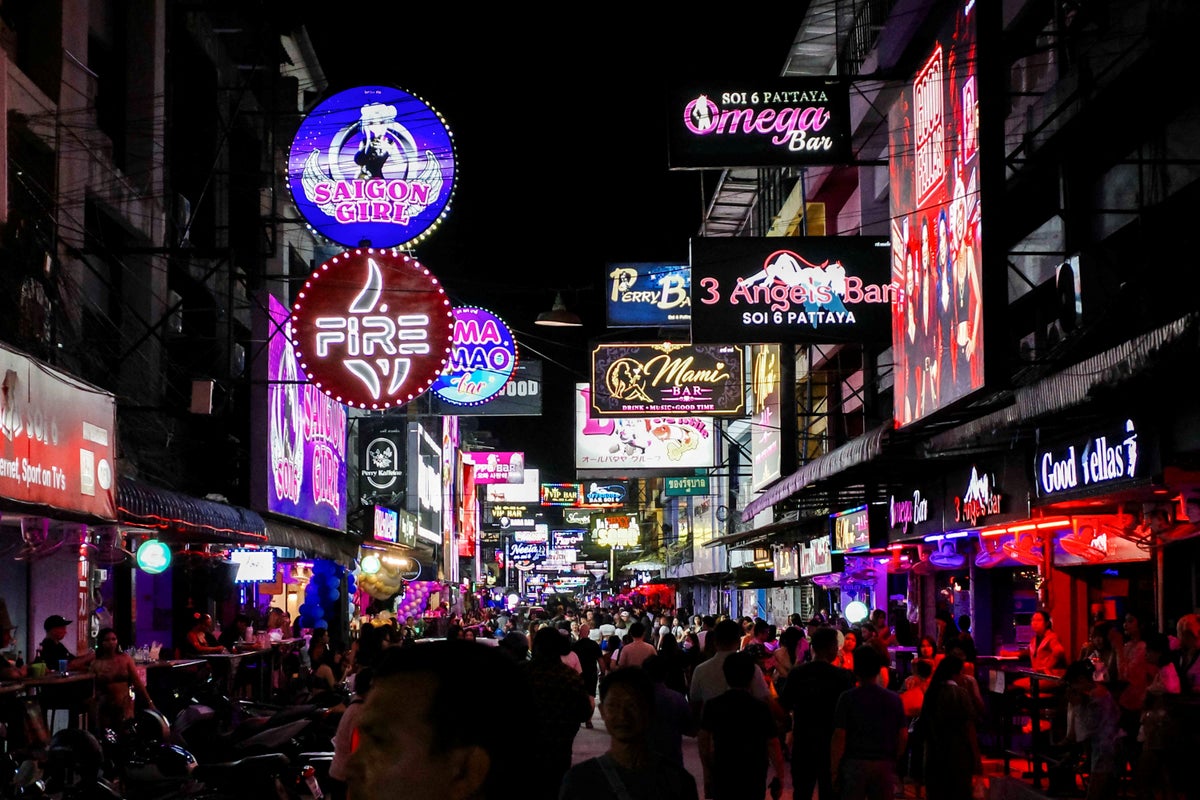
Pattaya operates on a specialized tourism economy with unique multiplier effects and structural vulnerabilities. Unlike cultural heritage destinations or eco-tourism zones, Pattaya’s economic engine relies heavily on high-frequency, low-duration visitor cycles and a concentration of entertainment, nightlife, and hospitality services.
The supply chain supporting this ecosystem is remarkably lean. Food and beverage provisioning relies on agricultural networks extending from central and northeastern Thailand, while labor imports flow continuously from rural provinces to staff hotels, restaurants, and entertainment venues. This dynamic creates high employment elasticity but subjects the local labor force to seasonal volatility and external macroeconomic shocks.
Foreign exchange dependency is another defining characteristic. Currency fluctuations directly impact the purchasing power of key demographic cohorts, shifting the balance between budget travelers and high-net-worth visitors. To mitigate this volatility, regional planners have repeatedly attempted to pivot the city’s branding toward family tourism, sports events, and corporate conventions.
The Pivot Toward Diversified Urban Infrastructure
The structural limitations of an economy built primarily around nightlife and coastal leisure forced a strategic re-evaluation by both municipal authorities and national planners under the Eastern Economic Corridor initiative.
Industrial and Logistics Integration
Pattaya is no longer isolated from heavy industry. It sits adjacent to the Map Ta Phut industrial estate and the Laem Chabang deep-sea port. The integration of high-speed rail links connecting Bangkok’s major airports to the eastern seaboard positions Pattaya as a residential and lifestyle hub for international executives, engineers, and digital professionals working within the broader economic corridor.
MICE Sector Development
Meetings, incentives, conferences, and exhibitions represent an institutional attempt to capture higher-yield business travelers. Large-scale convention facilities and luxury resort complexes have altered the demographic profile of specific zones, particularly in the northern reaches toward Wong Amat and Na Jomtien.
Environmental and Coastal Remediation
Decades of untreated wastewater discharge and coastal erosion forced a massive capital commitment to underground sanitation systems, wastewater treatment plants, and beach replenishment projects. These infrastructure investments aim to reverse ecological degradation that threatened the long-term viability of the marine tourism sector.
Urban resilience in Pattaya now depends on the successful execution of these diversification vectors. The historical reliance on a singular economic driver has been tempered by infrastructural upgrades and regional integration policies designed to stabilize long-term capital flows. The transition from a wartime rest stop to a diversified eastern seaboard hub illustrates the complex mechanics of rapid municipal scaling under intense external market forces.