The hum of a long-haul flight is a deceptive lullaby. It is a steady, mechanical vibration that masks the reality of three hundred people hurtling through the stratosphere at five hundred miles per hour inside a pressurized aluminum tube. On a flight from Hong Kong to London, that sound is the backdrop of dreams, movies, and the quiet clinking of plastic cups. But for the crew, that hum is a constant vigil. They are trained to look for things the rest of us ignore. They are watching for the thin, acrid ribbon of gray smoke that doesn't belong.
In the modern age, we don’t fear the engine failing as much as we fear the ghost in the machine—the lithium-ion battery.
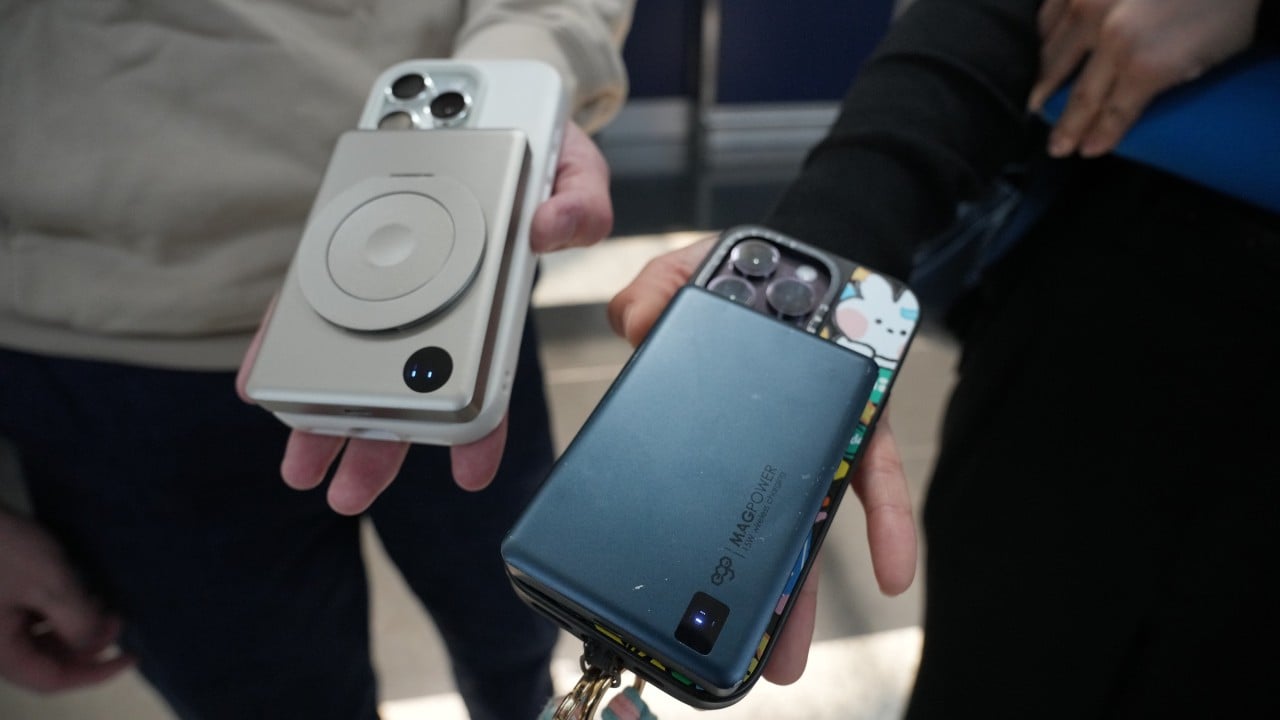
The recent shift at Hong Kong International Airport, capping power banks to a strict limit of two per passenger, isn't just another bureaucratic hoop to jump through. It is a response to a chemical reality. We carry miniature lightning bolts in our pockets. We rely on them to keep our maps alive, our business emails flowing, and our children entertained. Yet, the very density that makes these batteries so efficient also makes them a concentrated source of thermal energy.
The Physics of a Panic
To understand why a security officer is counting the rectangular bricks in your carry-on, you have to understand what happens inside a failing battery. It isn't a slow burn. It is a runaway train.
Imagine a microscopic wall, thinner than a human hair, separating two chemical chambers. If that wall is compromised—by a manufacturing defect, a drop on a hard terminal floor, or simple age—the energy isn't released through a charging cable. It is released all at once. This is thermal runaway. The temperature spikes to hundreds of degrees in seconds. It feeds itself. One cell ignites the next, and suddenly, a passenger's seat cushion is the site of a chemical fire that cannot be extinguished with water.
In the sky, you cannot pull over. You cannot open a window. You have to fight the fire where it sits.
Hong Kong’s move to align with global aviation standards is a recognition of this invisible stakes game. By limiting each traveler to two power banks—and specifically those with a capacity below 100 Watt-hours (Wh)—the authorities are managing the "fuel load" of the cabin. It is a calculation of probability. One battery is a manageable risk. Ten batteries in a single overhead bin is a potential warehouse fire at thirty thousand feet.
The Human Cost of Convenience
Consider a hypothetical traveler named Elias. Elias is a freelance videographer. His backpack is a graveyard of cables, cameras, and four high-capacity power banks. To him, these aren't hazards; they are his livelihood. When he reaches the security checkpoint at HKIA, he is frustrated. He sees the new signage. He hears the polite but firm explanation from the officer.
Elias sees a delay. The officer sees a catastrophe avoided.
The disconnect exists because we have become desensitized to the power we carry. We treat power banks like wallets or keys. But a wallet doesn't have the potential to melt through a composite floorboard. The rule states that any power bank between 100Wh and 160Wh requires prior airline approval, and anything over 160Wh is strictly forbidden. For the average user, a 20,000mAh battery usually sits around 74Wh. You are likely safe with your standard phone charger. But for the Elias types—the power users—the world just got a little more complicated.
This isn't just about Hong Kong. It is a domino effect. As one of the world's busiest logistics hubs, Hong Kong’s adoption of these strict International Air Transport Association (IATA) guidelines signals a global tightening of the net. Safety is a collective labor. It requires the passenger to be an active participant in the integrity of the flight.
The Science of the Limit
Why two? Why not three? Or one?
Aviation safety is built on the "Swiss Cheese Model." Every layer of security is a slice of cheese with holes in it. The goal is to stack enough slices so that the holes never line up. Limiting the number of batteries reduces the density of potential ignition points. If every passenger on a Boeing 777 brought five power banks, the cabin would contain over 1,500 high-energy devices. By capping it at two, that number drops to 600. The math of survival is often that simple.
There is also the matter of transparency. Cheap, unbranded power banks are the nightmares of the industry. They often lack the internal "smart" circuitry that prevents overcharging or short-circuiting. The new enforcement at Hong Kong emphasizes that the power rating must be clearly marked on the device. If the label is worn off or the text is illegible, that device stays on the ground. It is a brutal but necessary form of digital Darwinism.
The Invisible Shield
We often complain about the friction of travel. The long lines, the removal of shoes, the liquid limits. It feels like theater. But the battery limit is different. It is a response to documented incidents where "venting with flame" turned a routine flight into an emergency landing.
When you sit in Row 14, and you slide your bag under the seat in front of you, you are trusting the person in Row 15 to have followed the rules. You are trusting that their cheap, knocked-off charger isn't currently overheating against a stray coin or a paperclip.
The airport authorities aren't trying to stifle your connectivity. They are trying to ensure that the hum of the aircraft remains the only thing you hear. They are protecting the silence.
Next time you pack, look at those black bricks. Check the labels. Feel the weight. You aren't just carrying a charge for your phone. You are carrying a responsibility to the three hundred other souls sharing your oxygen.
The security officer isn't just counting your batteries. They are checking the fuse on a bomb that no one intended to build, ensuring that your only worry during the flight is whether the mid-flight meal is chicken or pasta.
The spark stays in the battery. The plane stays in the air. The story continues, uninterrupted by the heat of a mistake we can no longer afford to make.