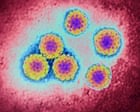
A commercial flight from Kinshasa landed at Paris-Charles de Gaulle airport on Tuesday, carrying an unsuspecting passenger. The traveler, a French doctor returning from a humanitarian mission with the medical group ALIMA in the Democratic Republic of the Congo (DRC), felt a mild headache. By the time the wheels touched down on the tarmac, their condition began to slip.
Testing soon confirmed the reality. The doctor had contracted the Ebola virus.
This marks France's first native case of the virus. More importantly, it is the first time during the current African surge that the disease has escaped the continent. The news sent immediate shockwaves through public health agencies. It shouldn't have. For weeks, the ground conditions in eastern Africa pointed toward an international leak.
The World Health Organization (WHO) and local ministries are scrambling to manage the fallout. While French officials stress the immediate risk to the European public remains low, the infection exposes a massive, fragile line in global biosecurity. The virus is moving faster than the systems built to contain it.
Inside the Numbers of the 2026 Surge
The official data coming out of Central Africa looks grim, but the reality on the ground is likely worse. The DRC is managing its 17th recorded Ebola outbreak, and the trajectory is steeper than anything health officials have seen before.
According to verified figures from the WHO and Africa CDC, the outbreak has surpassed 1,000 confirmed cases. At least 267 people have died. That puts the current fatality rate at roughly 25%. On paper, a 25% death rate looks lower than the historic 50% to 90% mortality seen in older variants like the Zaire strain. But that number hides a far more dangerous truth.
This particular crisis is driven by the Bundibugyo species of the virus. It is a rare variant. Crucially, the highly effective Ervebo vaccine used to stamp out previous outbreaks does not work against the Bundibugyo strain. There is no approved vaccine or specific antiviral therapy ready for deployment. Health workers are relying on experimental treatments currently in clinical trials, the same therapies the French doctor is now receiving in a specialized isolation unit.
The epidemic has concentrated heavily in the northeastern Ituri province of the DRC, specifically tearing through the Bunia, Rwampara, and Mongbwalu health zones. It has also spilled across the border into western Uganda.
Why This Outbreak is Evading Containment
Traditional public health strategies rely on a simple playbook: find the first patient (patient zero), isolate them, trace their contacts, and vaccinate the surrounding ring of people. That playbook is useless right now.
Epidemiologists have been unable to identify patient zero. Even worse, health agencies are struggling to keep tabs on more than 35,000 listed contacts who may have been exposed. The entire response infrastructure is colliding with a complex humanitarian crisis.
"Our teams in Ituri have met children who have lost their mothers, and in some cases both parents, to Ebola. Children are trying to make sense of the threat while surrounded by rumors and online misinformation." — Catherine Russell, UNICEF Executive Director
Several factors are making containment nearly impossible:
- Active Conflict Zones: In Ituri, attacks by the Allied Democratic Forces (ADF)—an armed group linked to Islamic State—have cut off access to entire villages. Health teams cannot safely enter these areas to test patients or track exposures.
- Mass Population Displacement: Violence has forced hundreds of thousands of people into overcrowded, temporary displacement camps. In these high-density environments, standard physical distancing is a luxury no one has.
- Weakened Surveillance: Recent funding drops and the shifting presence of international aid programs have left local clinical networks understaffed. The disease quietly infected up to 300 people before anyone formally recognized the outbreak.
- Border Volatility: The epicentre sits right where the DRC, Uganda, and South Sudan meet. Regular trade and refugee movements across these porous borders turn a localized spark into an international threat.
The Disproportionate Toll on Children
The demographics of this outbreak reveal an incredibly tragic shift. UNICEF reports that children and adolescents under 18 make up roughly 15% of all confirmed infections. However, they account for more than 25% of the total deaths.
Young people infected with this Bundibugyo strain are dying at nearly twice the rate of adults.
The reasons are deeply biological and behavioral. Children depend entirely on adult caregivers. They cannot isolate themselves from an ailing parent. When an adult falls ill, a child naturally stays close, exposing themselves directly to highly infectious bodily fluids. Furthermore, systemic malnutrition caused by the ongoing regional food crisis has left the immune systems of local children heavily compromised.
What Happens Next in Paris and Beyond
The flight manifest from the Air France commercial flight has been handed over to European health authorities. French contact-tracing teams are tracking down every passenger who sat near the infected doctor.
Because the doctor showed a low viral load upon landing and Ebola does not spread through the air like influenza or COVID-19, the risk of a widespread European outbreak is minimal. The virus requires direct contact with bodily fluids. The real concern isn't a sudden explosion of cases in Paris. The concern is the stark reminder that a biological crisis anywhere is a flight away from everywhere else.
Global health networks must pivot immediately. To stop this trajectory, international partners need to fund the outstanding $20 million gap in UNICEF’s emergency response plan. Medical groups must accelerate the field trials for Bundibugyo-specific therapeutics directly within the active transmission zones. Most importantly, regional governments must establish safe humanitarian corridors through contested territories so healthcare workers can do their jobs without staring down gunfire.
The Paris case proves that containing a virus to a remote forest is a fantasy. The only way to protect international borders is to fix the breakdown at the source.