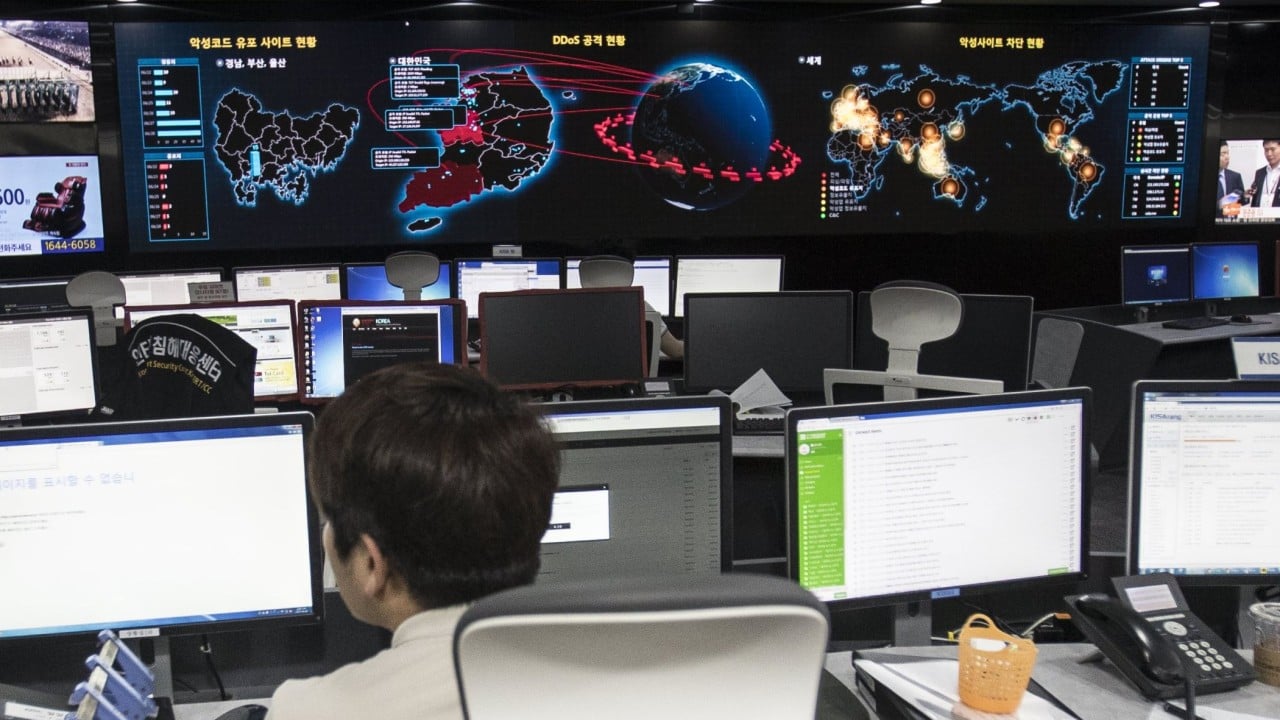
Paper ballots are the single most effective barrier against large-scale digital manipulation of election results because they decouple the vote record from the vulnerabilities of network-connected systems. While software can be silently altered from thousands of miles away, physically changing a piece of paper requires local, manual, and highly visible intervention. This physical reality creates a permanent, immutable record that can be audited to verify that the digital tallies generated by scanners match the actual intent of the voters.
The Mirage of the All-Digital Ballot Box
For decades, technology enthusiasts argued that moving elections to the screen was the natural progression of modern society. We bank on our phones, file taxes online, and manage critical infrastructure through digital dashboards. It seemed logical that voting should follow.
But this logic ignores a fundamental difference between financial systems and democratic elections.
In banking, every transaction is tied to an identity. If someone hacks your bank account and steals money, a paper trail of digital footprints exists. The bank can trace the funds, verify your identity, reverse the transaction, and absorb the loss.
Elections cannot work this way. The secret ballot is a core requirement of democratic voting. Once a vote is cast, it must be permanently disconnected from the voter's identity to prevent coercion and retaliation.
[Voter Identity] --(Separated)---> [Secret Ballot] ---> [Tabulation]
Without a physical paper ballot, an all-digital system leaves no independent audit trail. If a malicious actor alters the software of a paperless Direct Recording Electronic (DRE) voting machine, the machine will output corrupted totals. Because there is no physical backup to check against, those corrupted totals become the official record. There is no "undo" button, no transaction history to reverse, and no way to prove the count was compromised.
How Physical Paper Defeats Remote Cyberattacks
To understand why paper is so resilient, look at the logistics of a cyberattack.
A hacker targeting a digital system looks for scalability. They want to find a single vulnerability in a software update, a central database, or a network configuration that allows them to alter thousands or millions of data points simultaneously. This is the definition of a low-cost, high-yield attack.
Paper completely destroys this scalability.
Imagine a bad actor wants to alter 50,000 votes in a closely contested state. If those votes exist only as bits and bytes on a server, a single script could theoretically accomplish the task in milliseconds.
Now, imagine trying to alter 50,000 physical paper ballots.
- You must physically access secure storage facilities across dozens of local jurisdictions.
- You must bypass physical locks, security cameras, tamper-evident seals, and dual-custody logbooks maintained by bipartisan election workers.
- You must manually alter or replace thousands of sheets of specialized, weighted paper.
- You must accomplish all of this without being noticed by observers, staff, or law enforcement.
The sheer physical effort required to execute a coordinated, multi-county paper ballot manipulation scheme is staggering. It requires too many co-conspirators. It leaves too much physical evidence. It is, for all practical purposes, impossible to scale undetected.
The Scanner is Not the Final Authority
A common counter-argument is that we still use digital machines—optical scanners—to count paper ballots. If those scanners are hacked, doesn't that render the paper useless?
No. Because the paper remains the ground truth.
An optical scanner does not create the vote; it merely reads and tallies the mark made by the voter. If a scanner is infected with malware that miscounts votes, that malware cannot change the physical marks on the paper ballots resting in the ballot box beneath it.
[Voter Mark on Paper] ---> [Optical Scanner] ---> [Digital Tally (Vulnerable to Malware)]
          |
          +-------------> [Physical Ballot Box] ---> [Manual Audit (Ground Truth)]
If a discrepancy is suspected, or as part of routine post-election verification, election officials can run a manual hand count of the physical paper. If the scanner's digital tally says Candidate A won, but a physical hand count of the paper ballots reveals Candidate B actually received more votes, the physical paper legally supersedes the digital tally.
The scanner is a tool for speed, not the final authority. The paper is the anchor that prevents the digital tally from drifting into fiction.
The Vulnerability of Machine-Marked Paper
Not all paper ballot systems are created equal. This is where the debate among security experts becomes critical.
Many jurisdictions have adopted Ballot Marking Devices (BMDs). With these systems, a voter makes their selections on a touchscreen, and the machine prints a paper ballot containing their choices.
This hybrid approach introduces a subtle but significant vulnerability. Most BMDs print ballots that contain both human-readable text (e.g., "Jane Doe") and a machine-readable barcode or QR code.
+----------------------------------------+
|                                        |
|  [|||| | ||| |||| || |||]  <-- Barcode |
|  (This is what the scanner reads)      |
|                                        |
|  VOTE: Jane Doe            <-- Text    |
|  (This is what the human reads)        |
|                                        |
+----------------------------------------+
When the voter feeds this ballot into the scanner, the scanner reads the barcode, not the human-readable text.
If malware on the BMD alters the barcode to record a vote for a different candidate while leaving the human-readable text unchanged, the voter would look at the paper, see the correct name, and walk away satisfied. Yet, the scanner would count the corrupted barcode.
Study after study has shown that the vast majority of voters do not carefully review their printed ballots before casting them, and even fewer notice if a minor contest has been altered. This reality weakens the security chain.
For paper to serve as an absolute defense, the scanner must read the exact same marks that the human voter verified. This is why many election security advocates argue that hand-marked paper ballots, where the voter uses a pen to fill in an oval, remain the gold standard of election security.
The Critical Role of Risk-Limiting Audits
Having paper ballots is meaningless if they sit in locked boxes unexamined until they are destroyed. To unlock the security value of paper, jurisdictions must implement rigorous post-election audit procedures.
The most advanced method is the Risk-Limiting Audit (RLA).
An RLA is a statistically sound hand count of a sample of physical paper ballots. Instead of counting every single ballot, which is time-consuming and expensive, mathematicians calculate a specific sample size based on the margin of victory.
If the margin is wide, only a small sample of ballots needs to be checked by hand to confirm the digital tally. If the margin is razor-thin, the sample size automatically scales up, potentially triggering a full manual recount if necessary.
An RLA provides a mathematically verifiable guarantee: if the digital results were manipulated or miscounted by machines, there is a pre-determined, highly probable chance that the physical hand count of the sample will detect the error and correct the outcome.
| Audit Type | Sample Method | Scalability | Error Correction |
|---|---|---|---|
| Traditional Fixed-Percentage | Flat percentage of precincts (e.g., 1%) | Poor (same effort regardless of margin) | Low (can miss systemic errors in close races) |
| Risk-Limiting Audit (RLA) | Statistical sampling based on margin | Excellent (scales automatically to margin) | High (guaranteed to catch and correct wrong outcomes) |
Without these audits, paper ballots are like a smoke detector with no batteries. They have the potential to save you, but only if you actively maintain the system that makes them work.
The Imperfect Reality of Physical Security
While paper ballots dramatically raise the bar for attackers, they are not a magic wand. They trade cyber vulnerabilities for physical ones.
A physical system relies on chain of custody. This means that from the moment a blank ballot is printed to the moment the final certified results are archived, every movement of that paper must be documented.
This requires:
- Two-person control policies (ensuring no single individual is ever left alone with ballots).
- Numbered, tamper-evident seals on all ballot boxes and transfer cases.
- Detailed logbooks recording seal numbers and signatures at every transfer point.
- Climate-controlled, secure storage facilities with restricted access controls.
If a chain of custody is broken—even if no actual tampering occurred—the public trust in the election is compromised. A single lost box of paper ballots in a close election can trigger a crisis of legitimacy that is incredibly difficult to resolve.
Furthermore, hand counts are not immune to human error. People get tired, lose focus, and misinterpret ambiguous marks. In large-scale recounts, human tallies can vary slightly from run to run.
But these physical errors are localized, predictable, and manageable. They do not possess the systemic, silent, and instantaneous threat profile of a remote digital attack.
Securing an election is not about achieving absolute, theoretical perfection. It is about managing risk. By anchoring our voting systems to physical, hand-marked paper ballots backed by rigorous, statistically sound audits, we force any potential adversary to abandon the comfort of a keyboard and face the messy, high-risk reality of physical intervention.