Imagine a quiet evening in a border town in Estonia. The air is cold, smelling of pine and damp earth. A young woman named Elina sits at her kitchen table, watching her daughter finish a drawing. For Elina, the North Atlantic Treaty Organization isn't a collection of acronyms or a series of white papers stored in a climate-controlled room in Brussels. It is the invisible shield that allows her to buy groceries without wondering if the currency will be worthless by Tuesday. It is the reason she doesn't flinch when she hears a low-flying plane.
Then, a voice from across the Atlantic shatters the silence.
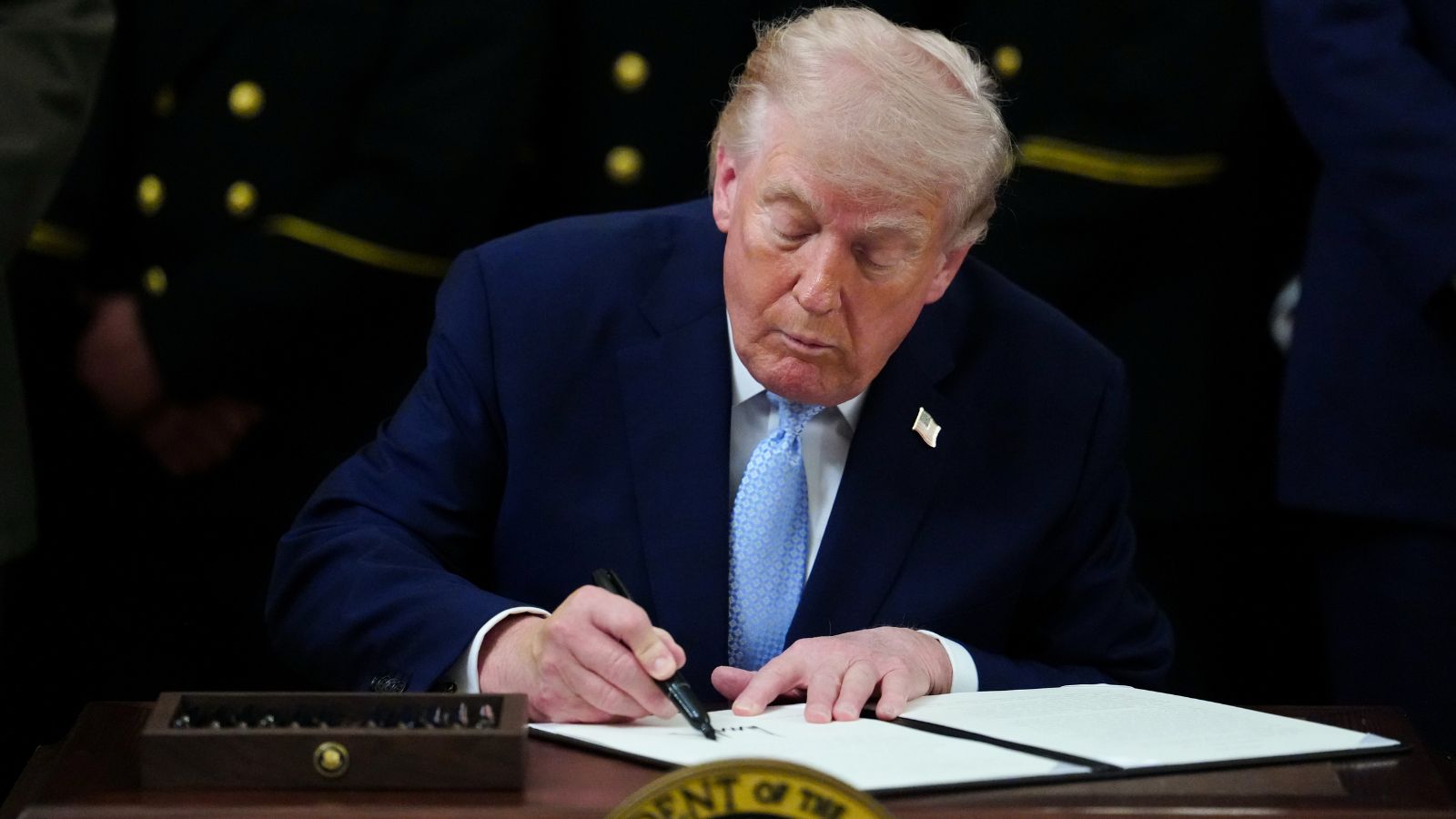
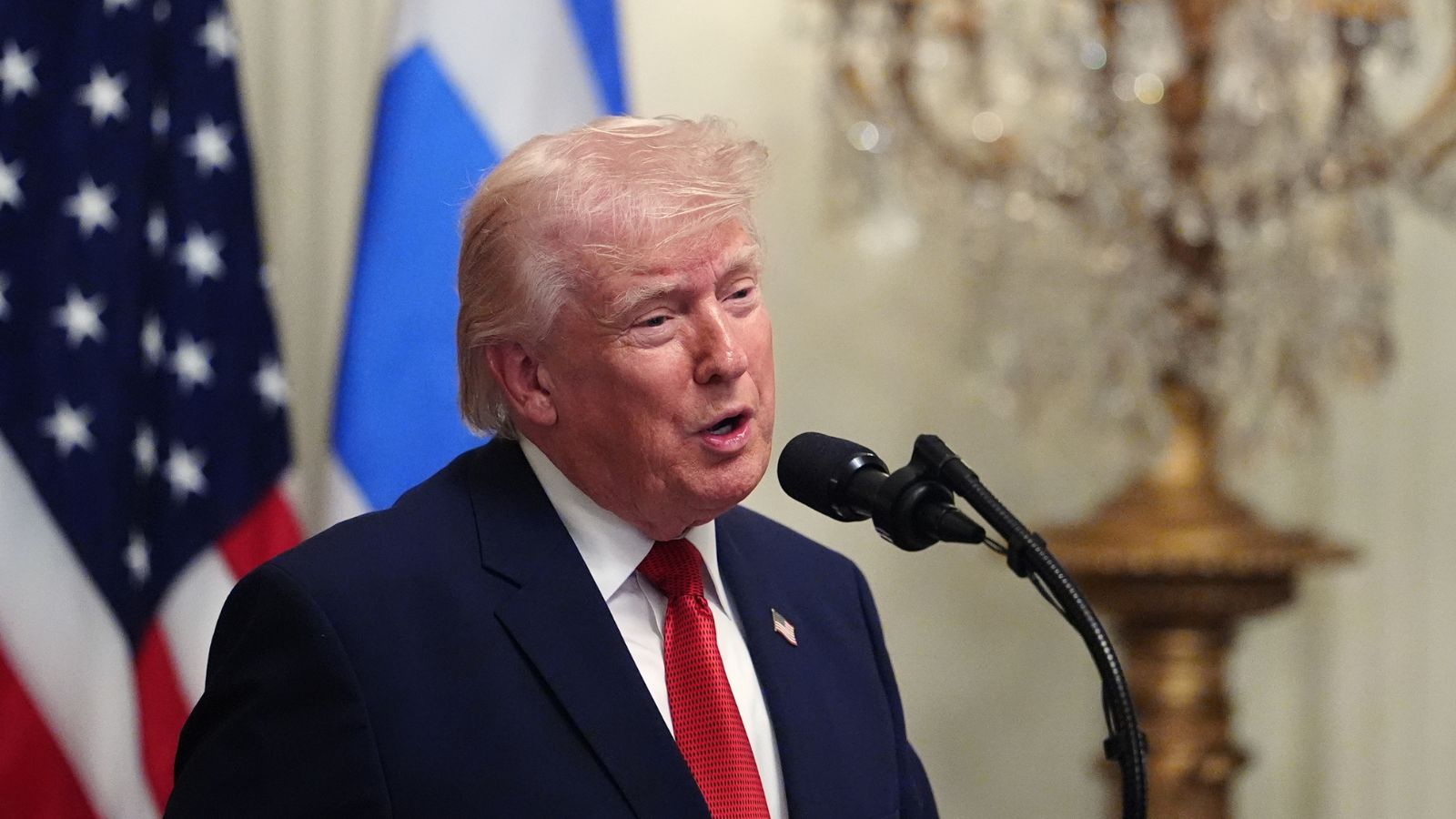
Donald Trump recently leveled a rhetorical sledgehammer at this invisible shield, branding NATO a "paper tiger." He didn't stop at the insult. He reached back into the archives of the 1980s, claiming the alliance did "nothing for us" during the Iran-Iraq War. With those few words, the architecture of global security—the very thing that keeps Elina’s world upright—was dismissed as a flimsy, useless decoration.
But metaphors are dangerous things. If you tell the world a tiger is made of paper, you aren't just critiquing a budget. You are inviting the predators to test the teeth.
The Ledger of Blood and Interest
To understand why a former president would take a blowtorch to the world’s most successful military alliance, you have to look at how he views the world. It is a ledger. Columns of red and black. In this worldview, there are no friends, only clients. There are no values, only invoices.
When Trump speaks of the Iran-Iraq War, he is looking for a specific ROI. He looks back at the "Tanker War" of the 1980s, where global oil supplies were strangled in the Persian Gulf. The United States launched Operation Earnest Will to protect Kuwaiti tankers, a massive naval undertaking that saw American sailors in the crosshairs of Iranian mines and missiles. Trump’s grievance is simple: why weren't the Europeans there? Why didn't they pay?
The reality is messier. NATO, by its very charter, is a collective defense pact for the North Atlantic. It was never designed to be a global police force for every regional skirmish. Yet, the logic of the "paper tiger" argument ignores the subtle, grinding work of the alliance that doesn't make the evening news. It ignores the fact that the only time Article 5—the "one for all" clause—was ever invoked was to defend the United States after September 11.
European soldiers didn't die in the mountains of Afghanistan because their borders were under attack. They died because ours were. That is the human currency that doesn't always show up on a businessman's balance sheet.
The Fragility of the Guarantee
Trust is the most expensive commodity on earth. It takes decades to build and roughly six seconds to incinerate.
When a leader of a superpower calls an alliance a "paper tiger," he is performing a stress test on the psychology of his enemies. Deterrence is a mind game. It works because the "other side" believes that if they cross a certain line, a massive, coordinated machine will roar to life. If you remove that belief, the machine might as well be made of cardboard.
Consider the hypothetical case of a mid-level commander in a hostile regime. For years, he has looked at the map and seen a "No Go" zone. He sees the integrated command structures, the shared radar data, and the decades of joint training. He sees a wall. But then he hears the leader of the wall’s primary builder saying the bricks are fake.
The commander starts to wonder. He starts to push. A small cyber attack here. A "lost" drone there. A troop buildup on a snowy border. He isn't looking for a world war; he is looking for a crack. He is looking to see if the paper tiger will fold.
The Cost of Going Solo
There is a seductive quality to the "America First" narrative. It whispers that we are being suckered, that we are the world’s ATM, and that we would be better off staying behind our own moats. It appeals to the exhaustion of a nation that has been at war for much of the last quarter-century.
But the "nothing for us" argument carries a hidden price tag. If the United States decides that NATO is a relic, it doesn't just walk away from a bill. It walks away from a seat at the head of the table.
Without the alliance, every trade deal becomes harder. Every intelligence-sharing agreement becomes thinner. Every time an American diplomat walks into a room, they walk in alone. The "paper tiger" rhetoric assumes that the US can dictate terms to the world without the backing of a choir. In reality, a solo act is much easier to drown out.
We saw this friction during the Iran war years that Trump cites. The US struggled to coordinate a response in the Gulf because the mechanisms of cooperation were strained. The lesson wasn't that NATO was useless; it was that when we don't act in concert, the chaos lasts longer and costs more in both gold and blood.
The Human Stakes of a Rhetorical War
Let’s go back to Elina in Estonia.
She reads the news on her phone. She sees the "paper tiger" headline. She thinks about her grandfather, who lived through an era when there were no alliances to protect the small from the large. She remembers the stories of the "disappeared," of the nights when a knock on the door meant a journey from which no one returned.
For her, NATO isn't a debating point. It is the difference between a life of quiet ambition and a life of terror. When the security of the West is debated as if it were a failed real estate development, the people living on the edges of that security feel the floor drop an inch.
The danger of this language isn't just that it might embolden an adversary. It’s that it alienates the people who have stood by us. It tells the Polish paratrooper, the British sailor, and the German technician that their contribution is invisible because it didn't arrive with a "Thank You" note written on a treasury bond.
The Invisible Shield
We live in an age of loud men and fragile systems. It is easy to point at a complex, bureaucratic organization like NATO and find its flaws. It is slow. It is expensive. Some members do, in fact, skimp on their dues, hiding behind the American taxpayer like a younger sibling hiding behind a big brother.
But calling it a "paper tiger" is a failure of imagination. It fails to see the peace that hasn't been broken. It fails to see the wars that didn't happen because someone, somewhere, decided the risk of hitting the tiger was too high.
The Iran-Iraq War was a tragedy of immense proportions, a meat-grinder that claimed a million lives. Using it as a prop to diminish the alliance that kept the Cold War from turning into a nuclear winter is a revisionist luxury. We can only call the tiger "paper" because we haven't yet had to feel its claws—or realize how cold the night becomes when the tiger is gone.
The board is being reset. The pieces are moving. In the grand theater of geopolitics, words are not just sounds; they are invitations to action. When you tell the world the shield is broken, you shouldn't be surprised when the arrows start to fly.
Somewhere, in a cold border town, a woman puts her daughter to bed and checks the lock on the door, wondering for the first time if the house is as solid as she thought.