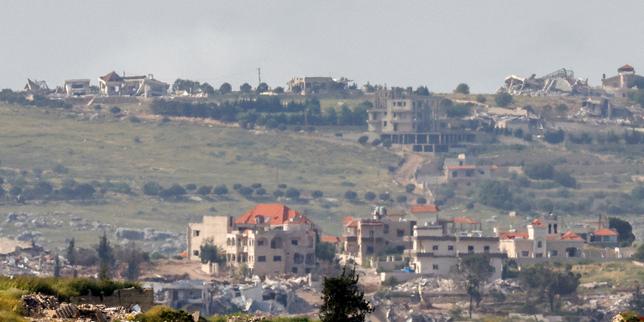
War correspondents love a tragedy wrapped in a metaphor. When artillery or an airstrike reduces a municipal building to gray dust, the narrative writes itself. The recent destruction of the cadastre—the land registry—in Bint Jbeil, South Lebanon, prompted an immediate wave of media mourning. The consensus emerged instantly: without these physical archives, the social fabric is torn, displacement becomes permanent, and residents will return to a homeland where they no longer "feel at home" because their legal identity has been vaporized.
This perspective is emotionally evocative, highly dramatic, and completely wrong.
The belief that destroying a physical land registry destroys property ownership is a 19th-century anxiety operating in a 21st-century reality. It misunderstands how ownership functions in border regions, underestimates the resilience of informal legal networks, and ignores the fact that centralized state registries have historically been tools of dispossession in the Levant rather than shields against it. Losing the paper ledger in Bint Jbeil is a logistical headache, not an existential erasure.
The Fetish of the Paper Ledger
The mainstream narrative relies on the assumption that property rights exist only when documented in a pristine, state-sanctioned vault. When that vault burns, the rights supposedly burn with it.
This view ignores the fundamental mechanics of property in historic, tight-knit communities. Property is not a relationship between a person and a piece of paper; it is a social contract between a person and their neighbors.
In towns like Bint Jbeil, land boundaries are deeply etched into collective memory, localized customs, and multi-generational consensus. If an airstrike flattens the cadastre, it does not erase the fact that everyone on a given ridge knows exactly where the Harb family’s olive grove ends and the Bazzi family’s plot begins.
Historically, formal state registries in Lebanon have been notoriously incomplete, outdated, or riddled with inaccuracies. Large swaths of rural and southern land have long relied on alternative forms of validation:
- The Hujja: Hand-written, community-witnessed deeds that predate modern state bureaucracy.
- Tax Receipts: Decades of local municipal tax records stored outside the central land registry.
- Utility Infrastructure: Decades of electrical, water, and telecom connections tied to specific names and physical coordinates.
To argue that residents will "no longer feel at home" because a government office was destroyed overestimates the average citizen's love for Lebanese state bureaucracy. Nobody's sense of belonging in South Lebanon was ever rooted in a stamp from a corrupt, gridlocked ministry in Beirut.
When the State Registry is the Actual Threat
Let’s dismantle the premise that the cadastre is the ultimate protector of the dispossessed. Throughout the history of the modern Middle East, centralized land registration has been weaponized against rural populations far more often than it has protected them.
Consider the Ottoman Land Code of 1858. The empire demanded that communal peasant lands (masha'a) be registered under individual names to streamline tax collection and conscription. Fearing taxes and the draft, local populations routinely registered vast tracts of communal land under the names of a few wealthy, distant urban elites or local notables (zu'ama). When those elites later claimed exclusive ownership, the state registry became the very instrument that dispossessed the people actually tilling the soil.
When we look at post-conflict reconstruction, a clean, centralized registry can actually accelerate gentrification and displacement. In post-war Beirut, Solidere—the joint-stock company tasked with rebuilding the central district—used state-backed eminent domain and formal property valuations to clear out historical owners and tenants. They handed them meager shares in a corporation instead of their actual properties. The formal legal apparatus did not save the historic core of Beirut; it institutionalized its corporate takeover.
In a crisis zone, a missing registry can act as a temporary shield. It freezes the status quo, making it legally impossible for predatory developers or corrupt officials to execute quick, fraudulent transfers of title while the population is displaced.
How Property Rights Survive Destruction
Property rights do not vanish when a building collapses; they decentralize. Reconstructing a land registry without the original papers is a solved problem. It has been executed repeatedly across globe-spanning conflict zones using a mix of technology and old-world sociology.
When the land registry of Kosovo was removed or destroyed in the late 1990s, international agencies didn't throw up their hands and declare ownership dead. They built a parallel mechanism. Property claims were reconstructed using a triad of data points:
- Satellite and Aerial Imagery: Pre-conflict and post-conflict imagery to map physical boundaries, fences, and structures.
- Mass Claims Processes: Standardized adjudication bodies that accepted oral testimonies, utility bills, and old family photographs as valid proof of occupancy.
- Local Knowledge Councils: Convening community elders who cross-verified claims to weed out opportunistic land-grabbing.
[Satellite Mapping] + [Community Oral Adjudication] + [Utility / Tax History]
============================================================================
                     = Bulletproof Post-War Property Title
In South Lebanon, the digital footprint of ownership is far wider than Western journalists realize. Long before the recent escalations, digital backups, private legal archives, and municipal duplicates existed. The Lebanese diaspora, which holds immense financial stakes in these properties, has meticulously digitized its own family deeds, inheritances, and boundary disputes in private cloud storage and across law offices from Michigan to West Africa.
The physical registry in Bint Jbeil was merely the mirror reflecting the reality of ownership. Breaking the mirror does not change the physical reality of the land.
The Real Threat is Not Legal, It Is Demographic
The hyper-focus on the destruction of paper documents distracts from the genuine, far more dangerous mechanism of displacement: systemic economic attrition and the unlivable transformation of the geography.
If a returning resident decides not to stay in Bint Jbeil, it won't be because they lack a certificate of registration from the cadastre. It will be because the basic elements of life have been systematically dismantled:
- The Destruction of Agrarian Economy: Olive groves take decades to mature. When white phosphorus or heavy shelling scorches agricultural land, the economic engine of the family is dead. A piece of paper cannot revive a dead orchard.
- Unexploded Ordnance (UXO): Submunitions and unexploded shells turn fields and backyards into lethal minefields, making reconstruction physically impossible regardless of who owns the title.
- The Collapse of Local Commerce: When schools, hospitals, and marketplaces are leveled, the ecosystem that makes ownership meaningful disappears.
Ownership is an economic utility. A title deed is only valuable if the land it represents can sustain life or generate capital. By framing the tragedy around a bureaucratic loss, commentators sanitize the raw, physical destruction of the environment into a manageable, Westernized legal problem. They imply that if we just fix the paperwork, we fix the displacement.
Stop Mourning the Filing Cabinets
The narrative that the destruction of the Bint Jbeil cadastre leaves the population rootless is an insult to the resilience of the communities of South Lebanon. It reduces a population that has survived multiple invasions, occupations, and economic collapses to helpless dependents on a notoriously dysfunctional state apparatus.
The local ownership structure will survive because the community knows who owns what, the diaspora has the records, and modern technology can map the rest. The challenge of returning home has nothing to do with lost filing cabinets. It has everything to do with the grueling, capital-intensive work of clearing unexploded bombs, rebuilding flattened infrastructure, and restoring the poisoned soil.
Stop weeping over burned paper while the land itself is begging for reconstruction.