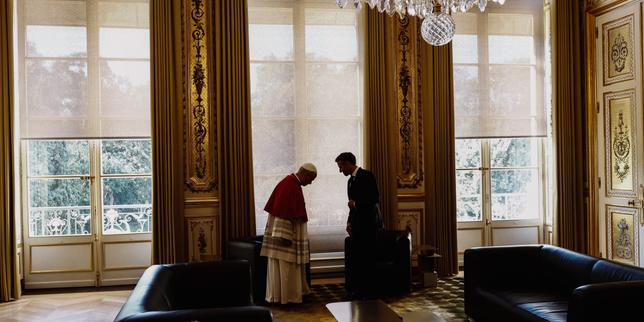
Pope Léon XIV arrived in Paris carrying a message that cut straight to the friction point between the Vatican and the French Republic. Standing before political leaders at the Élysée Palace, the pontiff declared that legitimate secularism avoids expelling religion from the public square. This pronouncement landed in a nation deeply attached to laïcité, a strict legal boundary separating state institutions from religious practice.
The collision between papal philosophy and French state doctrine is not a superficial diplomatic spat. It exposes a fundamental disagreement over where public morality originates and who holds the authority to define it.
France holds its model of laïcité as a cornerstone of national identity. Enacted into law in 1905, the principle ensures state neutrality regarding religion while protecting freedom of conscience. Over the decades, however, interpretation has shifted. What began as a defensive shield preventing the Catholic Church from dictating state policy has morphed into a proactive tool used to restrict visible religious symbols and practices in public spaces, schools, and government offices. Critics argue this evolution has turned neutrality into an aggressive form of secular conformity.
The Vatican views this trajectory with quiet alarm. From the perspective of Church leadership, European secularism has overcorrected. Instead of creating a neutral space where diverse viewpoints can coexist, strict government policies often marginalize religious citizens, treating faith as a private hobby rather than a valid framework for public ethics. By challenging this approach on French soil, the Pope signaled that the Holy See intends to push back against policies it views as discriminatory under the guise of neutrality.
French official reaction was predictable. Defenders of laïcité quickly reiterated that the Republic treats all citizens equally precisely by keeping the public sphere free from religious markers. To French lawmakers, the separation of church and state guarantees social cohesion by preventing sectarian conflicts from dominating public discourse. Allowing religion a louder voice in government-adjacent spaces, from their viewpoint, risks opening the door to creeping sectarianism and the erosion of hard-won civil liberties.
Beneath the diplomatic pleasantries lies a deeper societal anxiety. France is grappling with integration, national identity, and the place of minority religions, particularly Islam, within a historically Catholic culture. When the state enforces strict secularism, the rules apply universally on paper, but their real-world impact falls unevenly. A policy banning religious signs affects different communities in vastly different ways, complicating the narrative of neutral equality.
The papal intervention forces an uncomfortable examination of these contradictions. If secularism demands the erasure of faith from public visibility, it risks alienating millions of believers who find moral guidance in their traditions. If it accommodates religious expression, it risks fracturing the fragile consensus that keeps civic life orderly in a pluralistic society.
Neither side is likely to yield ground. The French political establishment views laïcité as non-negotiable, a sacred cow of the Republic that cannot be compromised for visiting dignitaries, regardless of their status. Meanwhile, the Vatican answers to a trans-national constituency that sees moral authority independent of national borders.
The debate over the public square will continue to shape European politics long after this papal visit fades from the headlines. The tension between state control and individual conscience remains one of the defining political struggles of the modern era, leaving nations to navigate a delicate balance between public order and personal freedom without a clear map forward.


