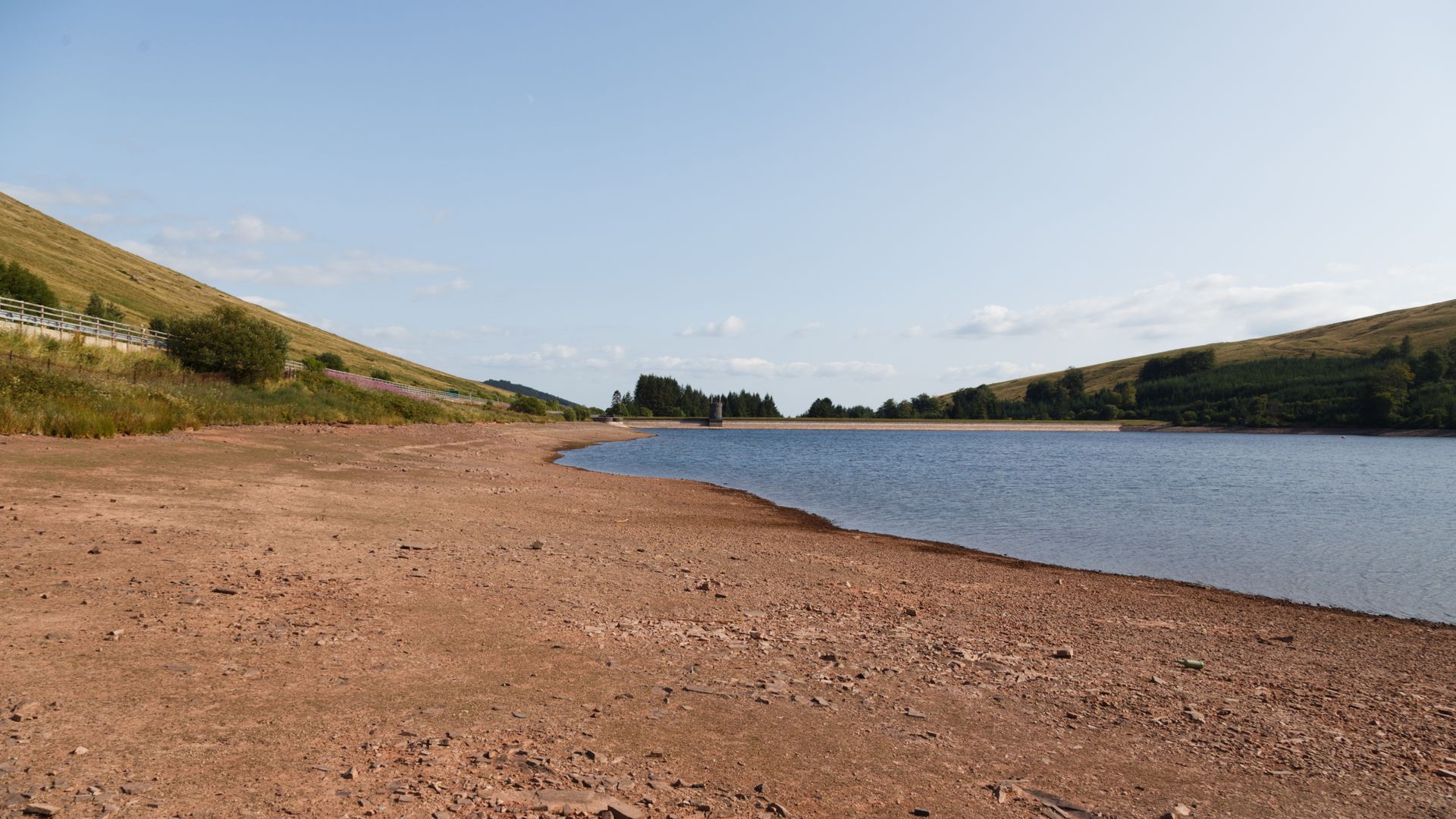
The headlines arrived on cue. Panic printed in bold letters. Cameras panned toward cracked earth in reservoirs while environmental officials furrowed their brows for the evening broadcast, declaring a drought across the entirety of Wales. The public response was predictable. Turn off the taps, wash your car with a bucket, and feel guilty about flushing the toilet after a cup of tea. It is an emotional routine we perform every time the sun stays out for more than three consecutive weekends.
Here is the truth nobody in the water authority wants to utter over a hot microphone. Wales does not have a water supply crisis. Wales has a logistical and political distribution failure wrapped inside a very convenient excuse for infrastructure neglect.
When bureaucrats wave their hands and announce a nation-wide drought, they are masking decades of institutional underinvestment behind the weather. Blaming the clouds is free. Fixing leaking Victorian cast-iron mains costs billions.
Let us look at the mechanical reality of how water moves through this country.
The Leakage Scandal We Ignore While Watering Our Lawns
Every single day, hundreds of millions of liters of treated drinking water never make it to a kitchen sink or a bathroom fixture. They vanish straight into the ground beneath our feet.
According to regulatory data from Ofwat and Natural Resources Wales, major water suppliers lose staggering fractions of their daily supply through cracked, crumbling distribution networks before the fluid even reaches a customer's meter. Yet, when the reservoirs dip below arbitrary thresholds, the collective finger of blame swivels away from the boardroom and points directly at residential garden hoses.
This is regulatory gaslighting at scale.
Imagine a scenario where a commercial delivery company lost a third of its inventory out of holes in the back of the truck before delivering a single package, and instead of patching the holes, management demanded that customers eat less. You would fire the executive team before lunch. Yet, in the utility sector, management imposes hosepipe bans and runs PR campaigns about taking four-minute showers while letting the distribution network bleed out silently.
The Geography of Abundance
Let us talk about where we actually live. Wales is one of the wettest places in northwestern Europe. We export immense volumes of water across the border to English urban centers like Liverpool via massive engineering feats constructed generations ago, such as the Vyrnwy Reservoir.
We possess more water per capita than almost any neighboring region. The rain falls reliably across the Cambrian Mountains, filling natural and artificial basins to the brim for the better part of three seasons every year.
To claim a national drought under these climatic conditions is intellectually lazy. What we experience during a dry spell is an inventory management failure. We capture a fraction of what falls, let a massive portion leak into the subsoil through ancient pipes, and then act surprised when a summer heatwave exposes the fragile math of our storage capacity.
Fixing this does not require praying for rain. It requires hard capital allocation toward infrastructure renewal.
The False Economy of Restriction
Hosepipe bans are the security theater of environmental policy. They provide a tangible action for citizens, making people feel like they are contributing to a collective effort while giving water companies political cover to delay heavy engineering work.
The volume of water saved by stopping residential car washing and lawn sprinkling is a drop in the ocean compared to the volume lost through network leakage. But enforcing restrictions on citizens is cheap. Replacing twenty miles of subterranean piping under the Welsh valleys is expensive.
When you tell people to ration their water while ignoring the gushing geysers beneath the tarmac, you break the social contract of conservation. You create cynicism. Citizens stop caring about genuine resource stewardship because they realize the rules are designed to protect balance sheets, not reservoirs.
How to Actually Solve the Water Crisis
If we want to stop panicking every time the weather forecast shows a clear blue sky, we need to abandon administrative theater and embrace engineering realism.
- Mandate Real-Time Leak Detection: Force suppliers to deploy acoustic monitoring and pressure management sensors across every primary distribution node. If a pipe bursts, the location should register on a dashboard within minutes, not weeks after residential water pressure drops.
- Decouple Tariffs from Volume Punishments: Shift the financial burden of scarcity onto the corporate balance sheets of the utilities. If leakage rates exceed strict performance thresholds, executive bonuses disappear and shareholder dividends face mandatory clawbacks.
- Expand Strategic Interconnections: Modernize the grid so water can move dynamically from surplus catchment zones to areas experiencing localized dryness, rather than relying on isolated regional systems that panic at the first sign of summer.
- Invest in Decentralized Capture: Incentivize commercial and residential property developments to incorporate greywater recycling and local rainwater harvesting systems, reducing the strain on municipal treatment plants.
The sky is not our enemy. The weather in Wales has always been cyclical, alternating between torrential downpours and dry spells. Building a modern society means engineering for our climate reality, not begging the clouds to bail out failing balance sheets.
Stop checking your lawn for dryness. Start checking your water provider's leakage reports.