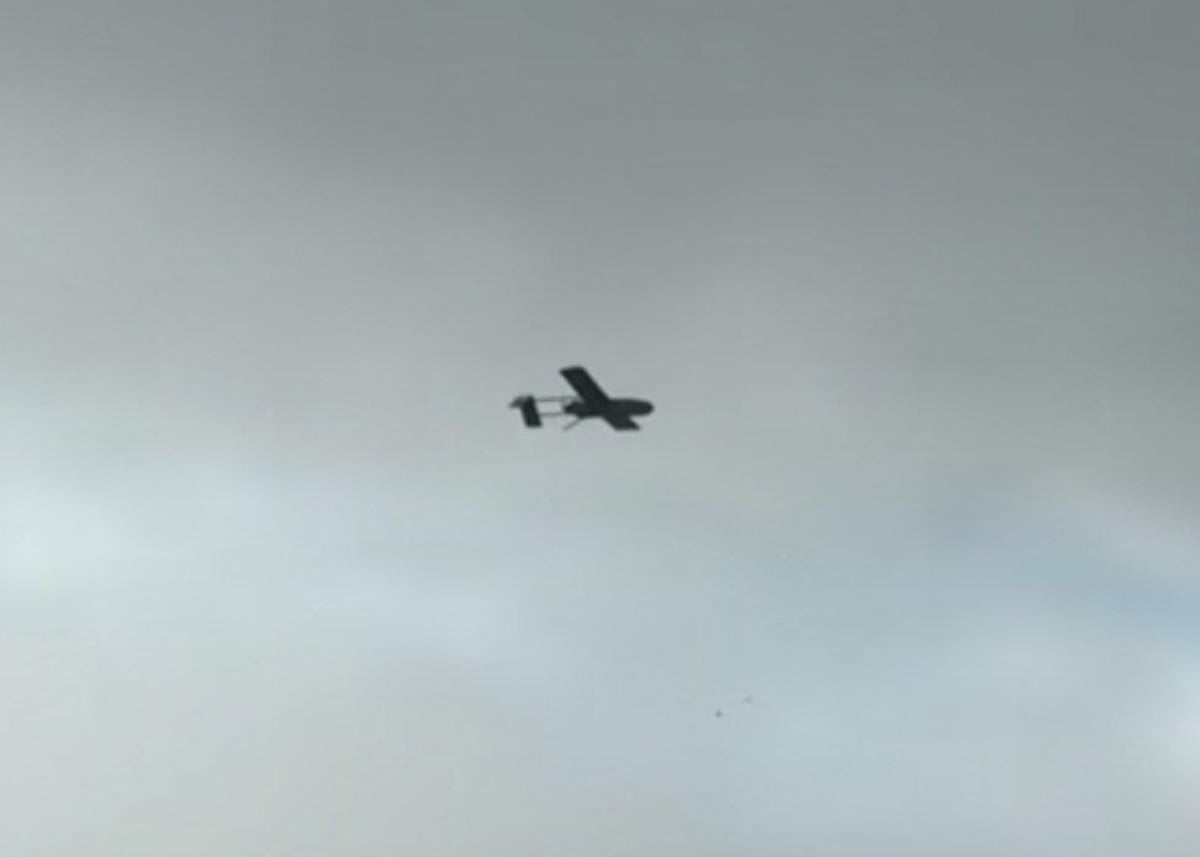
Mainstream defense analysts love big numbers because big numbers save them from having to think.
When headlines flashed claims that 64,000 Ukrainian drones were neutralized over a six-month period, the internet did exactly what it always does. Half the pundits cried foul, labeling it absurd Kremlin propaganda. The other half panicked, declaring that modern electronic warfare had permanently closed the skies to unmanned aerial vehicles.
Both sides are completely wrong. They are playing an outdated intellectual game, evaluating a 21st-century war of economic attrition through the lens of 20th-century conventional military doctrine.
The shock value of 64,000 downed drones vanishes the moment you step out of the press briefing room and onto the actual muddy earth of the frontline. I have spent years tracking procurement cycles and technical hardware shifts in defense tech. If you think that number signifies a catastrophic failure for Ukraine or an impenetrable iron dome for Russia, you do not understand the mechanics of modern industrial warfare.
The truth is far more clinical, far more brutal, and entirely counter-intuitive.
The Cheap Flying Pipe Bomb Fallacy
To understand why a massive shootdown rate is irrelevant, we must first blow up the definition of the word "drone."
When the public hears "drone," they picture an exquisite, multimillion-dollar platform equipped with proprietary optics and military-grade communication links. They think of a machine meant to fly dozens of missions, return to base, and undergo scheduled maintenance by specialized contractors.
That asset class does not exist on the modern frontline in high volume.
The vast majority of those 64,000 units are commercial-grade first-person view (FPV) quadcopters and basic hobbyist platforms. They are held together with zip ties, electrical tape, and prayer. They are powered by cheap lithium-polymer batteries and guided by unencrypted analog video transmitters operating on standard consumer frequencies.
They are not aircraft. They are guided artillery shells with propellers.
They are designed to fly exactly once. Their expected lifespan on the front is measured in minutes.
If an artillery shell explodes near a target but gets deflected slightly by a physical barrier, do we write a news feature about how the enemy "shot down" a shell? No. We recognize it as the normal margin of error in a high-volume kinetic exchange.
When a military forces an adversary to expend hundreds of thousands of low-cost, disposable assets to overwhelm defensive perimeters, the raw count of destroyed units ceases to be a metric of tactical success. It becomes a basic operational overhead cost.
The Dirty Secret of Electronic Warfare Success
The media reads "shot down" and visualizes Pantsir missile systems blasting aircraft out of the clouds or anti-aircraft guns painting the sky with lead.
That is a fantasy.
In reality, the overwhelming majority of these 64,000 drones met their end via directional radio frequency jamming and GPS spoofing. A stationary or vehicle-mounted electronic warfare (EW) asset floods a specific frequency band with white noise, severing the command link between the pilot and the drone. The drone, lacking an expensive inertial navigation system or hardened anti-jamming GPS, simply loses orientation and falls out of the sky into an empty field.
This looks like a victory on a Russian spreadsheet. It is counted as a successful neutralization.
But look closer at the operational reality.
When an EW system jams a $500 FPV drone, it does not do so for free. High-power jamming units are massive radio beacons. They scream their exact geographical coordinates across the electromagnetic spectrum to every signals intelligence asset within fifty miles.
By activating a high-power jammer to drop ten cheap quadcopters, an EW crew frequently exposes its position to long-range, heavy artillery or precision HIMARS strikes. I have seen telemetry data where the neutralization of three commercial drones was immediately followed by a counter-battery strike that wiped out a multi-million-dollar electronic warfare vehicle.
Who won that exchange? On paper, the side that "shot down" the drones. In reality, the side that traded $1,500 worth of plastic and batteries to locate and eliminate a scarce, high-value strategic asset.
Focusing on the raw number of downed drones is like celebrating how many plastic bullets your chest armor stopped while ignoring the fact that your boots are sinking into quicksand.
The Mathematical Trap of Conventional Defense Economics
Let us dismantle the economics of this claim.
Assume for a moment that the 64,000 figure is completely accurate. To conventional military thinkers, losing 64,000 assets in six months sounds like an unsustainable logistical apocalypse.
Now do the real math.
A standard FPV strike drone costs roughly $400 to $600 to assemble using global supply-chain components. Let us take the higher end: $600 per unit.
Multiply 64,000 drones by $600. The total hardware cost equals $38.4 million.
Over six months, that represents an expenditure of less than $6.5 million per month. In the context of a modern state-level military budget, $38 million is a rounding error. It is less than the cost of three western main battle tanks. It is less than a handful of precision air-defense missiles.
Now look at the defensive side of the equation. To achieve this level of denial, Russia has had to deploy an unprecedented density of EW complexes, consume massive amounts of power, and commit significant personnel to monitoring the spectrum 24/7. They must expend physical anti-drone ammunition, wear down the barrels of automatic weapons, and burn through localized air defense missiles when a drone gets too close to a critical ammo dump or command post.
If a military can force its opponent to sustain an active, high-alert defensive posture across a thousand-kilometer front for the price of a few dozen million dollars, the offensive campaign is wildly successful—regardless of how many units actually hit a physical target.
The goal of mass drone deployment is not a 100% strike rate. The goal is saturation. If 95% of your drones are jammed or shot down, but the remaining 5% successfully liquidate field command centers, fuel trucks, and artillery pieces, the strategic return on investment is astronomical.
Dismantling the Flawed Consensus
The public discourse surrounding this topic is broken. Let us look directly at the questions people are asking and correct the foundational errors baked into them.
Are drones becoming obsolete due to advanced electronic warfare?
This question assumes that electronic warfare is a permanent, static wall. It is not. It is an endless cat-and-mouse game of frequency hopping and software modification. The moment a defensive force deploys a jammer tuned to 900 MHz, the offensive force shifts its manufacturing line to use 700 MHz or 1.2 GHz control links.
Furthermore, we are already seeing the deployment of basic machine-vision algorithms running on cheap chips directly on the drone. Once a drone enters its final terminal phase, it no longer requires a radio link to a human pilot. It uses optical tracking to lock onto a vehicle and steer itself in. Jamping the radio spectrum at that point does absolutely nothing. The premise that EW has permanently solved the drone problem is a dangerous illusion.
Can any military sustain losing thousands of drones a week?
Yes, easily, provided their manufacturing pipeline is decentralized and built on commercial electronics rather than standard defense procurement protocols. If you try to build drones through a traditional defense prime contractor, where every screw requires a three-year certification process and costs $400, you will go bankrupt in weeks. If you build them in garages, small workshops, and converted warehouses using commercial components, you can scale production to hundreds of thousands of units per year without sweating. The bottleneck is not money or industrial capacity; it is pilot training and battery logistics.
The Strategic Reality No One Wants to Face
The fixation on drone casualties is a coping mechanism for an defense establishment that refuses to admit that the nature of hardware superiority has changed.
For decades, the dominant military doctrine dictated that the side with the most expensive, technologically dense platforms wins. We built incredibly complex systems designed to operate flawlessly in sterile testing environments.
Mass drone warfare has turned that model inside out. It proves that quantity, speed of iteration, and a total disregard for asset survivability can overwhelm highly sophisticated, rigid defense systems.
When you see a claim that tens of thousands of drones have been brought down, do not look for a sign that the sky is closing. Look at the sheer scale of the industrial output required to put those thousands of units into the air in the first place. Look at the immense strain placed on the defensive architecture trying to cope with an endless, buzzing swarm of cheap kinetic energy.
Stop counting the casualties of the swarm. Start calculating the exhaustion of the machine trying to fight it off.
The side that wins this confrontation will not be the one that claims to have shot down the most targets. It will be the side that accepts that their assets are meant to die, optimizes for absolute minimum unit cost, and simply out-produces the adversary's ability to pull the trigger.