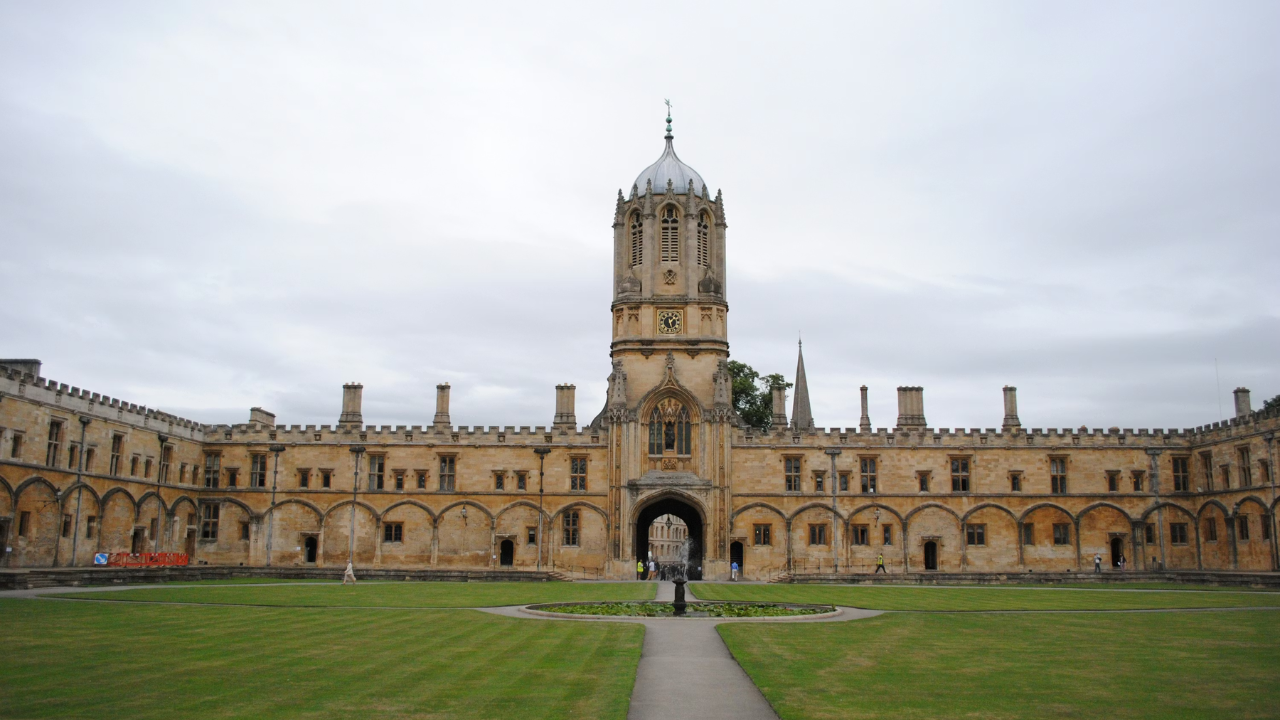
When a thousand-year-old bastion of Western academia pauses its relentless pursuit of research to post a "Happy Navratri" greeting, the internet reacts with a predictable mix of warmth and cynicism. On the surface, Oxford University’s recent social media nod to Chaitra Navratri—the nine-day Hindu festival honoring Goddess Durga—appears to be a simple act of digital etiquette. However, for those of us who have tracked the intersection of institutional branding and global soft power for decades, this isn’t just a friendly greeting. It is a calculated piece of cultural bridge-building in an era where prestige is no longer measured solely by Nobel Prizes, but by a brand’s ability to speak to the fastest-growing intellectual markets on earth.
Oxford’s gesture went viral because it touched a nerve. For the diaspora and millions in India, seeing the dreaming spires of the UK’s most elite institution acknowledge a specific, often overshadowed lunar new year celebration felt like a validation. But the mechanics behind this viral moment reveal a much more complex strategy of institutional survival and relevance.
The Strategy Behind the Greeting
Institutions like Oxford do not tweet on a whim. Every post is filtered through layers of communications strategy designed to maintain a specific image. By acknowledging Chaitra Navratri, Oxford is addressing a massive demographic of current students, prospective applicants, and high-net-worth alumni who hail from the Indian subcontinent.
This isn't just about being polite. It is about retention and recruitment. India has become the primary engine for international student growth in the UK. As visa regulations tighten and competition from Canadian or Australian universities intensifies, Oxford must prove it is not a cold, exclusionary ivory tower. It needs to show it is a place where a student from Delhi or Mumbai can see their heritage reflected in the official narrative of the university.
Why Chaitra Navratri specifically
Most Western brands wait for Diwali to engage with the Hindu calendar. It is the "safe" choice—the festival of lights that has been commercialized and simplified for a global audience. Choosing Chaitra Navratri shows a deeper level of cultural research. It marks the beginning of the Hindu New Year in many regions. By highlighting this specific window, Oxford signaled that it isn't just skimming the surface of "diversity." It is paying attention to the nuances of the calendar.
The Economics of Academic Prestige
We have to look at the numbers to understand the "why" behind this digital pivot. The global education market is shifting. The wealth is moving East. Oxford’s endowment and its research partnerships are increasingly tied to global entities.
- Alumni Networks: Indian-origin leaders now head some of the largest corporations in the world. Engaging with their cultural touchstones is a subtle but effective way to maintain "warm" leads for future fundraising and partnerships.
- The Talent Pipeline: The smartest minds in STEM and Humanities are increasingly looking for global homes. If Oxford feels like a relic of the British Empire, it loses its edge. If it feels like a global hub that celebrates Durga and Darwin with equal fervor, it wins the talent war.
There is a risk here, of course. Critics often point to these posts as "performative activism" or "optical inclusion." This is the cynical view that suggests the university is merely checking a box without changing the structural reality of its admissions or faculty diversity.
Beyond the Viral Post
To treat this as just a "heart-winning" moment is to miss the structural shift occurring in global education. Oxford is effectively rebranding itself as a "Global University" rather than a "British University." This shift is necessary because the traditional Western canon is being challenged from all sides.
If Oxford wants to remain the definitive authority on knowledge, it must incorporate the knowledge and traditions of the world it seeks to lead. This means acknowledging the Vedic traditions with the same weight it gives to the Enlightenment. A social media post is the easiest, most visible way to start that process, but it is far from the end.
The Pushback and the Reality
Not everyone is cheering. There is always a vocal minority that views such greetings as a dilution of the university’s "traditional" values. They argue that an English institution should stick to English traditions. But this argument ignores history. Oxford has always been a sponge, soaking up the influences of the people who walk its halls.
In the 19th century, it was the training ground for the administrators of the Raj. Today, it is the training ground for the global tech and policy elite. The power dynamic has flipped. The university is no longer dictating culture to the world; it is desperately trying to show the world that it still belongs in the conversation.
The Digital Footprint of Faith
The reaction to the post also highlights a fascinating trend in how faith is expressed online. For many, the university’s post became a digital shrine—a place to share "Shubh Navratri" wishes and connect with a global community.
This creates a virtuous cycle for the university’s social media metrics. High engagement leads to better algorithmic visibility. This visibility leads to more eyes on Oxford’s research and recruitment ads. It is a masterclass in using "soft" content to drive "hard" institutional goals.
What Other Institutions Can Learn
Other heritage brands are watching. If Oxford can do it without losing its "prestige" or "gravitas," then the floodgates are open. We should expect to see more of this. More lunar New Year greetings, more Eid Mubarak posts, more recognition of the diverse calendars that govern the lives of the global population.
But there is a trap. If an institution posts a greeting but fails to support its international students on the ground—through better food options, prayer spaces, or inclusive holiday policies—the digital greeting becomes a liability. It becomes proof of hypocrisy.
The Modern Meritocracy
The real test for Oxford isn't whether it can hire a social media manager who knows when Navratri starts. The test is whether the university can evolve its curriculum and its culture to match its digital persona.
The "heart-winning" aspect of the post is real, but it is fleeting. True institutional change is slow and often invisible. For now, the university has successfully bought itself some goodwill in a key market. It has shown that it can speak the language of the modern world, even while sitting in buildings that are centuries old.
Check the admissions data for the next three cycles; that is where you will see the true impact of this digital diplomacy.
Ask yourself if your own organization is recognizing the world as it is, or as it was fifty years ago. Regardless of the industry, the lesson from Oxford is clear: ignore the cultural shifts of your audience at your own peril. If you are looking to audit your own brand's cultural competency, start by looking at the specific holidays you celebrate and the ones you ignore.