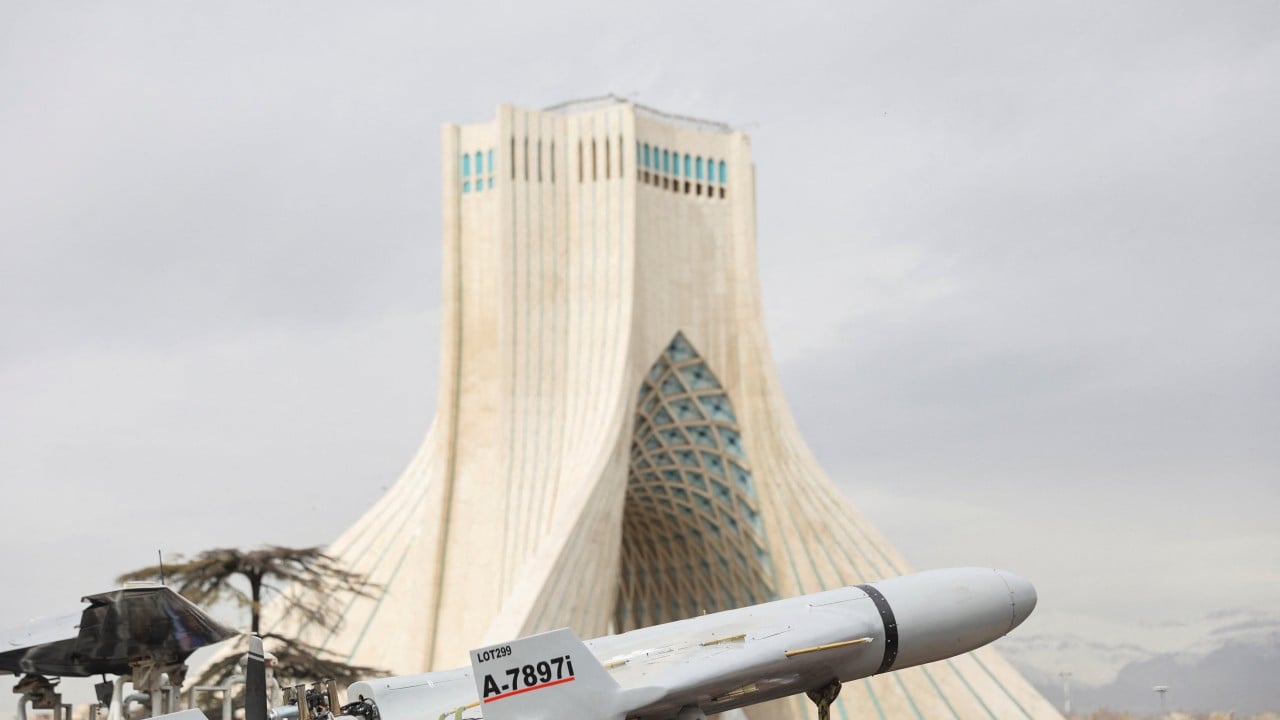
Media outlets are currently flooding your feed with high-resolution satellite imagery and grainy night-vision footage of explosions across the Middle East. They want you to stare at the fire. They want you to count the craters. They frame these U.S.-led strikes as a "restoration of deterrence" or a "significant degradation of capabilities."
They are wrong.
What you are actually witnessing isn't a military operation. It is an expensive, high-altitude performance piece. We are watching the terminal stage of a foreign policy that prioritizes optics over outcomes. If you want to understand the modern reality of regional conflict, you have to stop looking at the smoke and start looking at the spreadsheets.
The Myth of the Precision Deterrent
The standard narrative suggests that if you hit enough warehouses and mobile launchers, the "bad actors" will simply run out of toys or, better yet, lose the will to play. This logic is stuck in 1944.
In the modern theater, missiles are not just weapons; they are incredibly overpriced communication tools. When the U.S. launches a series of strikes, they aren't trying to win a war. They are sending a very loud, $2 million-per-shot email to domestic voters and regional allies.
The problem? The recipient of that email isn't intimidated. They are taking notes.
I have spent years analyzing how asymmetrical forces adapt to "precision" warfare. Here is the reality: the more precise our strikes become, the more decentralized and resilient the opposition becomes. We are using a scalpel to fight a fog. You can’t "degrade" a network that is designed to function in pieces.
The Arithmetic of Failure
Let’s talk about the math that the news anchors ignore.
The cost-exchange ratio in these "U.S.-led attacks" is a fiscal disaster. We are firing interceptors that cost $2.1 million to down drones that cost $20,000. We are using multi-billion dollar carrier strike groups to play Whac-A-Mole with groups that have zero fixed infrastructure and a limitless supply of cheap, off-the-shelf tech.
- U.S. Asset: Tomahawk Land Attack Missile (TLAM). Cost: approx. $2 million.
- Target: A plywood drone or a repurposed shipping container. Cost: Negligible.
When you see a photo of a "destroyed command center," you are seeing a hole in the ground that will be replaced by three guys with laptops in a different basement by tomorrow morning. We are burning through our own readiness and munitions stockpiles to achieve "symbolic victories."
This isn't strength. It's a strategic drain. If I ran a company with this kind of ROI, the board would have me escorted out by noon.
Why Satellite Imagery Is a Lie
The competitor articles love to show you "Before and After" shots. It satisfies a primal urge for clarity.
"Look," the caption says. "The building is gone."
But the building doesn't matter. In the age of digital warfare and distributed proxies, the physical footprint of an adversary is their least important attribute.
- Ghost Infrastructure: Advanced actors in the Middle East have moved their high-value assets underground or into densely populated civilian corridors years ago.
- Redundancy by Design: The "command and control" nodes being targeted are often decoy shells. I’ve seen intelligence reports where strike packages were wasted on literal empty sheds because the heat signature was faked with a few space heaters.
- The Information Loop: Every strike provides the adversary with free R&D. They see our flight paths, our sensor blind spots, and our response times.
We are paying for the privilege of training our enemies.
The "De-escalation Through Escalation" Fallacy
The most grating "lazy consensus" in current reporting is the idea that these strikes prevent a wider war.
Imagine a scenario where you try to stop a fire by throwing smaller, more controlled matches at it. That is the current state of "kinetic diplomacy." By striking, the U.S. validates the adversary’s narrative of resistance. It provides them with the political capital they need to recruit and the moral high ground they need to maintain local support.
The status quo media refuses to admit that these attacks are a confession of a lack of options. We strike because we don't know how to talk, and we don't have the stomach to actually fight. It is the middle path of cowardice—too much force to be ignored, too little force to actually change the power dynamics.
The Tech Debt of Modern Warfare
We are also ignoring the massive technological debt we are accruing.
Our adversaries are iterating in real-time. They are using AI-driven swarm logic and low-observable flight paths that cost pennies. Meanwhile, the U.S. military-industrial complex is still trying to justify the cost of platforms designed for the Cold War.
We are bringing a gold-plated sledgehammer to a swarm-of-wasps fight.
The photos you see in the news of burning depots are the "visual noise" of a dying strategy. They want you to feel a sense of accomplishment. You shouldn't. You should feel concerned that we are depleting our national treasury and our military hardware on targets that simply do not move the needle on the geopolitical map.
Stop Asking "Did We Hit the Target?"
The "People Also Ask" sections are filled with questions like: "Was the mission successful?" or "How many militants were killed?"
These are the wrong questions.
The only question that matters is: "Does the adversary have more or less leverage today than they did yesterday?"
In almost every case, the answer is "more." They have the leverage of having survived a superpower's best shot. They have the leverage of a viral video showing they are still standing. They have the leverage of knowing exactly how we operate.
The Brutal Truth of the New Map
The map isn't defined by borders or flags anymore. It’s defined by supply chains and bandwidth.
When the U.S. strikes a port or a desert outpost, it’s trying to redraw a map that no longer exists. The real power in the Middle East today isn't held by the person with the most tanks. It’s held by the person who can disrupt a global shipping lane with a $500 flight controller and a 3D printer.
We are trying to bomb the internet. We are trying to use kinetic energy to solve a systemic, ideological, and technological shift.
It is time to stop being distracted by the fireworks. The "U.S.-led attacks" aren't a sign of a plan coming together. They are the frantic, reflexive flailing of an old guard that hasn't realized the rules of the game changed ten years ago.
You want a fresh perspective? Here it is: The strikes are the distraction. The real war is being lost in the factories, the codebases, and the hearts of the people who see these explosions as nothing more than a temporary inconvenience.
Stop looking at the craters. Start looking at the bill.
Then ask yourself why we keep paying it for a product that doesn't work.