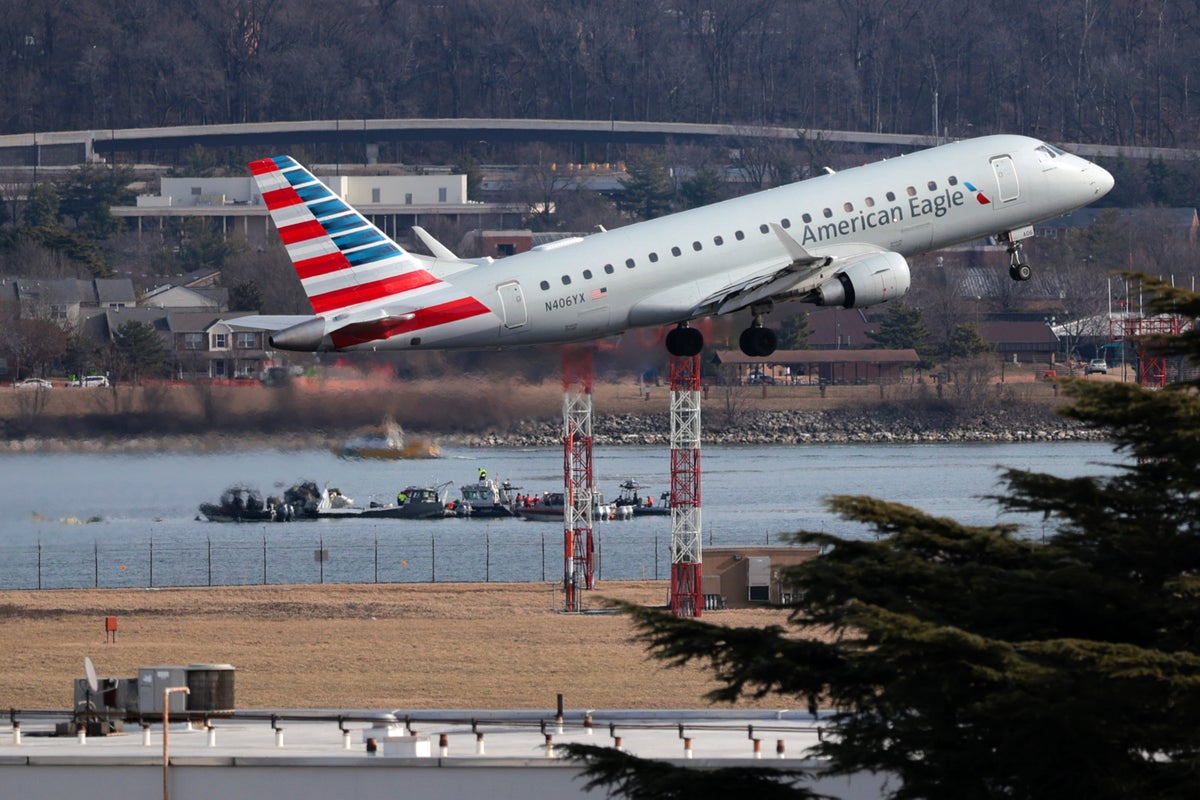
The federal mandate to overhaul air traffic controller rest requirements represents a fundamental shift from a policy of "managed exhaustion" to one of biological compliance. The Federal Aviation Administration’s (FAA) recent directive, triggered by a series of high-profile near-misses and a critical midair collision in the D.C. region, acknowledges a systemic failure: the previous staffing model relied on human endurance to compensate for structural labor shortages. This analysis deconstructs the new regulatory framework through the lens of cognitive ergonomics, labor economics, and safety-critical system design.
The Triad of Operational Failure
Recent safety lapses in the National Airspace System (NAS) are not isolated human errors but the predictable output of a system operating beyond its design limits. Three primary variables contribute to the current risk profile:
- Circadian Dysregulation: Controllers frequently work "rattler" shifts—sequences that move from afternoons to mornings to midnights within a 72-hour window. This compressed schedule prevents the synchronization of the body's internal clock with the sleep-wake cycle.
- Cognitive Load Saturation: As air traffic volume returns to or exceeds 2019 levels, the density of "complexities" (intersecting flight paths and weather diversions) increases exponentially rather than linearly.
- Staffing Deficits: The gap between the current Certified Professional Controller (CPC) count and the optimal staffing level has forced a reliance on mandatory overtime, often extending work weeks to six days.
The FAA’s intervention—specifically requiring 10 hours of rest between shifts and 12 hours before a midnight shift—directly targets the first variable. However, by solving for Circadian Dysregulation, the agency inadvertently places greater pressure on the Staffing Deficit.
The Mechanics of the 10-Hour Rest Mandate
The transition from a 9-hour to a 10-hour minimum rest period is not a marginal 11% improvement in downtime. In operational terms, it is a binary shift in the quality of the "sleep window." When accounting for travel time to and from the facility, personal hygiene, and meal consumption, a 9-hour gap often yields less than 6 hours of actual sleep.
Mathematically, the 10-hour rule ensures a biological buffer. If $T_g$ is the total gap between shifts and $T_o$ is the overhead of non-sleep activities, the available sleep time $S_a$ is defined as:
$$S_a = T_g - T_o$$
By increasing $T_g$ to 10 or 12 hours, the FAA is attempting to move $S_a$ from a state of chronic deprivation ($S_a < 6$) to a state of baseline recovery ($S_a \geq 7$). This is a recognition that cognitive performance in high-stakes environments degrades at a rate comparable to alcohol intoxication when sleep is restricted below the six-hour threshold.
The Bottleneck Problem: Capacity vs. Safety
The core tension in this policy change lies in the "Throughput-Safety Paradox." The NAS is a finite resource. Its capacity is a function of the number of available sectors and the number of controllers qualified to manage them.
When the FAA increases rest requirements without an immediate influx of new CPCs, the available "man-hours" for the system decrease. This leads to several systemic outcomes:
- Ground Delay Programs (GDPs): To maintain safety margins with fewer controllers on the floor, the FAA must restrict the number of aircraft entering specific segments of airspace. This results in the "hidden cost" of the mandate: increased ground delays for passengers and higher fuel burn for airlines.
- Sector Combining: In some instances, facilities may combine multiple geographic sectors into one. While this requires fewer controllers, it increases the individual cognitive load on the controller remaining at the desk, potentially neutralizing the safety gains of the extra rest.
- Training Stagnation: New recruits require on-the-job training (OJT) from veteran CPCs. Increased rest requirements and staffing shortages often lead to the suspension of OJT to keep "iron on the glass" (active controllers at their stations), further delaying the long-term solution to the labor shortage.
Quantifying the Risk of the "Rattler" Schedule
The "rattler" schedule is an industry-standard rotation designed to maximize the number of consecutive days off by compressing the workweek. A typical rotation might look like:
- Day 1: 15:00 – 23:00
- Day 2: 07:00 – 15:00
- Day 3: 00:00 – 08:00 (after a short swing)
The physiological cost of this rotation is cumulative. The "near-misses" cited by the FAA often occur during the transition between the morning shift and the midnight shift, where the controller's "homeostatic sleep drive" is at its peak while their "circadian alertness signal" is at its lowest point.
By mandating 12 hours of rest before a midnight shift, the FAA is effectively killing the traditional rattler. This forces a transition toward "straight" shifts (fixed mornings, afternoons, or nights) or much slower rotations. While this improves biological stability, it is met with cultural resistance because it disrupts the work-life balance that controllers have used to offset the high-stress nature of the job.
Structural Vulnerabilities in the D.C. Midair Analysis
The D.C. midair collision and subsequent near-misses at major hubs (SFO, JFK, BOS) highlight a specific failure mode: loss of situational awareness during "routine" operations. In many of these cases, the hardware—the Ground Radar (ASDE-X) and Alerting Systems—functioned correctly. The failure was in the human-in-the-loop response time.
Fatigue does not usually manifest as a total blackout. It manifests as "micro-sleeps" and "attentional narrowing." A controller may focus on one potential conflict (the primary task) while losing track of a second, developing conflict in the periphery. The 10-hour rule is a blunt instrument designed to widen that attentional window back to its nominal state.
The Economic Impact on NAS Stakeholders
The implementation of these rules necessitates a recalculation of the "Cost of Safety."
- For the FAA: The agency must accelerate its hiring pipeline. The current goal of 1,800 new controllers annually is likely insufficient to cover the attrition rate plus the "loss of hours" created by the new rest rules.
- For Airlines: The reduction in system throughput translates to lower aircraft utilization. If a carrier cannot fly 12 segments a day due to ATC constraints and can only fly 10, the fixed costs of the airframe must be amortized over fewer seats, leading to upward pressure on ticket prices.
- For the Controller Workforce: There is a non-monetary cost in the form of reduced flexibility. The new rules make "swapping" shifts significantly harder, as any swap must still comply with the 10/12-hour buffers.
The Technical Gap: Technology as a Stopgap
Because the human labor supply is inelastic (it takes 2-3 years to train a controller), the FAA is looking toward technological mitigations to bridge the gap while the rest rules take effect. These include:
- Surface Awareness Initiative (SAI): Deploying cost-effective ADS-B based surface monitoring to airports without full ASDE-X coverage. This provides a digital safety net that is less dependent on constant visual scanning by a fatigued controller.
- Conflict Prediction Software: Upgrading the automation at Terminal Radar Approach Control (TRACON) facilities to provide longer "look-ahead" times for potential collisions, giving controllers 30-60 seconds of additional reaction time.
Strategic Trajectory
The FAA’s move is a definitive admission that the era of "doing more with less" in air traffic control has reached its breaking point. For the aviation industry, this signifies a transition into a "Low-Growth, High-Safety" phase.
Expect the following developments over the next 24 months:
- Capacity Caps: Major hubs will likely see permanent or seasonal caps on hourly flight operations to match the "rested" capacity of the local controller workforce.
- Legislative Pressure: There will be a push to raise the mandatory retirement age for controllers (currently 56) to retain experience, though this conflicts with the biological goal of reducing fatigue-related risk in an aging workforce.
- Automation Escalation: A shift in R&D funding toward "autonomous" ATC functions where the AI handles routine spacing, leaving the human controller to act as a high-level supervisor rather than a tactical separator.
The immediate strategic priority for the FAA is not just hiring, but the radical redesign of the "Facility Throughput Model." Every air traffic facility must now be audited to determine its "Sleep-Adjusted Capacity." This metric will define the reality of American flight schedules for the next decade.
Airlines should proactively adjust their schedules by 5-10% in high-density corridors to avoid the compounding delays that occur when a short-staffed, well-rested tower must implement a ground stop. Failure to synchronize commercial schedules with the new biological reality of the tower will result in a chaotic operational environment where safety is preserved only through massive, unpredictable system volatility.