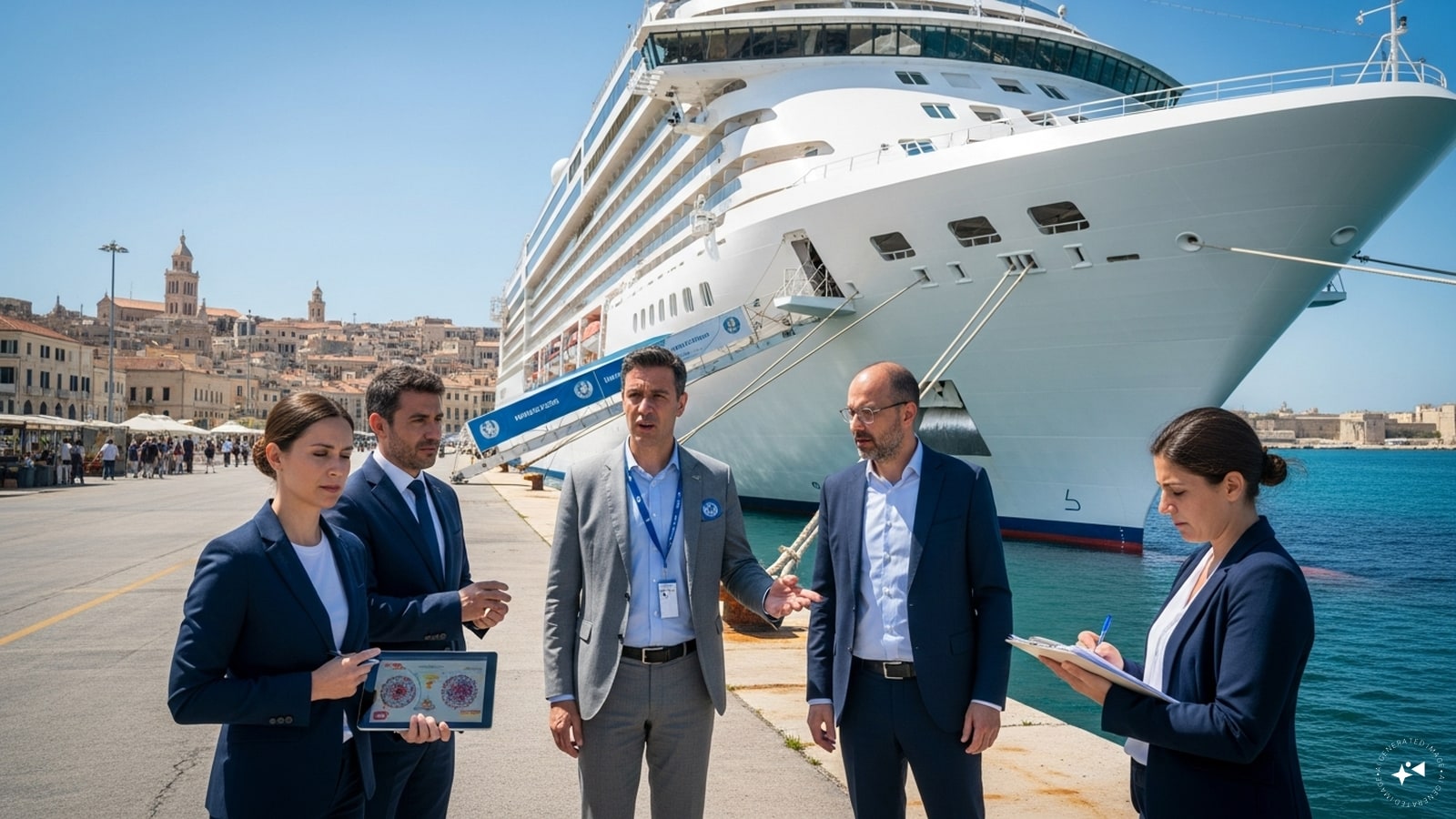
The deployment of the World Health Organization (WHO) Director-General to the Canary Islands signals a critical failure in standard maritime quarantine protocols and a significant escalation in the management of zoonotic spillover events. At the center of this crisis is a vessel requiring evacuation due to a suspected hantavirus outbreak—a pathogen typically associated with rodent vectors and characterized by high case-fatality rates when manifesting as Hantavirus Pulmonary Syndrome (HPS) or Hemorrhagic Fever with Renal Syndrome (HFRS). This specific intervention highlights a breakdown in the Triad of Maritime Biosecurity: detection at the point of origin, onboard containment, and the logistical feasibility of a mid-transit evacuation.
The Mechanics of Hantavirus Transmission in Maritime Environments
Hantaviruses do not follow the respiratory transmission patterns of influenza or coronaviruses. Instead, risk is a function of Vector Density and Environmental Aerolization. In the confined, recirculated air systems of a modern ship, the presence of infected rodents (specifically of the Muridae or Cricetidae families) transforms the vessel into a closed-loop exposure chamber.
Transmission occurs through the inhalation of aerosolized excreta. The mechanical vibrations of a ship, combined with high-velocity HVAC systems, facilitate the suspension of viral particles in common areas and crew quarters. The virus remains stable in the environment for several days depending on humidity and UV exposure—variables that are often optimized for viral longevity in the shadowed, climate-controlled lower decks of cargo or passenger vessels.
The clinical progression of the disease introduces a secondary logistical burden. Unlike pathogens with short incubation periods, hantavirus can remain latent for one to five weeks. This means the infection likely occurred at a previous port of call, remaining undetected until the vessel was deep in international waters. By the time symptoms manifest, the patient often requires intensive care, including mechanical ventilation or extracorporeal membrane oxygenation (ECMO), facilities which are non-existent on 99% of non-military vessels.
The Evacuation Bottleneck and Risk Stratification
The decision to evacuate a ship off the coast of the Canary Islands involves a complex Risk-Benefit Calculus. The WHO’s direct involvement suggests that the standard maritime "Pratique" (the license given to a ship to enter a port on assurance from the captain that it is free from contagious disease) has been suspended in favor of a controlled extraction.
Operational risks are categorized into three distinct domains:
- Bio-Containment Integrity: Transferring a patient from a vessel to a shore-based facility requires a seamless transition through a "hot zone" (the ship), a "transit zone" (the helicopter or tender), and a "cold zone" (the receiving hospital). Any breach in Personal Protective Equipment (PPE) during the hoist or transport phase risks introducing the pathogen into the local Canary Islands population.
- Vector Escape: The primary concern for local authorities in Spain is not just the human patients, but the rodents. If the ship docks, there is a non-zero probability of infected vectors escaping to the mainland. This would move the crisis from a localized medical emergency to a regional ecological threat, potentially establishing a new viral reservoir in the archipelago's unique fauna.
- Resource Displacement: Specialized infectious disease units in the Canary Islands are finite. A mass casualty event originating from a single vessel can instantly hit the "Surge Capacity Ceiling," forcing the diversion of local residents' medical needs to provide for the evacuated crew.
Structural Failures in International Health Regulations (IHR)
The necessity of a WHO-coordinated response indicates that the International Health Regulations (2005) framework is currently struggling to address high-consequence pathogens in the global shipping lane. Under IHR, member states are required to develop core capacities for surveillance and response, yet the "No-Man's-Land" of international waters creates a jurisdictional vacuum.
This incident exposes a Protocol Gap between the ship's flag state, the port of origin, and the intended destination. When a vessel becomes a biological hazard, the cost of the response—which includes specialized medical teams, decontamination, and potential loss of cargo—often leads to delayed reporting. This delay is the primary driver of mortality in viral outbreaks.
Economic and Logistical Friction Points
The Canary Islands serve as a vital hub for Atlantic shipping. An evacuation of this scale creates a "Contagion Shadow" over the region’s logistics.
- Demurrage and Detention Costs: While the vessel is quarantined, the daily operational costs and late delivery penalties can reach hundreds of thousands of dollars.
- Insurance Liability: Most Maritime Protection and Indemnity (P&I) Clubs have specific clauses regarding infectious diseases. If the outbreak is traced back to a failure in basic sanitation or pest control, the vessel owner may face total liability exclusion.
- Port Refusal: The "Pariah Ship" phenomenon occurs when neighboring ports deny entry to a vessel even after evacuation. This forces the ship to remain at sea, further endangering the remaining crew and increasing the likelihood of a total breakdown in order on board.
Scientific Uncertainty and the Hantavirus Variance
It is critical to distinguish between the known behavior of terrestrial hantaviruses and the potential for a novel strain. While human-to-human transmission is historically rare (notable exceptions being the Andes virus in South America), the WHO’s high-level mobilization suggests they are treating this as a high-risk outlier.
The strategy appears to be a Preemptive Containment Model. By coordinating at the highest level, the WHO is bypassing the bureaucratic delays of local government negotiations to establish a temporary maritime exclusion zone. The objective is to stabilize the patients in situ or via highly controlled medical evacuation (MEDEVAC) units while the ship undergoes a rigorous deratting procedure at anchor.
Strategic Imperatives for Maritime Operators
To prevent a recurrence of this specific failure, the maritime industry must transition from reactive crisis management to Predictive Biosecurity. This involves three structural shifts:
- Integrated Pest Monitoring: Moving beyond simple traps to electronic monitoring of rodent activity in cargo holds, providing real-time data on potential vector spikes.
- Rapid Diagnostic Kits (RDKs): Equipping deep-sea vessels with PCR or antigen-based tests for high-risk zoonotic markers, allowing for detection within the first 48 hours of symptoms.
- Tele-Critical Care Integration: Establishing direct data links between shipboard medical officers and specialized infectious disease centers to manage the early stages of viral shock before evacuation becomes the only option.
The current situation in the Canary Islands is not merely a medical emergency; it is a stress test for the global supply chain's ability to handle the next generation of zoonotic threats. The outcome will likely dictate the next decade of maritime health policy and the enforcement of sanitary standards at sea.
Vessel owners must now account for the "Biosecurity Premium" in their operational budgets. Failure to maintain a sterile vector environment is no longer just a regulatory nuisance; it is a catastrophic risk that can result in the total seizure of assets and the intervention of international governing bodies. The Canary Islands evacuation should be viewed as the definitive case study in why the "Clean Ship" protocol is the most important variable in modern maritime logistics.
Immediate action for vessels currently in the Atlantic transit corridor: execute a total vector audit and update medical manifests to include specific hantavirus symptom tracking. The cost of a 24-hour delay in port for inspection is negligible compared to the total immobilization of a vessel by the WHO.