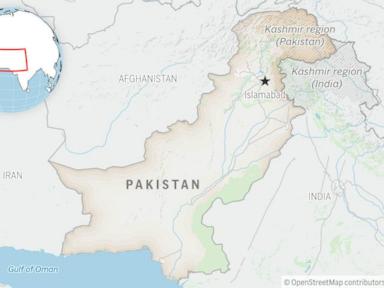
The recent assault on a security checkpoint in northwest Pakistan, resulting in the deaths of three police officers, is not an isolated outburst of violence but a calculated execution of asymmetric attrition. This specific event—combining a suicide operative with follow-on small arms fire—follows a predictable tactical sequence designed to degrade the state's monopoly on force in the tribal frontier. Analyzing this incident requires looking past the casualty count and examining the Force Multiplication Logic and the Structural Vulnerabilities of the police-as-frontline-defense model.
The Tactical Sequence of Compound Attacks
The attack in the Khyber Pakhtunkhwa province utilized a "breach-and-clear" methodology typical of high-end insurgent groups. In this framework, the suicide bomber serves as the kinetic key, tasked with neutralizing the perimeter’s structural integrity and psychological readiness.
- Phase I: Hardening Disruption. The suicide detonation is designed to maximize "shock and awe," causing immediate structural damage and forcing surviving personnel into a state of sensory overload.
- Phase II: Suppression of Response. Following the blast, gunmen engage the survivors. The goal here is not necessarily territorial seizure but the prevention of organized counter-fire.
- Phase III: Withdrawal and Propaganda. Insurgent success is measured by the ratio of state casualties to insurgent investment. A small cell of four or five men can neutralize a larger, stationary police force by dictating the timing and intensity of the engagement.
The Strategic Burden on the Police Force
The KP police are currently trapped in a Strategic Overstretch Loop. Unlike the military, which operates with concentrated force and superior technology, the police are distributed across a vast, porous geography in small, vulnerable units.
The Static Target Vulnerability
Police checkpoints are "fixed assets." In military science, a fixed asset without mobile support is merely a target waiting for a sufficient accumulation of force. Insurgent groups utilize surveillance-to-strike windows to identify the exact moments of low alertness—often during shift changes or meal times—to launch their kinetic operations.
The Resource Asymmetry
The "cost per kill" for the insurgent is significantly lower than the "cost of defense" for the state. To protect a single checkpoint, the government must invest in:
- Continuous 24/7 staffing.
- Physical fortifications (concrete, HESCO barriers).
- Intelligence networks to preempt attacks.
- Logistical chains for medical evacuation.
Conversely, the insurgent requires only a small amount of low-grade explosive, a willing operative, and discarded small arms. This creates a fiscal drain on the provincial administration that is unsustainable over a multi-decade conflict.
The Regional Proxy Variable
The geographic proximity to the Afghan border creates a Safe Haven Subsidy. When insurgents can retreat across an international border that the state cannot easily strike across without causing a diplomatic crisis, the "friction" of war is reduced for the non-state actor.
This creates a Logistical Sanctuary where groups can:
- Recruit and indoctrinate in a low-risk environment.
- Store hardware away from the reach of the Pakistani state's kinetic strikes.
- Analyze the failures of previous attacks to optimize the next "kinetic key" event.
Breakdown of the Intelligence Deficit
The primary bottleneck in preventing these attacks is not a lack of firepower, but an Intelligence-to-Action Latency. Human intelligence (HUMINT) in the northwest is often compromised by tribal loyalties or fear of insurgent retribution.
The "State Visibility Gap" occurs when the local population perceives the insurgent group as more permanent or more lethal than the visiting state security apparatus. If the police cannot guarantee the safety of informants, the flow of tactical data stops. Without tactical data, the police remain in a reactive posture, forced to absorb the first blow of every engagement.
The Failure of Current Deterrence Models
Conventional deterrence relies on the "certainty of retaliation." However, suicide-based tactics render traditional deterrence obsolete. You cannot deter an actor who has already accepted their own destruction as a cost of doing business.
The state is currently attempting to solve a qualitative problem with quantitative measures. Adding more police officers to a checkpoint does not solve the vulnerability; it merely increases the potential "yield" of the insurgent’s suicide blast.
Transition to Mobile Defense
The current reliance on stationary posts must be replaced by a Dynamic Patrol Framework. By keeping security forces mobile and their locations unpredictable, the insurgent's "surveillance-to-strike window" is closed. If the target is not where the reconnaissance team said it would be, the attack plan collapses.
Technological Hardening
The introduction of drone-based persistent surveillance and remote-operated weapon stations (ROWS) at checkpoints would shift the risk from human personnel to replaceable hardware. This reduces the "propaganda value" of an attack, as the insurgent would be destroying a machine rather than a state representative.
The Economic Cost of Insecurity
Beyond the loss of life, these attacks function as an Economic Inhibitor. Every successful strike on a security post sends a signal to internal and external markets that the region is "non-permissive" for investment.
- Human Capital Flight: The most capable civil servants and educators leave the region to avoid the violence.
- Infrastructure Stagnation: Projects like the China-Pakistan Economic Corridor (CPEC) face increased security premiums, making them less viable.
- Insurance and Risk Premiums: The cost of transporting goods through the KP province increases, effectively taxing every citizen through higher prices for basic commodities.
Strategic Realignment
The Pakistani security apparatus must move away from the "Fortress Mentality." The persistent loss of police personnel suggests that the current deployment of small, isolated units is a strategic error that provides the enemy with easy tactical victories.
The necessary shift involves:
- Consolidation: Closing small, indefensible posts and concentrating forces in "Hardened Response Hubs" capable of rapid deployment.
- Decoupling Police and Counter-Terrorism: Returning the police to community roles while delegating the defense of high-risk zones to specialized, better-equipped paramilitary units.
- Digital Border Management: Implementing biometrics and persistent thermal monitoring at the Afghan border to degrade the "Safe Haven Subsidy."
The survival of the provincial security framework depends on the ability to transform from a collection of static targets into a fluid, data-driven interceptor force. If the state continues to trade human lives for the preservation of symbolic checkpoints, the insurgent strategy of attrition will eventually achieve its goal of administrative collapse in the periphery.

