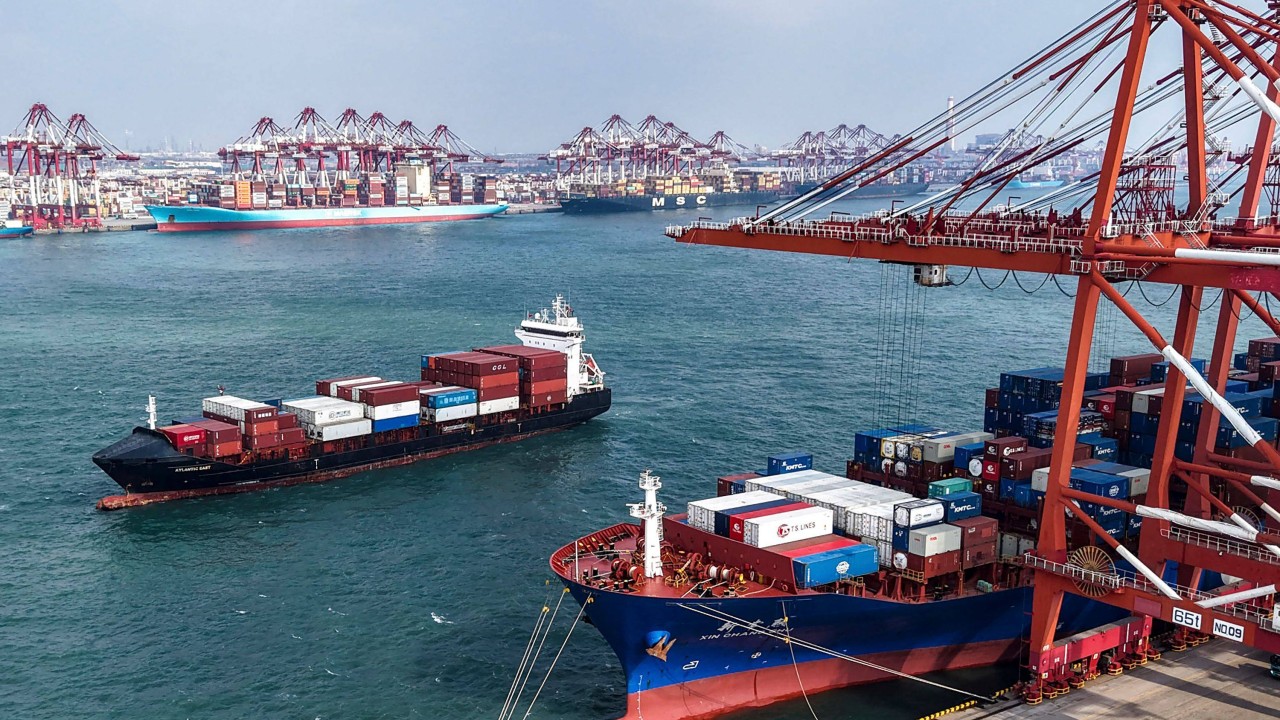
Middle East Airlines (MEA) serves as the primary case study for a high-risk commercial aviation strategy where the airline functions as a sovereign strategic asset rather than a standard profit-maximizing entity. While global carriers suspend operations at the first sign of regional instability, MEA maintains a flight schedule out of Beirut-Rafic Hariri International Airport (BEY) through a sophisticated triumvirate of internal risk hedging, specialized hull insurance negotiation, and geopolitical signaling. The airline’s continued presence in Lebanese airspace during periods of active conflict is not a matter of bravado; it is a calculated exercise in maintaining Lebanon’s singular umbilical cord to the global economy.
The Mechanics of Sovereign Continuity
The survival of MEA depends on three structural pillars that differentiate it from standard IATA members.
- Strategic Monopolization of the Gateway: As the sole national carrier, MEA holds a monopoly on the survival of Lebanese connectivity. When international competitors—Lufthansa, Air France, or Emirates—trigger their risk-mitigation protocols and cancel flights, MEA captures the entirety of the inelastic demand. This creates a unique revenue surge that offsets the massive spike in operational costs.
- State-Backed Risk Underwriting: The Lebanese government and the Central Bank (Banque du Liban), which owns the majority of MEA, treat the airline as a national security tool. Financial losses are viewed as a "cost of sovereignty" rather than a failure of management.
- Information Asymmetry and Local Intelligence: MEA operates with a superior understanding of local kinetic risks. Unlike foreign carriers that rely on third-party security briefs, MEA’s leadership maintains direct lines of communication with local political and military factions, allowing for real-time adjustments to flight paths and schedules that foreign risk-compliance departments cannot match.
The Cost Function of Aviation in a Conflict Zone
Operating an airline in a theater of active kinetic engagement shifts the standard cost-benefit analysis into a model defined by extreme externalities.
The Insurance Premium Bottleneck
The primary constraint for MEA is not fuel or labor, but the War Risk Insurance premium. Standard hull and liability insurance policies usually exclude acts of war, necessitating a separate, highly expensive "War Risk" rider. These premiums are not fixed; they are recalculated daily—sometimes hourly—based on the proximity of strikes to the airfield. MEA manages this through a technique known as "fleet dispersal." During periods of heightened tension, MEA relocates a significant portion of its Airbus A320 and A330 fleet to Istanbul (IST), Larnaca (LCA), or Paris (CDG). By keeping only the minimum necessary airframes on the ground in Beirut, the airline reduces its total "value at risk" (VAR), thereby lowering the insurance load.
The Labor Elasticity of Fear
Maintenance and ground crews face a different set of pressures. In a traditional business model, labor is a variable cost. In a conflict zone, it becomes a fixed psychological asset. MEA’s staff consists almost entirely of Lebanese nationals with a high tolerance for regional instability. This cultural alignment reduces the risk of "operational paralysis" that would occur in a multinational crew forced to stay overnight in a high-threat environment.
Geopolitical Signal Theory and Market Positioning
For MEA, every takeoff from Beirut is a demonstration of state resilience. This is a deliberate application of Signal Theory. When the national carrier continues to fly, it signals to the international community that the state infrastructure is still functional. Conversely, a total grounding of MEA is often the lead indicator of an imminent and total state collapse.
This signaling serves two specific audiences:
- The Diaspora Market: Lebanon’s economy is heavily reliant on remittances and seasonal travel from a massive global diaspora. This demographic has a near-total lack of price sensitivity during crises. MEA utilizes this inelasticity by maintaining premium pricing even as the "product" (the flight) becomes objectively more dangerous.
- The Diplomatic Corridor: MEA remains the only reliable method for diplomatic missions and international NGOs to rotate staff and supplies. By positioning itself as the "Indispensable Carrier," MEA secures a level of geopolitical protection; few actors in the region want to be responsible for the total isolation of a sovereign capital.
Technical Limitations of the Beirut Hub
The operational environment at BEY introduces specific technical constraints that modify flight profiles.
GPS Spoofing and Electronic Interference
Electronic warfare (EW) is a persistent feature of Middle Eastern conflicts. MEA pilots frequently navigate through zones where GPS signals are jammed or "spoofed" (indicating the aircraft is at a location hundreds of miles away). This forces a reliance on legacy navigation systems, such as Inertial Reference Systems (IRS) and ground-based radio beacons (VOR/DME). The requirement for high-level manual proficiency among pilots is a prerequisite for MEA’s operational model, as automated landing systems (ILS) may become unreliable in a jammed environment.
Fueling and Turnaround Efficiency
Turnaround time is the most critical metric in a kinetic environment. The objective is to minimize the "Ground Time Exposure" (GTE). MEA has optimized its ground operations to ensure that aircraft are refueled and re-loaded in the shortest possible window. In some instances, MEA utilizes "Tankering"—carrying enough fuel from the departure airport (like London or Dubai) for the return trip—to avoid any reliance on Beirut’s fuel infrastructure, which could be compromised or destroyed.
The Fragility of the Status Quo
While the model has proven resilient across decades, it faces a hard ceiling. The "Single Point of Failure" for MEA is the runway infrastructure. Unlike an aircraft, which can be moved, the physical assets of the airport—runways, air traffic control towers, and fuel depots—are static.
If the airport infrastructure is targeted, the MEA business model transitions from "High-Risk Aviation" to "Total Asset Preservation." At this stage, the airline enters a dormant state, with the fleet parked in Europe or the Gulf, waiting for a cessation of hostilities. This happened in 2006 and remains the primary threat to the current strategy.
Strategic Recommendation for Regional Stakeholders
To sustain operations in the current environment, MEA must move beyond simple fleet dispersal and embrace a Decentralized Operational Framework.
The airline should formalize secondary maintenance bases outside of Lebanon to ensure that the technical health of the fleet is not tied to the stability of the Beirut hangar. Furthermore, the development of a "Virtual Airline" contingency—where MEA utilizes wet-leased aircraft from neutral countries—could provide a layer of deniability and protection that Lebanese-registered airframes currently lack. This would shield the core fleet from seizure or destruction while maintaining the brand's presence in the sky.
The current strategy of "Flying into the Fire" is effective only as long as the airfield remains a neutralized zone. The moment that neutrality is violated, the cost function shifts from manageable high-risk to terminal asset loss. The next evolution of MEA must be the decoupling of the brand from the physical constraints of its home base. Only through geographic diversification of its operational core can MEA survive the inevitable closure of its primary hub.