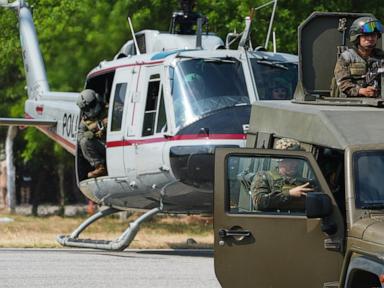
Deploying military assets under a state of siege is not a strategy for permanent security; it is an emergency liquidity injection of coercive force designed to break immediate territorial monopolies held by non-state actors. When the Guatemalan executive branch invokes a estado de sitio (state of siege) under the Ley de Orden Público (Public Order Law), it trades constitutional friction for tactical speed. Most coverage treats this escalation as a simple increase in troop counts and checkpoint frequency. That view misses the structural mechanics of the maneuver. A state of siege alters the legal, logistical, and economic rules of engagement across a targeted jurisdiction, forcing criminal syndicates, local populations, and state institutions into a high-stakes game of institutional endurance.
To evaluate whether Guatemala’s security escalation will produce durable order or merely displace violence, analysts must look past press briefings and examine the legal thresholds, force-multiplying mechanisms, and systemic bottlenecks that govern asymmetric domestic operations.
The Legal Mechanics of Constitutional Suspension
In standard policing environments, the state operates under a high burden of proof and strict procedural constraints. Law enforcement must obtain judicial warrants for searches, respect freedom of movement, and process detainees within rigid constitutional timelines. Under a state of siege—the second most severe tier of exception under Guatemalan law, exceeded only by a state of war—the executive branch suspends specific constitutional guarantees to eliminate these procedural bottlenecks.
The operational impact of this legal shift breaks down into four distinct powers:
- Warrantless Arrest and Detention: Security forces gain the authority to detain individuals suspected of conspiring against public order or participating in criminal networks without prior judicial authorization. This compresses the intelligence-to-capture cycle from weeks to minutes.
- Suspension of Freedom of Movement: Authorities impose curfews, restrict transit along strategic corridors, and establish perimeter cordons. This denies illicit networks their primary operational advantage: logistical fluidity.
- Prohibition of Public Assembly: The state bans demonstrations and public gatherings, preventing criminal organizations from using civilian crowds as human shields or orchestrating civil unrest to distract tactical units.
- Militarization of Command: Operational control shifts from the Policía Nacional Civil (PNC) to the Ministry of National Defense. The military assumes direct responsibility for internal security, subordinating civilian policing functions to military chain-of-command structures.
This legal restructuring does not create new physical capabilities; it removes the friction preventing existing capabilities from being applied at maximum velocity. By lowering the legal threshold for intervention, the state attempts to overwhelm the decision-making loop of localized criminal cells.
The Three Pillars of Tactical Execution
When Guatemala ramps up operations following a state of siege declaration, field execution relies on three interdependent operational pillars. Failure in any single pillar degrades the entire campaign into expensive theater.
1. Saturation and Corridor Denial
Criminal organizations—whether transnational drug trafficking organizations (DTOs), extortion-driven maras, or land-usurping syndicates—depend on predictable transit routes and uncontested safe havens. Tactical escalation begins with physical saturation. Combined joint task forces (PNC and army units) flood chokepoints, municipal boundaries, and secondary highways.
The immediate objective is not necessarily high-body-count engagements, which carry severe political and legal risks, but corridor denial. By establishing permanent and mobile checkpoints, the state raises the transaction cost of moving contraband, weapons, and cash. When movement becomes expensive and unpredictable, criminal supply chains stall.
2. Intelligence Harvesting Under Reduced Friction
A state of siege functions as an aggressive intelligence-gathering dragnet. During standard operations, criminal networks insulate their leadership through layers of low-level lookouts (banderas) and informants who cannot be legally detained without specific evidence of a felony.
Under emergency powers, mass detentions of low-tier operatives allow intelligence units to rapidly map local command structures, seize mobile devices, and extract actionable network topology before mid-level leaders can relocate or wipe communications. The effectiveness of this pillar depends entirely on analytical throughput: if the state detains hundreds of suspects without the forensic capacity to process their devices within 72 hours, the tactical advantage evaporates.
3. Asset Seizure and Logistical Starvation
Territorial control requires capital. Armed groups maintain loyalty through payrolls, bribes, and localized patronage. Ramped-up operations target the physical infrastructure of illicit finance—clandestine airstrips, fuel caches, arms depots, and front businesses. By dismantling the physical assets that generate cash flow, the state attempts to induce internal fractures within criminal groups, forcing rivals to turn on one another as liquidity dries up.
The Asymmetry of Operational Cost Functions
A core flaw in conventional reporting on Guatemalan security operations is the failure to account for the diverging cost functions of the state and non-state actors. Security operations are capital-intensive, politically fragile, and subject to diminishing returns.
The Guatemalan state bears high fixed and variable costs during a state of siege. Deploying thousands of soldiers and police officers away from their home bases requires sustained expenditure on fuel, rations, hazard pay, vehicle maintenance, and communications infrastructure. Simultaneously, the state absorbs an economic penalty: curfews and transit restrictions depress local commerce, disrupt agricultural supply chains, and chill foreign direct investment in the affected departments.
Criminal networks operate on a radically different cost curve. When confronted with overwhelming military saturation, rational criminal actors do not engage in symmetric combat; they execute a strategic dispersion.
- Temporal Dispersion (The Wait-Out Strategy): States of siege are constitutionally time-bound, typically decreed for 30 days and requiring congressional ratification for extensions. Criminal leaders recognize that the state cannot maintain maximum troop density indefinitely. Mid- and high-level targets simply go dark, halt overt operations, and wait for the decree to expire.
- Spatial Dispersion (The Balloon Effect): Squeezing a specific municipality or department forces illicit operations into adjacent jurisdictions where constitutional protections remain intact. If security forces lock down one transit corridor, smuggling routes shift to rougher, unmonitored terrain or cross porous borders into neighboring territories.
- Institutional Infiltration: Rather than fighting checkpoints, well-capitalized syndicates buy advance warning of raid schedules from compromised officials within the justice or security apparatus, rendering high-profile deployments sterile before troops even leave the barracks.
This asymmetry creates a structural trap. The state spends immense political and financial capital to achieve immediate quiet, while the underlying criminal infrastructure merely shifts its posture from active extraction to dormant preservation.
Institutional Bottlenecks and the Judicial Cliff
Tactical dominance in the streets fails if the downstream institutions cannot absorb the output of security operations. In Guatemala, the primary constraint on sustained security success is not a lack of rifles or soldiers; it is the severe bottleneck within the justice sector—a phenomenon best described as the judicial cliff.
When combined forces execute mass arrests during a state of siege, they generate a massive surge of case files that must eventually transition back into the ordinary court system once the emergency decree lapses. If the Ministerio Público (Public Prosecutor's Office) lacks the investigative personnel to build airtight evidentiary cases out of warrantless arrests, judges are legally obligated to release detainees due to lack of merit or procedural violations.
The mechanics of this failure follow a predictable sequence:
- Phase 1 (Days 1–10): Security forces conduct aggressive sweeps, yielding high arrest numbers and public approval.
- Phase 2 (Days 11–25): Detention facilities reach capacity. Prosecutors struggle to link detained individuals to specific crimes using admissible forensic evidence, as emergency detentions often rely on intelligence tips rather than documented chain-of-custody proof.
- Phase 3 (Day 30+): The state of siege expires or faces congressional pushback. Defense attorneys challenge the legality of evidence gathered during the suspension of rights. Courts dismiss charges against mid-level operatives, returning hardened, resentful actors to the streets with intact criminal networks.
Without parallel surges in prosecutorial capacity, forensic laboratories, and protected witness programs, military escalation acts merely as a temporary holding pattern rather than a permanent removal mechanism.
Separating Known Mechanics from Strategic Unknowns
Evaluating the trajectory of Guatemala’s security escalation requires separating verifiable operational realities from speculative outcomes.
Verified Realities:
- Legal Precedent: Guatemala possesses a well-established legal framework for states of exception, frequently utilized by successive administrations to address localized gang violence, narco-trafficking in border regions (such as Petén, Izabal, and Alta Verapaz), and agrarian or mining conflicts.
- Civil-Military Integration: The Guatemalan military retains superior logistical reach, transport assets, and territorial footprint compared to the PNC, making military involvement operationally unavoidable for large-scale rural deployments.
- Short-Term Suppression: Historical data from prior states of siege in Guatemala consistently confirms an immediate, sharp drop in reported homicides, extortions, and highway blockades within the targeted zone during the active window of the decree.
Strategic Unknowns (Hypotheses Requiring Monitoring):
- Congressional Durability: Whether the legislature will ratify and extend the state of siege beyond its initial 30-day window remains an open political variable. Congressional opposition often uses ratification votes as leverage to extract unrelated political concessions from the executive branch.
- Targeted vs. Indiscriminate Enforcement: The long-term legitimacy of the operation hinges on whether security forces utilize emergency powers for surgical strikes against high-value financial nodes, or resort to indiscriminate sweeps of working-class neighborhoods that alienate the civilian population and dry up human intelligence sources.
- Post-Siege State Presence: The ultimate success of the campaign cannot be measured while troops are on the streets; it can only be measured 90 days after they withdraw. If civilian governance, municipal services, and community policing do not fill the vacuum left by departing soldiers, criminal governance will inevitably reassert itself.
Strategic Imperatives for Durable Territorial Control
Relying on repeated states of siege creates a dependency cycle that degrades constitutional norms while failing to dismantle the economic engines of organized crime. To convert the temporary tactical advantage of a state of siege into permanent territorial control, security planners must execute a strict transition protocol before the emergency decree expires.
First, operational metrics must shift immediately from volume to network disruption. Leadership must halt the practice of measuring success by total arrests or weapons seized. Instead, performance must be graded exclusively on the neutralization of financial fixers, corrupt municipal officials, and logistics coordinators—the irreplaceable nodes that connect street-level muscle to transnational capital.
Second, the executive branch must deploy embedded prosecutorial task forces alongside military units from hour zero. Every warrantless detention and search must be shadowed by legal technicians tasked with converting raw tactical intelligence into constitutionally admissible evidence before the 30-day clock runs out.
Third, the state must pair military withdrawal with permanent infrastructure and administrative anchoring. Before a single battalion stands down, civilian agencies must establish permanent, fortified police substations, functioning local courts, and basic public services within the pacified perimeter. A state of siege can clear a territory of armed rivals, but only permanent, predictable institutional presence prevents them from returning.



