The era of the specialized tech company is dying. If you've been watching the market lately, you've seen a shift that goes beyond simple growth. We're witnessing the rise of the omniscaler. These aren't just big companies. They're entities that vacuum up every horizontal and vertical layer of the digital economy until there’s nowhere left for a startup to breathe.
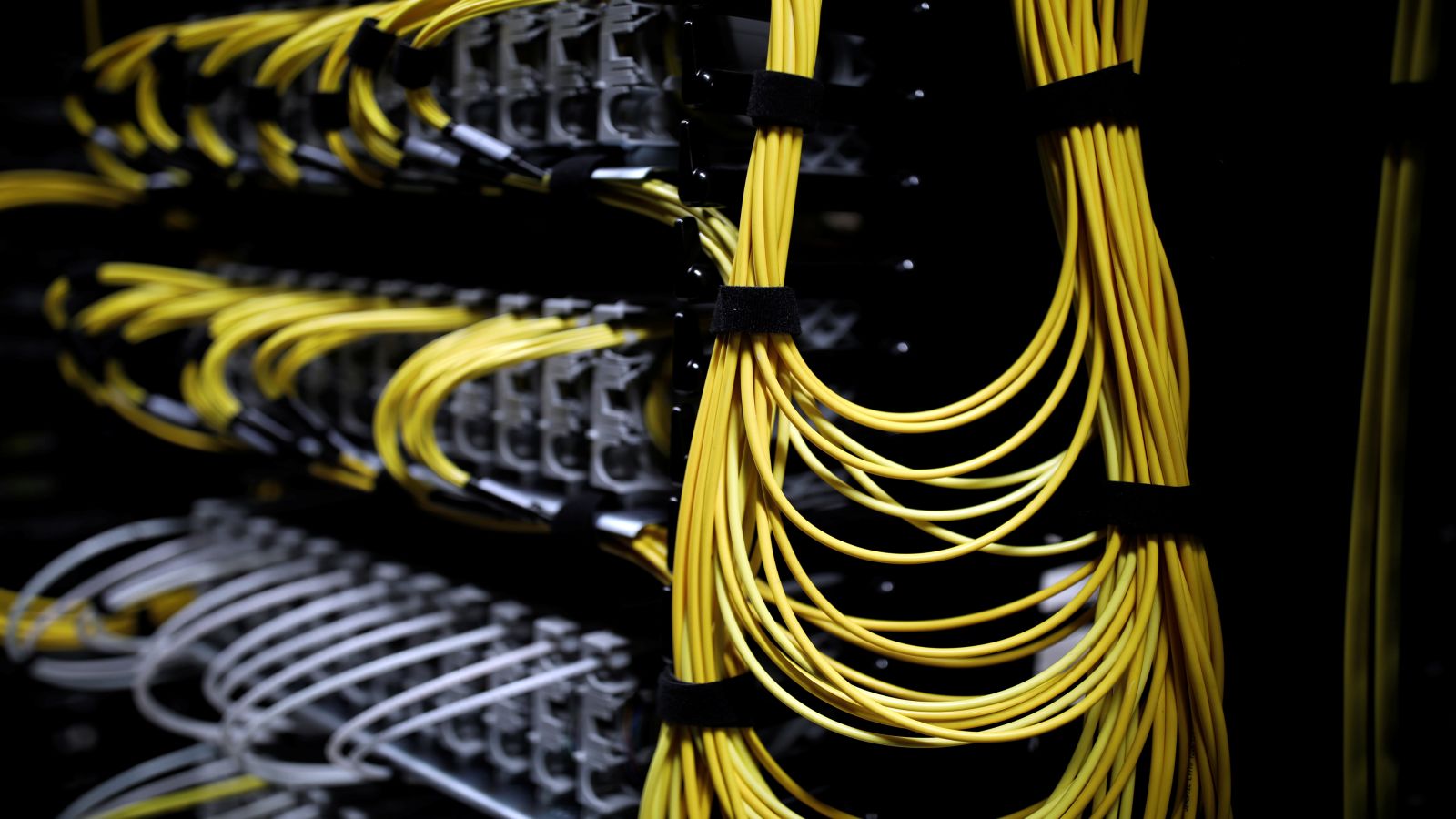
You probably remember when Google just did search. Or when Amazon just sold books. Those days are gone. Now, these giants own the chips, the data centers, the fiber optic cables, and the AI models running on top of them. They’ve become omniscalers. They scale everywhere, all at once, with a terrifying efficiency that makes traditional antitrust laws look like they're written in crayon.
If you’re trying to build a software business today, you aren't just competing with other startups. You're competing against an integrated stack that spans from subsea cables to the voice assistant in your kitchen. It's a massive shift in how value is captured.
The Stack is No Longer Optional
In the old days, you could win by being the best at one thing. You’d build a great database, or a clever app, and you’d plug into someone else’s infrastructure. That’s a dangerous game now. Omniscalers have realized that the real money isn't in the service; it's in owning the entire pipe.
Take Microsoft. They don't just want you using Office. They want you on Windows, using Azure, powered by their custom Athena AI chips, authenticated via Entra, and communicating via Teams. Each layer reinforces the others. If you try to swap out one piece for a competitor's product, the "friction" starts to feel like a brick wall. It's not always a conscious choice by the user. It’s gravity.
This vertical integration is a massive moat. It allows these firms to subsidize costs in one area to kill off competition in another. They can give away software for free because they're making a killing on the underlying compute. Or they offer "free" AI credits to startups, effectively locking those new companies into their cloud ecosystem before they’ve even written their first line of production code.
Why Software Alone Is a Losing Battle
I've talked to dozens of founders who thought their "unique algorithm" would save them. It won't. Algorithms are becoming a commodity. The real power has shifted to whoever has the most GPUs and the cheapest electricity.
The omniscalers—think Meta, Alphabet, Amazon, and Microsoft—are spending tens of billions every quarter on capital expenditures. We're talking about physical hardware. Land. Power plants. They are building a physical reality that matches their digital dominance. While a startup is worried about its burn rate, an omniscaler is worried about whether it can secure enough nuclear power to keep its next-gen data center running in 2027.
This is the "physicality" of tech that most people ignore. You can't disrupt a power plant with a clever UI. You can't "pivot" your way out of a chip shortage if your competitor owns the fabrication queue. The sheer scale of this investment creates a barrier to entry that is effectively infinite for anyone without a trillion-dollar market cap.
The Data Feedback Loop
It’s not just about the hardware. It’s about the closed-loop system of data. Every time you search, click, or even hover your mouse over an image, you’re training the omniscaler’s next model.
- They see the demand before you do.
- They identify emerging trends in real-time.
- They can clone a competitor’s feature set in a weekend.
- They have the distribution to push that clone to a billion users by Monday.
This creates a "winner-takes-most" dynamic. If you aren't the primary platform, you're just a tenant. And being a tenant is expensive. You pay the "tax" in the form of cloud fees, app store commissions, and advertising costs. You're essentially funding your own replacement.
The Death of the Middle Class Startup
We’re seeing the hollowing out of the tech ecosystem. On one end, you have the massive omniscalers. On the other, you have tiny, agile "solopreneur" setups or micro-SaaS companies that stay under the radar. The middle—the companies trying to grow into the next Salesforce or Workday—is getting squeezed.
The omniscaler strategy is simple: absorb or outspend. If a middle-market company starts gaining traction, the omniscaler either buys them (if the regulators are sleeping) or integrates a "good enough" version of that product into their existing suite. Most enterprise customers would rather use a 7/10 tool that’s already included in their existing contract than pay for a 10/10 tool that requires a new security audit and a separate bill.
It’s brutal. It’s efficient. And it’s changing the nature of innovation. Instead of dreaming of becoming a public company, most founders are now just building "features" in hopes of an exit. They want to be absorbed into the omniscaler's belly.
The Energy Monopoly
One thing people don't talk about enough is the energy play. As AI models get bigger, the demand for power is skyrocketing. We’re reaching a point where the biggest tech companies are becoming energy companies.
Microsoft's deal to restart a reactor at Three Mile Island isn't just a PR stunt. It’s a survival tactic. Google is looking at small modular reactors. Amazon is buying data centers directly connected to nuclear plants. They're bypassing the grid because the grid isn't fast enough or big enough for their ambitions.
This is the ultimate omniscaler move. When you own the intelligence (AI), the infrastructure (Cloud), and the energy (Nuclear), you don't just own the market. You own the foundation of the modern world. Small players can't compete with that. They can't even get in the room.
Finding the Gaps in the Armor
Is it all doom and gloom? Not necessarily. But the strategy has to change. You can't beat an omniscaler at scale. You have to beat them at "small."
Omniscalers are built for the masses. They’re built for the 80% use case. That leaves 20% of the market—the high-value, high-complexity niches—underserved. The giants are too big to care about a specialized law firm’s specific workflow or a boutique manufacturer’s supply chain needs. They want "one size fits all" because that’s how you get to a billion users.
If you’re building today, you have to be un-copyable. That means:
- Deeply integrated hardware-software plays that don't rely on generic cloud.
- Highly regulated industries where "move fast and break things" leads to jail time.
- Community-driven platforms where the value is the people, not the code.
- Localized solutions that require "boots on the ground" expertise.
Basically, if an omniscaler can do it with an API, don't do it.
The Regulatory Mirage
Don't wait for the government to save you. Antitrust moves slowly. By the time a court decides a company is a monopoly, the market has usually moved on to the next thing anyway. The "march" isn't going to stop because of a few fines. To these companies, a 5-billion-dollar fine is just a line item in the "cost of doing business" column.
The real shift will come from a change in user sentiment or a fundamental shift in how we access the internet. But for now, the omniscalers are the ones holding the map and the compass. They’re the ones defining what the digital world looks like for the next decade.
Stop looking at these companies as just "websites" or "service providers." They are the new utilities. They are the roads, the electricity, and the water of the 21st century.
The smartest thing you can do right now is audit your own dependence. Look at your tech stack. How much of it is owned by a single entity? If that entity decided to compete with you tomorrow, would you survive? If the answer is no, it's time to start diversifying. Move your critical data to independent providers. Build direct relationships with your customers that don't rely on a third-party algorithm. Own your distribution. It’s the only way to avoid being crushed by the march.