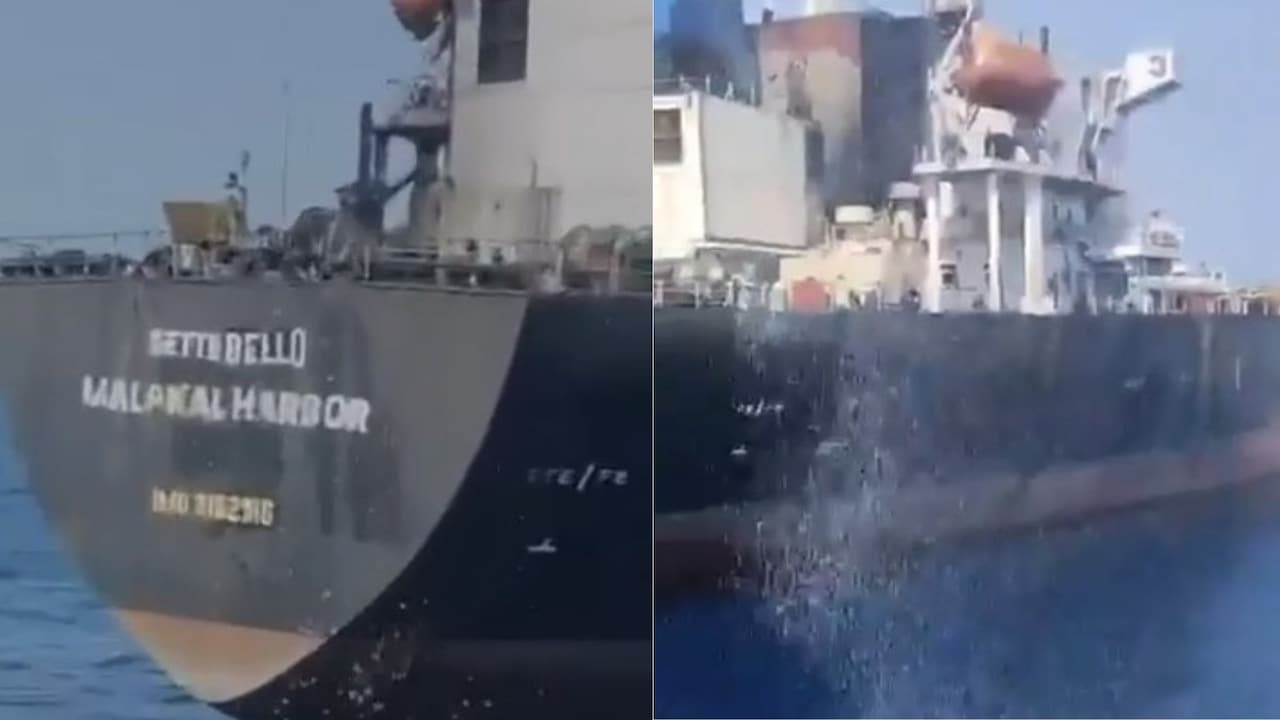
Mainstream news outlets are running the same tired headline: three Indian mariners dead after a missile strike off the coast of Oman, framed entirely as a tragic failure of international naval protection. The media wants you to look at the warships. They want you to look at geopolitical friction points. They want you to blame the lack of military escorts in the Arabian Sea.
They are looking at the wrong map.
This tragedy is not an unpredictable casualty of modern warfare. It is the predictable cost of doing business in a global shipping industry that treats human crews as cheap, depreciating assets. For decades, maritime logistics has run on a high-stakes, low-margin calculus that intentionally gambles with human lives to save pennies on fuel and insurance premiums.
The media calls it a security crisis. In reality, it is a structural labor exploitation crisis disguised as a military conflict.
The Phantom Fleet: Why Big Shipping Deserts Its Crews
When a merchant vessel gets hit in the waters off Oman, the immediate reaction from talking heads is to demand more naval destroyers from Washington, New Delhi, or London. This demand ignores how global shipping actually operates.
The vast majority of cargo ships traversing these high-risk corridors fly "flags of convenience." They are registered in Panama, Liberia, or the Marshall Islands to evade taxes, bypass strict labor laws, and avoid stringent safety inspections.
[Flag of Convenience System]
   |
   +--> Ship Owner (Based in G7 Nation)
   |
   +--> Shell Company (Based in Tax Haven)
   |
   +--> Registration Flag (Panama/Liberia - Low Regulation)
   |
   +--> Crew Supply (Sourced from Developing Nations)
I have spent years analyzing supply chain risk, and the pattern is unvarying. When a crisis hits, the corporate entities hiding behind these flags dissolve into a cloud of shell companies.
- The Insurance Shell Game: Shipowners buy war-risk insurance, calculate the deductible against the value of the hull, and realize that keeping a vessel running through a combat zone is more profitable than rerouting around the Cape of Good Hope.
- The Human Subsidized Risk: If the ship is hit, the hull is insured. The cargo is insured. The lives of the mariners? They are covered by standard liability limits that value a South Asian sailor's life at a fraction of a Western executive's daily bonus.
The "lazy consensus" blames regional militants or insufficient naval patrols. The hard truth is that the shipping lines choose to sail through the crosshairs because the math tells them it is cheaper to risk an explosion than to delay a shipment of consumer electronics by twelve days.
Dismantling the Naval Escort Myth
Let’s answer the question the mainstream press refuses to ask honestly: Why can't international navies just protect every merchant ship?
The premise itself is flawed. The Arabian Sea, the Gulf of Oman, and the Red Sea cover millions of square miles of open water. Even if the world's major navies deployed every single destroyer and frigate they possessed, they could not guarantee a safe perimeter around every commercial vessel.
Furthermore, modern anti-ship ballistic missiles and low-cost loitering munitions have completely flipped the economic asymmetry of naval warfare.
$$Cost\ Exchange\ Ratio = \frac{Cost\ of\ Air\ Defense\ Missile\ ($2,000,000)}{Cost\ of\ Offensive\ Drone\ ($20,000)} = 100:1$$
A state-of-the-art air defense missile costs upwards of two million dollars. The drone or asymmetric missile used to strike a bulk carrier costs twenty thousand. No navy can sustain that cost exchange ratio indefinitely. Expecting a military shield to permanently sanitize a commercial shipping lane in a contested zone is a logistical fantasy.
The shipping industry knows this. Yet, they continue to send sailors into these zones without hazard pay that reflects the actual risk, relying on the public taxpayer to fund the naval presence that acts as their corporate security detail.
Why the Seafarer Sourcing Model is Broken
The three sailors killed off Oman were Indian nationals. This is not a coincidence; it is the industry standard.
According to the International Chamber of Shipping, India, the Philippines, and China supply the vast majority of the world’s seafarers. These mariners come from working-class communities, signed to grueling multi-month contracts managed by third-party crewing agencies that insulate the actual shipowner from any direct liability.
+-------------------------------------------------------------+
|               THE SEAFARER LIABILITY BUFFER                 |
+-------------------------------------------------------------+
| [Actual Ship Owner]                                         |
|    |                                                        |
|    v (Management Contract)                                  |
| [Technical Manager (Third Party)]                           |
|    |                                                        |
|    v (Crewing Agreement)                                    |
| [Subcontracted Recruitment Agency (Mumbai/Manila)]          |
|    |                                                        |
|    v (Employment Contract)                                  |
| [The Mariner on the Ship]                                    |
+-------------------------------------------------------------+
When a tragedy like this occurs, the finger-pointing begins instantly. The shipowner blames the charterer. The charterer blames the technical manager. The technical manager points to the recruitment agency in Mumbai. The family of the deceased is left navigating a labyrinth of maritime law that spans four continents just to claim a basic payout.
I have watched maritime executives at industry conferences lament the "crew shortage" while simultaneously lobbying against mandatory rerouting protocols that would keep these exact crews out of missile range. They want the talent, but they refuse the responsibility of keeping them alive.
The Hard Reversal: Stop Funding Corporate Risk With Human Lives
If global supply chains cannot function without sacrificing mariners in predictable combat zones, then the system requires an immediate, non-negotiable overhaul.
We must stop treating these incidents as military anomalies. They are corporate compliance failures.
- Ban Flags of Convenience for High-Risk Transits: If a shipowner wants the protection of Western or Indian naval forces, their vessel must be flagged in a nation that enforces strict labor protections and holds executives criminally liable for reckless endangerment.
- Absolute Right of Refusal: Mariners must have the legally binding right to refuse transit through verified high-risk zones without fear of blacklisting or termination by crewing agencies.
- Direct Executive Liability: If a corporate board decides to send a ship through a known active conflict zone to save on transit costs, the C-suite executives should face personal legal consequences if that gamble costs human lives.
The downside to this approach is obvious: consumer prices will rise. Rerouting ships around Africa adds time, burns more fuel, and increases the cost of every container landed in Europe or North America.
But anyone who argues that we must keep the current lanes open at all costs is making a clear moral statement: they believe cheap shipping is worth a steady body count.
Stop looking at the missile strikes as a failure of geopolitics. Start looking at them for what they really are: the cost of goods sold, written in blood, approved in corporate boardrooms.
Fire the executives who chose the route, not the politicians who couldn't stop the missile.