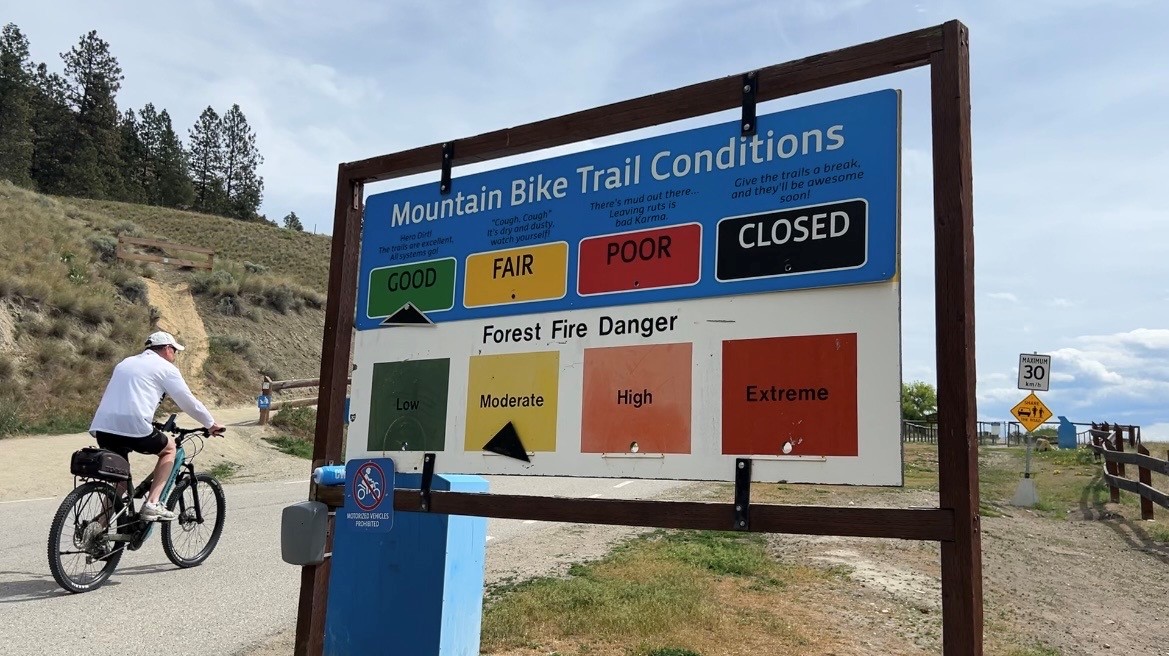
The valley is warming, and the safety net is fraying. For years, residents of the Okanagan have lived under a seasonal rhythm of anxiety, waiting for the first plume of smoke to signal the start of the fire season. But the old warnings to simply be vigilant have become a hollow defense against a changing climate and a decade of questionable forest management. Vigilance is no longer enough when the landscape itself has been primed for combustion.
As temperatures climb toward record highs this week, the risk is not just a matter of stray cigarette butts or unattended campfires. The real danger lies in the massive accumulation of fuel on the forest floor and the suburban sprawl that has pushed residential neighborhoods deep into the wildland-urban interface. We are looking at a structural crisis, not just a seasonal one.
The Fuel Load Reckoning
Decades of fire suppression have created a paradox. By putting out every small blaze immediately, we have prevented the natural cycle of low-intensity burns that historically cleared out underbrush and dead wood. The result is a forest floor that acts as a powder keg. In the hills surrounding Kelowna and Vernon, the density of "fine fuels"—needles, dried grass, and small branches—is at levels that make high-intensity crown fires almost inevitable once an ignition occurs.
The heat we are seeing now isn't just uncomfortable; it is actively curing this fuel. When the moisture content in these materials drops below a certain threshold, the physics of fire change. A single spark doesn't just start a fire; it triggers an explosion of energy that can leap across highways and over the man-made firebreaks we once relied on.
We often blame the "human element" for ignitions, but we rarely discuss the "management element" that determines whether that ignition becomes a manageable brush fire or a city-threatening inferno. The province has made strides in mechanical thinning and prescribed burns, but the scale of the work required dwarfs the current budget and manpower. We are treating hectares when we should be treating mountain ranges.
The Interface Trap
The Okanagan is one of the fastest-growing regions in Canada. That growth has a price. Every new development perched on a scenic hillside represents a new set of targets for a wildfire. These areas, known as the wildland-urban interface, are where the most significant property losses occur.
Modern building codes have improved, with many new homes featuring fire-resistant siding and roofing. However, older neighborhoods remain highly vulnerable. A cedar shake roof or a wooden deck connected to a house can act as a fuse, drawing fire from the grass straight into the structure.
The Myth of Response Time
There is a dangerous sense of complacency that comes with living near a major center. Residents often believe that because they are within city limits, a fire truck will arrive in minutes to save their home. In a mass-ignition event or a fast-moving interface fire, that is a physical impossibility.
During major events, fire departments are forced to engage in "triage." If a house is already involved or if the surrounding vegetation makes it indefensible, crews will move on to the next property. It is a brutal calculation. If your home hasn't been "FireSmarted"—clearing brush within 10 meters, removing low-hanging branches, and keeping gutters clean—you are essentially opting out of the protection plan.
The Economics of Smoke
We cannot talk about fire risk without talking about the atmospheric consequences. The Okanagan's economy is built on tourism and viticulture. Both are under direct threat from the increasing frequency of "smoke seasons."
When the valley fills with particulate matter, the vineyards suffer. Smoke taint is a documented phenomenon where the chemicals in wood smoke are absorbed by grapes, ruining the flavor profile of the wine. For a multi-billion dollar industry, this isn't just a nuisance; it's an existential threat.
The tourism sector feels the hit even faster. Hotel cancellations follow smoke plumes with surgical precision. The "vigilance" being urged by officials isn't just about saving trees; it's an attempt to save the regional economy from a total summer shutdown.
Beyond the Bucket Brigade
The reliance on water bombers is a visible sign of action, but it is often a sign of failure. By the time a Martin Mars or a Conair Dash 8 is dropping retardant, the situation is already out of control. These tools are designed to slow a fire down so ground crews can get in, not to extinguish it entirely.
The real work happens in the winter and spring. It happens through "cultural burning"—practices used by Indigenous communities for millennia to manage the land. These traditional methods involve small, controlled fires that mimic natural cycles, reducing the fuel load without destroying the ecosystem. Integrating these practices into modern provincial strategies has been slow, hampered by bureaucracy and a lack of understanding of fire's role as a tool rather than an enemy.
The Homeowner's False Security
Many residents feel they have done their part by keeping their lawns green. But a green lawn won't stop an ember shower. During a wildfire, embers can travel several kilometers ahead of the main fire front. These glowing coals find their way into attic vents, under decks, and into the "nooks" of a house.
Consider a hypothetical scenario: A homeowner clears all the trees around their house but leaves a pile of firewood stacked against the back wall. An ember lands in that woodpile. Within twenty minutes, the house is lost, despite the forest being fifty meters away. This is how most interface homes burn. It is rarely a wall of flame; it is a thousand small ignitions that go unnoticed until it is too late.
The Changing Winds
Climate data suggests that the "shoulder seasons" are shrinking. The window of time where the weather is cool enough to perform safe prescribed burns is narrowing. Simultaneously, the peak heat of summer is arriving earlier and staying longer.
This creates a high-pressure environment over the interior of British Columbia. These heat domes don't just bake the earth; they create their own weather systems. Pyrocumulonimbus clouds—fire clouds—can generate lightning and erratic winds, essentially allowing a fire to dictate its own path of destruction regardless of the local topography.
The Limits of Public Policy
Government agencies are in a difficult position. They must manage public safety while respecting private property rights and environmental concerns. Asking people to clear-cut parts of their property for fire safety is often met with resistance from those who moved to the Okanagan specifically for the trees and the "natural" look.
There is also the issue of insurance. We are seeing a trend in other high-risk regions, such as California, where insurers are simply pulling out of the market or raising premiums to unaffordable levels. The Okanagan hasn't reached that tipping point yet, but the data suggests it is on the horizon. If you cannot insure a home in a high-risk zone, the property value evaporates.
The Hard Choice
The narrative of "being careful" is a relic of a time when the forests weren't so volatile. Today, we need to shift from a mindset of prevention to a mindset of resilience. We have to accept that fire is a permanent part of the Okanagan landscape.
This means making hard choices about where we build and how we live. It means demanding that local governments prioritize fuel mitigation over new developments. It means recognizing that the smoke-filled summers of the last decade are not anomalies; they are the new baseline.
The heat is coming, and the wind will follow. The time for simple vigilance has passed. We are now in a race to re-engineer our relationship with the land before the next spark decides the future for us.
Move the woodpile. Clean the gutters. Demand better forest management. The valley depends on it.