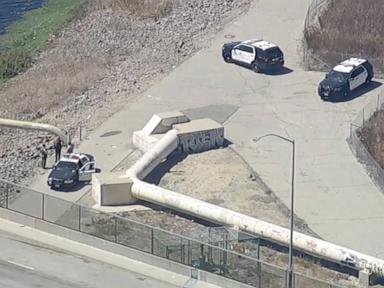
Every time a nameless body hits the news cycle, the public machinery grinds into the exact same predictable, performative outrage. Local outlets push breathless updates. Armchair sleuths scour GIS maps. Purtane moralists lament the fragility of modern safety nets. The recent double discovery of a young girl and a man found dead in the same district sparked the usual round of hand-wringing. Headlines treated the proximity of the two cases as some macabre geographical mystery, a spatial puzzle begging for a narrative tie-in.
It is a lazy, sensationalist reflex.
I have spent years watching institutions panic over the optics of unsolved tragedies while completely ignoring the structural rot that caused them. We treat unidentified remains as a localized whodunit or a tragic anomaly, missing the cold, systemic reality. The horror is not that we occasionally find people whose names we do not know. The horror is that our entire social architecture is built to make people invisible long before they ever draw their last breath.
The Geography of Eradication
Let us dispense with the amateur fiction that finding two bodies in close proximity implies a coordinated threat or a shared narrative thread. That is television writer-room logic. In urban and semi-rural planning, certain dead zones naturally accumulate abandoned human life. Parks, industrial buffer strips, highway corridors, and neglected woodlots share common traits: low visibility, zero foot traffic from residents, and municipal neglect.
When a man and a child are recovered from the same general district in separate incidents, commentators rush to find a connective tissue. They want a monster under the bed because a monster is easy to conceptualize. A monster can be caught, hunted, and neutralized on film.
The truth is much more banal and infinitely more damning. The connection between those two deaths is not a serial perpetrator or a localized curse. The connection is a municipal policy that treats certain tracts of land as trash heaps and certain populations as disposable. When you systematically gut mental health infrastructure, evict safety-net housing, and underfund emergency shelter programs, human beings do not simply evaporate. They drift into the physical margins of our cities. Eventually, their bodies do too.
The Forensic Illusion
Police departments lean heavily on the public to identify the dead, throwing up composite sketches and dental charts like digital milk cartons. It makes for good press conferences. It projects diligence.
Let us be brutally honest about the limits of crowd-sourced forensics. Relying on Twitter detectives to identify a deceased child or an isolated adult is a confession of institutional failure. Modern forensic genealogy has made massive leaps, yet municipal budgets remain stubbornly locked in twentieth-century investigative loops. DNA phenotyping and familial database cross-matching exist, but departments routinely drag their feet on funding them unless a victim fits a specific media-friendly demographic.
When a body remains unidentified for weeks, it is rarely because technology failed. It is because nobody was looking for that person while they were alive.
Think about the sheer velocity of modern alienation. You can vanish from your apartment, your job, and your bank account, and society will not blink for months. Automated billing systems keep your utilities running. Subscription models auto-renew. Ghost profiles persist on social feeds, liking posts via background algorithms long after the owner has ceased to function. We have engineered a society where electronic proxies outlive flesh and blood. An unidentified corpse is merely the final, undeniable proof of an erasure that began years earlier.
The Morbidity Industrial Complex
The media coverage surrounding these dual discoveries exposes a profound moral rot in how we consume tragedy. We treat missing persons and unidentified remains as true-crime entertainment. Podcasts monetize the decay. Documentarians sensationalize the decomposition timelines.
This voyeurism serves a specific psychological function. It allows the comfortable middle class to peer into the abyss of absolute destitution from the safety of a leather couch, secretly reassuring themselves that this could never happen to them or theirs. They draw a sharp, imaginary line between the people found nameless in the brush and their own stable existence.
That line is a fiction.
The economic floor is dropping out for millions. The distance between a missed mortgage payment, a mental health crisis, and a nameless transit-hub death is shorter than most care to admit. By framing these deaths as isolated mysteries rather than predictable outputs of an unlivable economic baseline, we protect the status quo from accountability.
Stop treating human abandonment as a puzzle to be solved by internet sleuths. Stop waiting for a cinematic breakthrough from overworked coroners who are chronically starved of resources.
The next time a headline blares about a nameless body found in the woods or alongside an asphalt strip, do not look for clues. Look at the local municipal budget. Look at the eviction rates. Look at the shuttered clinics. The names do not matter nearly as much as the systemic failures that ensured nobody knew them in the first place.


