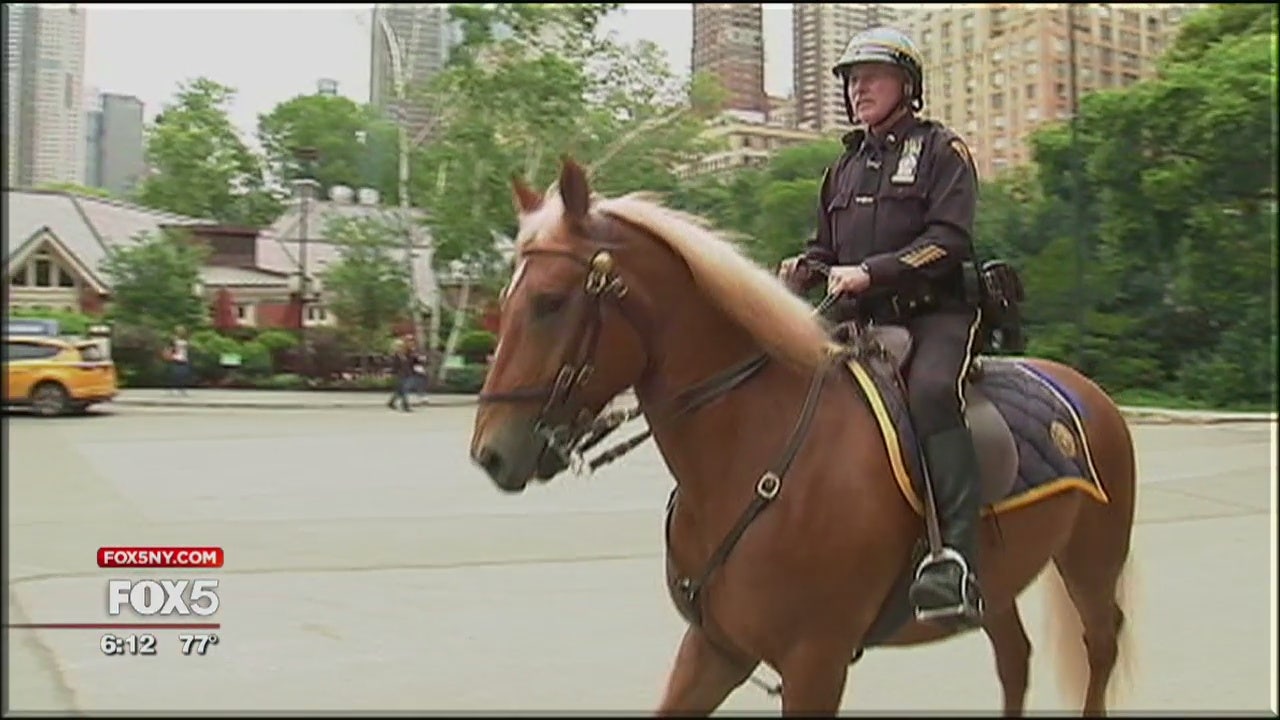
The sight of a police officer chasing down a suspect on horseback through the concrete canyons of Manhattan is not a cinematic gimmick or a relic of the nineteenth century. It is a calculated, functional component of urban law enforcement that recently went viral after a mounted officer pursued and apprehended a robbery suspect in Times Square. While the internet focused on the spectacle, the event exposed a deeper intersection of traditional policing methods and the chaotic reality of modern New York City street crime.
New York City remains one of the few global hubs where the horse is not just ceremonial. The NYPD Mounted Unit, established in 1871, serves a purpose that technology has yet to replicate. In a crowded environment like Times Square, a horse offers a ten-foot-tall vantage point that a patrol car or an officer on foot cannot match. It allows an officer to see over crowds, identify a fleeing suspect, and maneuver through gridlocked traffic that would paralyze a Ford Explorer or a scooter.
The Mechanics of the Elevated Arrest
When a mounted officer initiates an arrest, the physics of the encounter change immediately. A horse weighing 1,500 pounds creates a psychological and physical barrier that most suspects are unwilling to challenge. During the recent incident in Times Square, the officer utilized the animal's size to shepherd the suspect toward a wall, effectively using the horse as a living barricade.
The logistics of an arrest on horseback are notoriously difficult. An officer cannot simply hop off the saddle and leave a highly trained, expensive animal unattended in a swarm of tourists. Standard operating procedure requires the mounted officer to maintain control of the horse while coordinating with ground units via radio. In the Times Square case, the mounted officer performed the initial "interdiction," slowing the suspect's momentum and cutting off escape routes until officers on foot could arrive to apply handcuffs.
Why the Horse Survives in the Digital Age
Critics often argue that maintaining a stable of horses in the most expensive real estate in the world is an inefficient use of taxpayer funds. However, the Mounted Unit functions as a force multiplier in ways that data-driven policing often ignores.
Crowd Control and Visibility
In a protest or a high-density tourist zone, one horse is widely considered to have the tactical impact of ten to twelve officers on foot. The height advantage provides a "command presence" that de-escalates situations before they turn violent. It is much harder to ignore a direct order when it comes from someone sitting seven feet above your head.
Mobility in Gridlock
Manhattan traffic is a stationary beast. During the holidays or major events, response times for motorized units plummet. A horse can move onto a sidewalk, navigate between lanes of stopped taxis, and cross pedestrian plazas without the limitations of a wheelbase.
Community Engagement
There is a softer side to this hard-hitting tactical tool. In a city where the relationship between the public and the police is often strained, the horse acts as a social bridge. Tourists and residents who might never approach a patrol car will stop to speak with a mounted officer. This creates an intelligence-gathering network that is organic rather than forced.
The Risks to Man and Animal
The job is dangerous. New York streets are a sensory minefield of sirens, steam vents, air horns, and aggressive drivers. Training a horse for this environment takes months of "desensitization" training. They are exposed to controlled explosions, waving flags, and loud noises to ensure they do not bolt when a bus backfires.
The suspect in the Times Square pursuit was allegedly armed with a knife. This introduces a grim variable. While the horse provides a height advantage, it also presents a large target. The NYPD selects specific breeds—usually Percheron or Belgian crosses—for their temperament and durability, but the risk of injury in a high-speed chase on pavement is constant. Hard asphalt is unforgiving on equine joints, and the risk of a horse slipping during a sharp turn is a major concern for the unit's trainers.
The Cost of Tradition
Maintaining the Mounted Unit is a significant financial commitment. The NYPD operates several stables across the boroughs, including a flagship facility in Hell’s Kitchen. The costs involve specialized veterinary care, high-quality feed, and the maintenance of specialized trailers.
| Expense Category | Operational Impact |
|---|---|
| Training | Minimum of six months for both officer and horse. |
| Logistics | Specialized transport vehicles required for deployment. |
| Maintenance | 24/7 stable staffing and farrier services for shoeing. |
Despite these costs, the unit persists because it solves a specific New York problem. The city’s geography—narrow streets, massive crowds, and verticality—demands a solution that is both mobile and intimidating.
Tactical Evolution or Nostalgia
The debate over the Mounted Unit often mirrors the broader conversation about police modernization. Should the city trade horses for more drones or electric bikes?
Drones offer a better view but cannot physically stop a person. Electric bikes are fast but lack the physical presence to clear a path through a panicked crowd. The horse remains a hybrid solution. It is a vehicle that can think, react, and impose its will on a physical space.
The Times Square arrest was not a fluke. It was a demonstration of a specialized tool working exactly as intended. The officer spotted a crime from a distance, moved through a space where a car could not go, and used the mass of his mount to end a pursuit without discharging a weapon. In the complex ecosystem of New York City, sometimes the most effective way to move forward is to rely on a method that has worked for over a century.
New York is a city that never stops moving, but sometimes, the best way to catch up is on four legs.