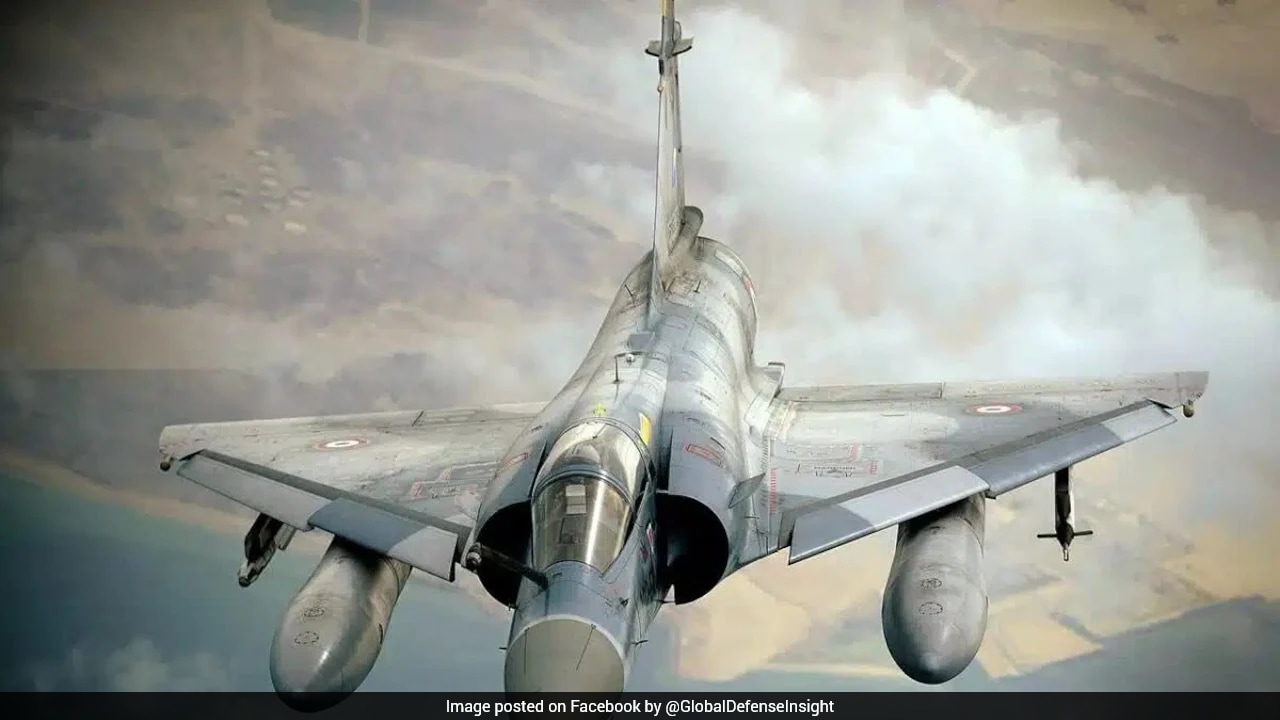
Early reporting on the October 20, 2026 French Air and Space Force fighter crash near Nancy listed one fatality while a second crew member remained missing. That initial tally changed. Investigators later confirmed that both aviators aboard the two-seat Dassault Mirage 2000D died when the jet went down in a wooded area north of Nancy.
The victims were 27-year-old Lieutenant Quentin Klysz, who was qualifying as an operational combat pilot with roughly 450 flight hours, and 44-year-old Lieutenant Colonel Antranig Sarkissian, a seasoned navigator. Neither aviator had time to eject before impact.
Honestly, whenever a headline drops with "one killed" during a live search, half the internet treats the update as a footnote. Aviation accidents rarely stay neat like that. When an aircraft hits trees at night with zero distress call and no ejection attempt, the real story isn't just the body count. It's what happens inside a cockpit when darkness, weather, and high-speed geometry collide.
What Actually Happened Near Nancy
The aircraft was operating out of Air Base 133 at Nancy-Ochey in northeastern France. Late on Tuesday evening, October 20, 2026, the jet was wrapping up the tactical phase of a night training exercise and flying back on instruments.
Around 10:40 p.m. local time (roughly 21:00 to 21:35 GMT depending on the timestamp log cited by officials and broadcasters), air traffic control lost both radio and radar contact. There was no mayday. No recorded ejection sequence.
Nearby residents felt their walls shake and heard a boom louder than a sonic crack. A neighbor walking a dog saw a fireball in the sky over forested ground between Rogéville, Domèvre-en-Haye, and Tremblecourt in the Meurthe-et-Moselle department. Search teams with firefighters, gendarmerie, drones, and air assets locked down the woods. Metz prosecutor David Touvet confirmed the violence of the impact left no realistic chance of survival for either crew member, with DNA testing needed for formal identification.
Why Night Training Is So Brutal Even on Modern Jets
People assume modern avionics make night flying safe by default. Not quite.
A Mirage 2000D carries terrain-following radar, fly-by-wire flight controls, and precision navigation gear built for low-level and night strike missions. Yet base commander Colonel Ludovic Humbert noted that weather conditions were complicated on the return leg. Flying on instruments at night strips away your natural horizon. Your inner ear lies to you.
Aviation safety data from bodies like the U.S. Federal Aviation Administration and the Aircraft Owners and Pilots Association shows that spatial disorientation accounts for a relatively small slice of general aviation crashes—roughly 5% to 10%—yet carries a fatality rate near 90% because pilots misjudge pitch, bank, or descent until there's no altitude left to recover. Military strike crews fly faster and lower than weekend flyers. Margin for error shrinks to fractions of a second.
Here's a mistake outside observers make all the time: thinking "training flight" means "low risk." Training is where crews practice hard stuff—low-level navigation, terrain masking, sensor workload, and instrument transitions—precisely because combat won't give them a warm-up lap. You can't learn night strike tactics safely inside a simulator alone, though simulators do heavy lifting. Eventually, real air and real dirt enter the equation.
The 2019 Jura Crash Shadow
You can't talk about a Nancy-based Mirage 2000D going down at night without looking back at January 9, 2019.
That night, another Mirage 2000D from Nancy-Ochey crashed in Mignovillard in the Jura mountains during low-altitude training in snow and poor visibility, killing Captain Baptiste Chirié and Lieutenant Audrey Michelon. France's military aviation safety office, the Bureau d'Enquêtes Accidents pour la Sécurité de l'Aéronautique d'État (BEA-É), published report A-2019-01-A later that year. Its reconstruction was chilling: the jet was flying around 300 feet (90 meters) above ground level, entered unprogrammed vertical maneuvers, and the crew only initiated ejection roughly 170 milliseconds before impact.
BEA-É pointed to probable spatial disorientation, compounded by a training deficit and a packed mission schedule.
Does that mean the October 2026 Rogéville crash had the exact same cause? No. Jumping to conclusions before flight data and wreckage analysis are complete is bad analysis. Other Mirage 2000D incidents had totally different triggers—like a July 2021 fuel-supply flameout in Mali where both crew members ejected and survived, or a June 2021 runway excursion at Nancy-Ochey. Every crash needs its own forensic trail. Still, the parallel in night trajectory control is hard to ignore.
Fleet Age Versus Modernization
Air and Space Force spokesman Colonel David Pappalardo pushed back against blaming the jet's age or service history for the October 2026 crash. That point deserves nuance.
The two-seat Mirage 2000D entered French service in 1993 and has seen combat across Kosovo, Libya, Afghanistan, Iraq, Syria, and the Sahel. Because France's newer Rafale fleet has been stretched across commitments, the Mirage 2000D isn't going anywhere soon. France completed a mid-life renovation program for 50 Mirage 2000Ds—with final deliveries wrapping in June 2026—to keep them flying into the 2030s.
Upgraded cockpits, new displays, and refreshed wiring help reliability a ton. They don't repeal physics or human physiology. When an airframe from the 1990s flies with modernized electronics into the 2030s, engineers and investigators have to test both legacy mechanical/hydraulic systems and newer integrated avionics when something goes wrong. Saying age isn't proven as the cause is fair right after a crash; pretending older fleets carry zero extra scrutiny over a decade-plus extension would be naive.
How to Read Breaking Crash Reports Smartly
When a military jet crashes, the first 48 hours of news are usually messy—conflicting headcounts, vague locations, and instant speculation. If you follow defense news or aviation safety, a few habits keep you grounded:
- Wait for judicial and safety bodies: Prosecutor statements confirm legal facts like fatalities and scene scope, while military safety boards like BEA-É dissect flight parameters, maintenance logs, and human factors.
- Separate early headcounts from confirmed totals: Missing-person searches during night crashes frequently turn into confirmed fatalities once debris and search grids are cleared.
- Distinguish crew experience roles: A junior pilot building hours paired with a senior navigator or weapons officer is standard training integration, not an automatic red flag on its own.
- Track official French defense releases: Primary updates from the French Ministry of the Armed Forces (defense.gouv.fr) and BEA-É investigations give far cleaner context than second-hand social posts.