A quiet hum vibrates through the floorboards of the air traffic control tower. Outside, the runway lights stretch into the darkness, a comforting grid of absolute predictability. Inside, screens blink with steady, reliable data. It is 11:00 PM. Most of the continent is brushing its teeth, setting alarms, or scrolling through phones in the dark. We take the seamless perfection of our plugged-in world for granted. We assume the grid will always hold.
Then, ninety-three million miles away, the sun exhales.
It is not a gentle breath. It is a violent, multi-billion-ton plume of magnetized plasma, blasted into the void at millions of miles per hour. Scientists call it a coronal mass ejection. To the rest of us, it is a phantom storm heading straight for the invisible shield that protects our planet.
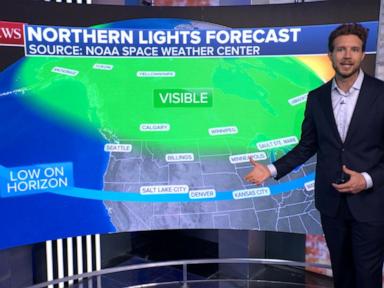
When the National Oceanic and Atmospheric Administration issues a strong geomagnetic storm watch, the alerts do not arrive with air-raid sirens. They land softly in the inboxes of utility grid operators, satellite technicians, and airline dispatchers. It is a silent warning of a beautiful, chaotic disruption.
We live our lives completely exposed to the whims of a volatile star, separated from its fury by nothing more than a fragile magnetic field.
The Invisible Ripples
To understand what happens when a solar storm strikes, imagine the Earth as a massive bell.
When the wave of solar particles hits our magnetic field, it strikes that bell. The instrument does not ring with sound; it vibrates with direct electrical current. That current seeks a path. It forces its way into the longest metal conductors it can find on the surface of our planet: our high-voltage power lines and oil pipelines.
Consider a hypothetical grid operator named Sarah. She sits in a windowless control room in the Midwest, watching a digital map of the regional power supply. On a normal night, the lines are green. Balance is maintained. But as the solar storm intensifies, her monitors flash amber. Unwanted, phantom electricity—spurred by the celestial chaos overhead—is cooking the giant, expensive transformers that keep the lights on in a dozen cities.
This is not a cinematic disaster movie where the world ends in an instant. It is a game of technical chess. If Sarah and her team do not react quickly to redirect the power, those transformers can overheat and melt. Replacing just one can take months.
The stakes are entirely hidden from the millions of people sleeping under the glow of their streetlights.
The Cost of a Disconnected World
Our reliance on high-frequency radio and satellite navigation means a solar tempest strikes directly at the nervous system of modern commerce.
Take a transatlantic flight cruising at 35,000 feet near the Arctic Circle. The pilots rely on high-frequency radio to communicate with air traffic control across the ocean. When the geomagnetic storm distorts the ionosphere, that radio signal dissolves into static. The GPS coordinates begin to drift. Suddenly, the vast expanse of the sky feels much lonelier.
Airlines do not panic, but they do pivot. They reroute flights away from the polar regions, sending planes on longer, thirstier paths closer to the equator. Flights are delayed. Luggage is misplaced. Schedules fracture across continents.
Closer to the ground, a farmer tracking a tractor guided by centimeter-accurate GPS notices the steering wheel jerk unexpectedly. The satellite signal, warped by the roiling upper atmosphere, is lying to the machine. The precision agriculture that feeds millions suddenly slows to a crawl.
It is in these tiny, friction-filled moments that the true scale of a solar storm reveals itself. It is a tax on our complexity.
A History Written in Sparks
We have been here before, though the world looked very different then.
In September of 1859, a massive solar event known as the Carrington Event slammed into the Earth. At the time, the peak of human technology was the telegraph framework. The storm was so intense that telegraph lines sparked spontaneously, setting fire to some offices. Operators disconnected the batteries, only to find they could still send messages using nothing but the ambient electricity flowing through the air itself.
The northern lights were so vivid that people in Cuba read the morning newspaper by the eerie, colorful glow. Birds began to chirp at 2:00 AM, confused by the false dawn.
If an event of that magnitude struck our hyper-connected society today, the consequences would stretch far beyond sparking telegraph papers. We are surrounded by delicate microchips and interconnected systems. The very tools that make modern life effortless are the most vulnerable to the sun's temper.
The Show in the Backyard
Yet, for all the quiet anxiety in the control rooms, a geomagnetic watch brings an entirely different emotion to the rest of the world: awe.
As the solar particles slide down the lines of our magnetic field toward the poles, they collide with gases in our atmosphere. They excite oxygen and nitrogen atoms, forcing them to release energy in the form of light.
Green waves dance across the horizon. Purples and deep reds bleed into the starry sky.
People who usually spend their evenings glued to television screens step outside in their pajamas, standing on front lawns and gravel driveways, staring upward. Neighbors who have never spoken to one another point toward the northern horizon. For a few hours, the digital distractions that divide us are replaced by a ancient, cosmic theater.
We are reminded that we are passengers on a rock hurtling through a living, breathing solar system.
The alerts from NOAA are a reminder of our vulnerability, but they are also a testament to human ingenuity. We can see the storm coming. We can shield our transformers, redirect our airplanes, and prepare our satellites. We have learned to read the weather of the cosmos.
The sky fades back to black as the solar wave passes. The screens in Sarah’s control room settle back to a steady, peaceful green. The planes land safely. The grid holds.
We return to our routines, plugging our phones into the wall, completely oblivious to the fact that the sky just took a breath, and we survived it.