Static.
That is the sound of a billion-dollar shield failing in the middle of a humid Persian Gulf night, a dry, electrical hiss that replaces the steady, rhythmic sweep of an invisible eye watching the horizon.
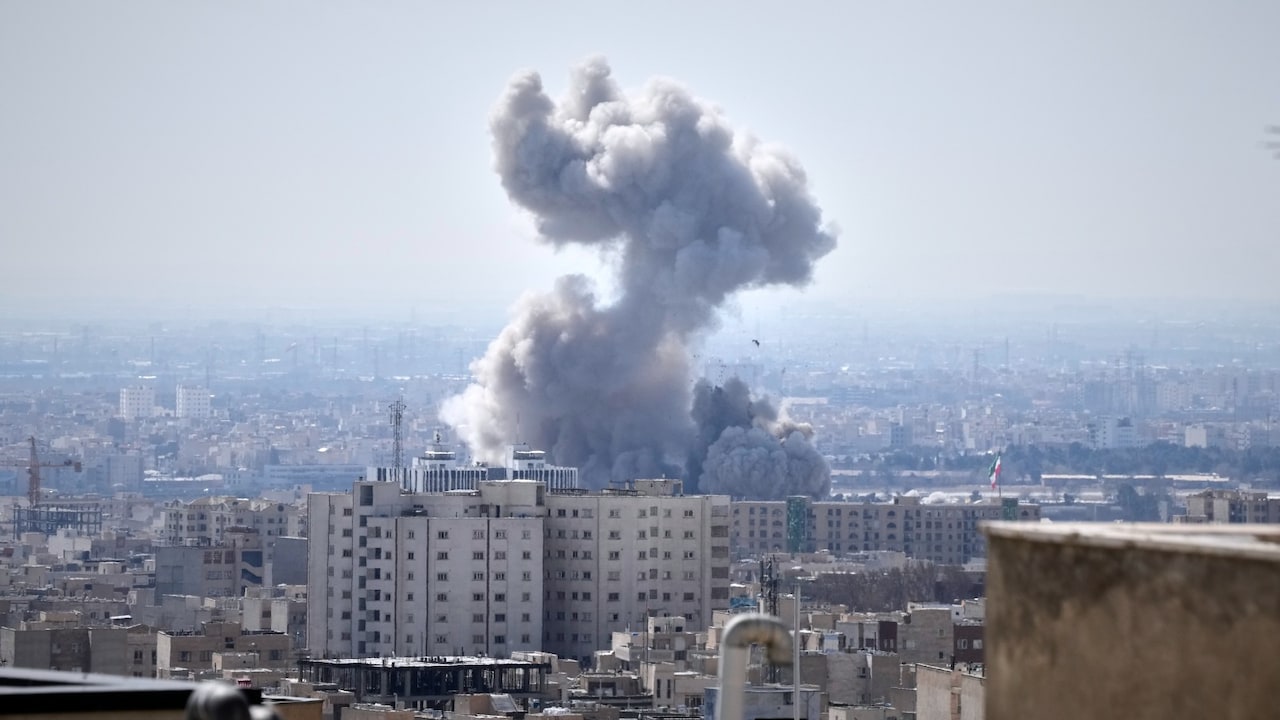
In the spring of 2026, a stark claim echoed out of Tehran, cutting through the static of regional tensions and landing with a heavy thud on the desks of defense analysts from Washington to Manama. Iranian military officials announced they had struck and destroyed a United States early-warning radar system stationed in Bahrain. To the casual observer scrolling past a three-sentence wire report, it sounded like another brick thrown in an endless, distant quarrel. Hardware broken. Paint scratched. A line item on a Pentagon ledger.
That reading misses everything that actually matters.
To understand why a single claim about a radar dome in a tiny island kingdom makes seasoned intelligence officers lose sleep, you have to step away from the maps and the press briefings. You have to stand on the asphalt of a Bahraini tarmac at three in the morning, when the air tastes like salt and jet fuel, and understand what that machine was actually doing for the people sleeping a mile away.
The Architecture of a Seven-Minute Warning
Let us construct a hypothetical evening to make the math real. Call him Petty Officer Marcus Vance, a twenty-six-year-old radar technician from Ohio, sitting in a climate-controlled trailer near Naval Support Activity Bahrain, the headquarters of the U.S. Fifth Fleet.
Outside Marcus’s metal door, the desert heat lingers even in the dark. Inside, the only light comes from the pale blue glow of telemetry monitors. Marcus is not looking at ships in the harbor. He is watching a slice of sky stretching hundreds of miles northeast, across the narrow waters of the Persian Gulf and deep into the rugged terrain of southern Iran.
Think of an early-warning radar system—specifically the long-range phased-array installations like the AN/TPY-2 or the massive fixed-site warning domes the U.S. military relies upon in the Gulf—not as a weapon, but as a tripwire strung across a dark hallway. It fires no bullets. It drops no bombs. Instead, it throws trillions of invisible radio waves into the upper atmosphere every second, listening for the faintest metallic echo bouncing back from objects moving at five times the speed of sound.
Without that tripwire, the geography of the Persian Gulf becomes a terrifyingly short hallway.
The distance between the Iranian coast and Manama is roughly two hundred kilometers. A modern medium-range ballistic missile covers that distance in less than seven minutes.
Seven minutes.
That is barely enough time to brew a pot of coffee, let alone wake a sleeping military base, calculate a ballistic trajectory, warm up an interceptor battery, and sound the sirens for civilians living in high-rise apartments along the Manama corniche. When the radar works, Marcus gets those seven minutes. The computers digest the echo in milliseconds, pass the coordinates to Patriot or THAAD batteries, and give human beings a fighting chance to knock incoming metal out of the sky before it touches the earth.
When the radar goes dark, those seven minutes vanish. You do not know the storm is coming until the roof caves in.
The Fog of Claims and Counterclaims
When Tehran broadcast its assertion that Iranian forces had obliterated this critical American sensor in Bahrain, the immediate reaction in diplomatic circles was a familiar, practiced skepticism. Information warfare in the Middle East operates like a hall of mirrors where every reflection is distorted for domestic consumption.
Iran has a well-documented history of amplifying tactical strikes—or even near-misses and cyber disruptions—into sweeping strategic victories. State media thrives on images of burning hardware and bold declarations that Western technological superiority has been punctured. Conversely, the Pentagon has its own deeply ingrained reflexes: silence, ambiguity, and tightly worded denials that confirm nothing while conceding no vulnerability.
Did a ballistic missile actually punch through Bahraini airspace and turn a multi-hundred-million-dollar radar array into molten aluminum? Or did a swarm of low-flying drones damage a peripheral generator, forcing operators to shut the system down temporarily? Could it have been a sophisticated electronic attack that blinded the screens without leaving a single scorch mark on the sand?
The honest, uncomfortable truth is that for the first forty-eight hours after such a claim, almost nobody outside a handful of classified briefing rooms knows for sure. And that uncertainty is precisely the point.
In modern deterrence, perception carries nearly as much weight as physical destruction. If regional allies—Saudi Arabia, the United Arab Emirates, Qatar, Bahrain—begin to suspect that the American security umbrella has holes torn through its fabric, their political calculus shifts overnight. Why host American bases that draw Iranian fire if the defensive shield protecting those bases can be knocked out in the opening seconds of a conflict?
Why Sensors Are the New First Strike
I remember standing on the edge of an airfield in the Gulf years ago during a joint defense exercise, watching technicians calibrate a mobile radar unit. The lieutenant colonel running the site pointed at the flat, tilted face of the antenna and said something I have never forgotten: "Nobody ever writes songs about the guy holding the flashlight, until the batteries die in a minefield."
For decades, military planners obsessed over shooters—the fighter jets, the aircraft carriers, the missile cruisers. Sensors were treated as supporting cast members. That era is dead.
In twenty-first-century warfare, the sensor is the primary target. You do not need to sink an aircraft carrier if you can blind the satellites and ground radars that tell the carrier where the horizon is. You do not need to overwhelm an air defense battery with fifty expensive missiles if you can destroy its single tracking radar with two cheap drones.
Consider what happens next in a crisis scenario if a primary early-warning node in Bahrain is genuinely taken offline:
- The Blind Spot Expands: Satellite coverage from space can detect the bright thermal plume of a rocket launch, but satellites orbit; they pass over, and cloud cover or decoy flares can muddy the picture. Ground-based X-band and UHF radars provide the crisp, continuous tracking data needed to distinguish a real warhead from a falling booster stage. Losing that ground node creates a jagged gap in the radar picture over the central Gulf.
- Interceptor Paralysis: A Patriot missile battery without its long-range cueing radar is like a boxer fighting with one eye taped shut. Its own local radar can still scan the sky, but at a much shorter range and narrower angle, drastically shrinking the window of time available to engage fast-moving targets.
- Human Hesitation: When automated warning chains break down, human operators are forced to make life-or-death decisions with incomplete data. Is that blip on a secondary screen a commercial airliner deviating from its flight path over Manama, or an incoming cruise missile skimming the waves? In 1988, radar confusion in this very body of water led to a tragedy that scarred generations. Nobody wants to repeat that math under pressure.
The Vulnerable Island
To appreciate the human weight of this standoff, you have to look at Bahrain itself.
Unlike the vast expanses of Saudi Arabia, Bahrain is tiny—an archipelago roughly the size of New York City, connected to the mainland by a single causeway. In Manama, military infrastructure and civilian life do not exist in separate zip codes; they press right up against one another.
Expats drink espresso in glass towers overlooking the naval port. Bahraini families walk along waterfront promenades a short drive from ammunition depots and fuel farms. The U.S. Fifth Fleet is not tucked away in some remote desert canyon; it is woven directly into the urban fabric of the capital.
Because of that proximity, an early-warning radar in Bahrain is never just protecting soldiers in uniform. It is the silent guardian standing between a geopolitical miscalculation and a crowded apartment building.
When Tehran claims to have destroyed that system, the message is not merely aimed at generals in the Pentagon. It is aimed squarely at the nervous system of everyone living along the Gulf coast. It is a deliberate reminder that the distance separating peace from catastrophe is measured in seconds, and that the electronic walls keeping the night quiet are fragile.
Ghosts in the Machine
There is a quieter, equally unsettling possibility behind the headlines—one that involves no explosions at all.
Over the past decade, Iran has poured immense resources into electronic warfare and cyber operations, building units specifically trained to spoof, jam, and corrupt Western sensor networks. During previous flare-ups in the region, commercial ships in the Strait of Hormuz watched their GPS screens suddenly place them miles inland, sitting in the middle of Iranian mountains while saltwater still lapped against their hulls.
Imagine our hypothetical technician, Marcus, sitting in his trailer in Bahrain. Instead of hearing an explosion outside, he watches his screen bloom with phantom targets—hundreds of identical radar returns marching across the Gulf in neat, impossible formations. The cooling fans on his servers scream as processors choke on garbage data. Technically, the radar antenna outside is intact, spinning or humming without a scratch. Functionally, it has been destroyed just as thoroughly as if a warhead had landed on top of it.
To the outside world, a claim of "destruction" sounds binary: either the building is standing or it is rubble. To the engineers who actually build and defend these systems, destruction is a spectrum. A burned-out circuit board, a severed fiber-optic trunk line, a corrupted software load, or a shattered antenna array all produce the exact same result on the battlefield: silence.
The Cost of Looking Away
We live in an era that loves spectacle. News cycles reward dramatic video footage—smoke rising from ports, streaks of fire arching across night skies, leaders pounding podiums. A silent radar installation sitting behind chain-link fences in Bahrain makes terrible television. There is no drama in a machine that simply hums in the heat, month after month, keeping track of empty sky.
Yet the entire fragile peace of the Persian Gulf rests on the credibility of those humming machines.
Deterrence works only when both sides believe the shield will hold. The moment one side convinces itself—or convinces the world—that the watcher has been blinded, the temptation to test the dark grows almost irresistible. History shows us again and again that major wars rarely begin because one nation desperately wants total ruin; they begin because someone miscalculates a window of vulnerability, believing they can strike fast enough before the other side can see clearly enough to hit back.
Think back to that quiet tarmac in Manama at three in the morning.
Whether Tehran’s claim represents a genuine physical strike, a temporary electronic blinding, or an audacious piece of psychological theater, the tremor it sent through the region is real. Every radar operator in the Gulf is leaning a little closer to their monitors tonight. Every air defense crew is double-checking backup generators and secondary data links.
Because in a part of the world where missiles fly faster than thought, the deadliest weapon isn't the rocket on the launchpad. It is the sudden, terrifying realization that nobody is watching the sky.