The coffee maker in the Tel Aviv apartment was mid-cycle when the air changed. It wasn't a sound at first. It was a sudden, violent drop in atmospheric pressure that you felt in the back of your throat before your brain could register the sirens.
Then came the wail. It is a sound designed to trigger primal panic, a mechanical shriek that tears through the ordinary evening routines of millions of people. Dinner plates were left warm on tables. Laptops remained open, glowing with half-finished emails. Parents scooped up toddlers, still in their pajamas, and ran toward the concrete-reinforced safe rooms that form the literal foundations of modern Israeli life. For a more detailed analysis into this area, we recommend: this related article.
For decades, geopolitics has been discussed in the sterile language of statecraft. We talk about strategic depth, deterrence capabilities, and proxy networks. We analyze satellite imagery of missile silos and debate the throwing weight of ballistic payloads. But when the sky over the Middle East ignites, the grand theories of international relations evaporate. They are replaced by the terrifyingly simple reality of human vulnerability.
Iran had just launched a massive wave of ballistic missiles directly toward Israel. For additional details on this development, extensive reporting can be read at Reuters.
This was not a shadow war anymore. The curtain had been pulled back.
The Geography of Fear
To understand the sheer velocity of this crisis, consider a simple geographical truth. A ballistic missile fired from western Iran takes roughly twelve minutes to reach central Israel.
Twelve minutes.
Think about what you can accomplish in twelve minutes. You can brew a cup of coffee. You can fold a basket of laundry. You can walk to the corner store. But in the context of modern warfare, twelve minutes is the entire lifespan of a catastrophe. It is the total amount of time available for early-warning satellites to detect a thermal bloom, for military computers to calculate trajectories, for national defense systems to activate, and for nine million citizens to find shelter.
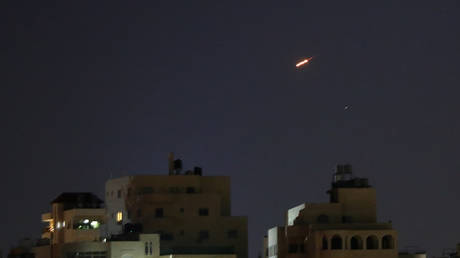
In Jerusalem, the sky became a canvas of apocalyptic geometry. Looking up from the stone courtyards, the scene was entirely surreal. Streaks of light cut through the darkness, rising from the east. These were not the slow, buzzing drones of previous escalations. These were massive projectiles moving at several times the speed of sound, glowing with the friction of re-entering the atmosphere.
Then came the interceptions.
The Arrow defense system, designed specifically to stop these high-altitude threats, met the incoming missiles outside the atmosphere. The result was a series of silent, blinding flashes in space, followed seconds later by a rolling, thunderous boom that shook windows across the country. It sounded like thunder, but it felt deeper. It was the sound of kinetic energy being violently dissipated over populated cities.
For a hypothetical family huddled in a shelter in central Israel—let us call them the Levis—the experience is one of sensory deprivation followed by sensory overload. The safe room smells of dust and old bottled water. You look at your phone, watching Telegram channels fill with chaotic, unverified videos of fireballs over the Dead Sea. Your ears ring with the muffled thuds of the Iron Dome and David’s Sling working in tandem. You hold your breath, waiting for the one impact that might slip through the shield.
The Calculus of Escalation
The dry news reports will tell you that this attack was a response to targeted assassinations, a retaliatory strike meant to restore balance. But the strategic logic behind throwing over a hundred ballistic missiles across sovereign borders reveals a much darker shift in the regional landscape.
For years, the conflict between Jerusalem and Tehran operated under a strict, unwritten code of deniability. It was a war fought in the shadows of cyber warfare, maritime sabotage, and targeted operations. It was a dangerous game, but it had boundaries. Both sides knew where the lines were drawn.
That code is dead.
When hundreds of missiles are launched from Iranian soil directly toward Israeli cities, the threshold of conflict shifts permanently. This is no longer about deterrence through proxies. This is a direct confrontation between two of the most powerful military machines in the region. The invisible stakes are no longer about geopolitical influence; they are about existential survival.
Consider what happens next when the dust settles and the sirens finally go silent. The military commanders sit in underground bunkers, looking at damage assessment maps. The physical toll might be mitigated by sophisticated defense technology—a testament to human engineering—but the psychological landscape has been completely reordered. The sense of security, always fragile in this part of the world, has been shattered.
The Shrapnel of Tomorrow
The morning after an attack like this does not bring clarity. It brings a heavy, watchful silence. The streets are unusually quiet. People walk with their heads slightly tilted, eyes scanning the clouds, listening for the next shift in the wind.
On the asphalt of a highway near the West Bank, a massive crater smokes in the morning sun. It is the remnant of a missile booster that fell after being intercepted. Bystanders gather at a distance, taking photos on their phones. The piece of twisted metal is hot to the touch, a physical manifestation of a geopolitical argument that has spiraled out of control.
This is the true cost of the escalation. It is not just the physical destruction, which can be measured in concrete and steel. It is the permanent state of high alert that settles into the bones of every person living under these flight paths. It is the knowledge that the distance between ordinary life and absolute chaos is exactly twelve minutes wide.
The international community will issue statements. Diplomatic cables will fly across the Atlantic. Coalitions will be formed and reformed in the corridors of the United Nations. But on the ground, the reality remains unchanged. The red alerts have shown that the region has crossed a line from which there is no easy return.
The night sky eventually cleared, leaving behind the cold, indifferent stars. But the people who watched it burn know that the silence is only temporary. The machinery of war remains spun up, the coordinates are saved, and the next twelve minutes are already ticking away in the dark.