Li Chen doesn’t look at the Nikkei 225 index when he wakes up in Hsinchu. He looks at the horizon. In the grey, humid light of a Taiwan morning, the skyline of the Science Park usually hums with a predictable, electric confidence. But today, the air feels heavy, thick with the scent of saltwater and something far more industrial. It is the smell of a machine stalling.
By 9:00 AM, the screens at the brokerage firms in Tokyo, Seoul, and Taipei weren't just red. They were bleeding.
We often talk about the global supply chain as if it is a series of lines on a map or cells in a spreadsheet. We treat it like an abstract math problem. But when news broke of the attacks in Qatar, followed immediately by a violent spike in crude oil prices, the math died. It was replaced by a cold, physical reality.
The world’s most advanced semiconductors—the microscopic brains in your pocket, your car, and your cloud—do not exist in a vacuum. They are born of fire and transit. They require immense amounts of energy to etch, and even more energy to move. When the energy stops being cheap and the transit stops being safe, the silicon stops breathing.
The Ghost in the Cargo Bay
Consider a single high-end GPU.
Before it reaches a gamer in London or an AI researcher in San Francisco, it is a traveler. Its components have crossed the ocean multiple times. But the "just-in-time" ghost that haunts modern manufacturing has a weakness: it assumes the world is a polite place. It assumes that the tankers moving through the Strait of Hormuz will keep moving, and that the energy required to power the massive lithography machines in Asia will remain a fixed, manageable cost.
That assumption evaporated this morning.
When the oil markets reacted to the instability in the Middle East, they didn't just make it more expensive to fill up a sedan in Ohio. They sent a shockwave through the cleanrooms of TSMC and Samsung. Fabrication plants, or "fabs," are some of the most energy-hungry structures ever built by human hands. They operate on margins that are razor-thin, not in terms of profit, but in terms of precision.
If the cost of the power required to run these facilities spikes by 20% or 30% in a week, the ripples don't just affect the balance sheet. They freeze the future.
Projects get shelved. Orders are prioritized for the highest bidder. The "little guy"—the startup building a new medical device or the mid-sized car manufacturer—gets pushed to the back of the line. We saw the tech stocks sink not because investors were bored, but because they realized the physical straw that stirs the global drink was being bent.
The Qatar Connection
Qatar is often framed in the media as a purveyor of luxury or a host of sporting events. In the world of tech, it is something else entirely: a lung.
The country is a primary supplier of Liquefied Natural Gas (LNG). In the frantic transition away from dirtier fuels, much of Asia’s industrial heartland—including the regions that manufacture the world’s logic chips—has become tethered to Qatari gas.
An attack on Qatari infrastructure isn't just a local tragedy or a geopolitical chess move. It is a direct assault on the power grids of the East.
Imagine a hypothetical factory foreman in Incheon named Min-jun. He doesn't care about the intricacies of Middle Eastern diplomacy. He cares about the "uptime" of his facility. If the gas doesn't flow, the power fluctuates. If the power fluctuates, the delicate chemical baths and light-exposure sequences used to create a 3-nanometer chip are ruined. A single "flicker" in the grid, caused by a fuel shortage or a sudden price-driven conservation effort, can result in the loss of millions of dollars of silicon wafers.
This is the invisible stake. It isn't just that the chips will be more expensive. It's that, for a period of time, they might simply cease to be made.
The Panic of the Numbers
The market is a nervous animal. It smells fear before it sees the predator.
When the Nikkei dropped, taking the heavyweights of the semiconductor equipment industry with it, it was a collective admission of vulnerability. We have spent thirty years building a world that is incredibly efficient and terrifyingly fragile.
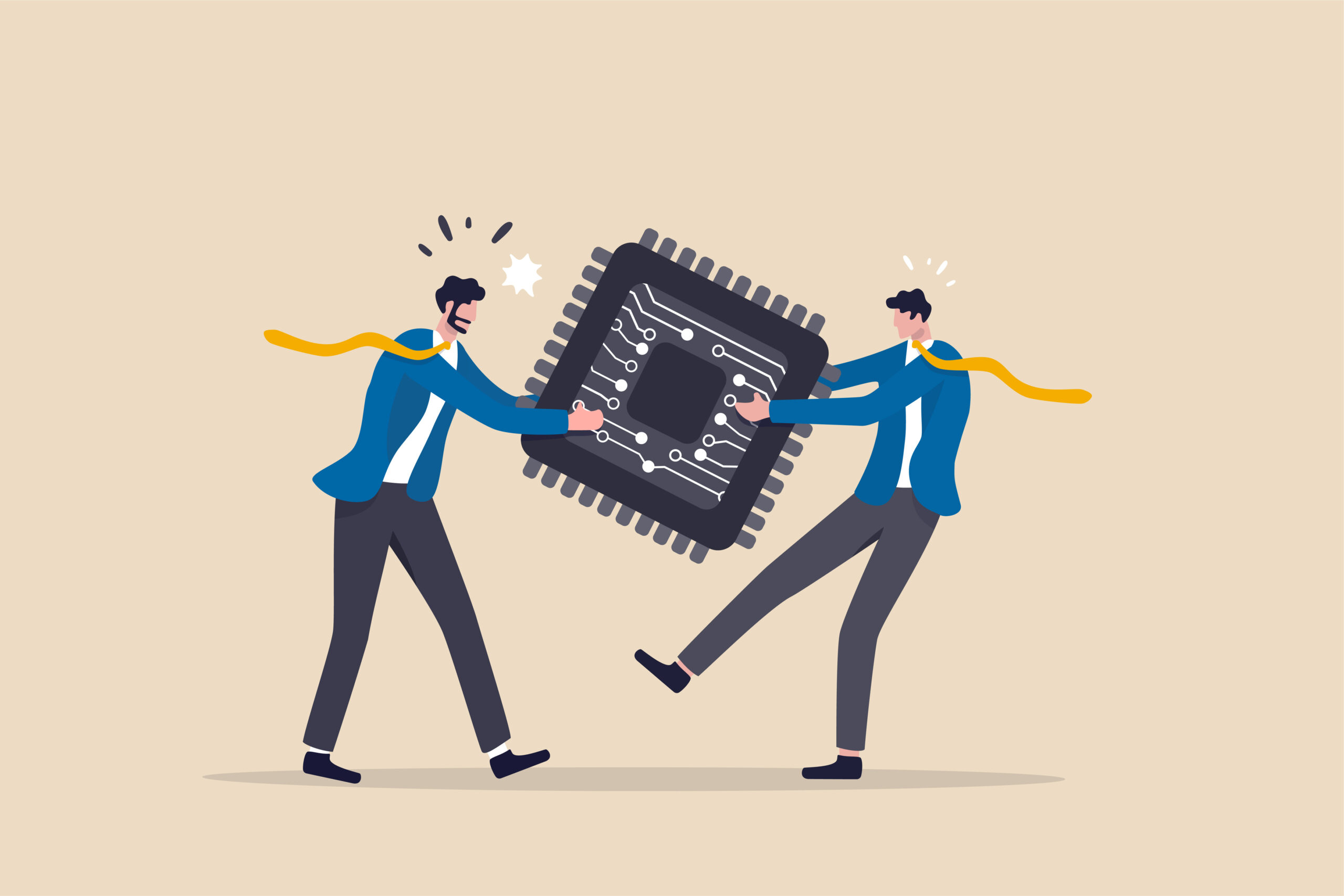
We consolidated the manufacturing of the world's most vital resource—advanced semiconductors—onto a few islands and peninsulas in Asia. Then, we powered those places with energy that has to travel through some of the most volatile waterways on earth.
It was a brilliant plan for a peaceful world.
But as the price of crude surged past $90, then $100, the logic of that world began to fracture. Shipping costs for tech components are often measured in weight, but the real cost is the risk premium. Suddenly, moving a crate of microcontrollers across the Pacific isn't just a logistics task; it’s a gamble against the morning headlines.
The Human Cost of a Sinking Index
We see the "Tech Stocks Sink" headline and we think of wealthy people in Patagonia vests losing a small percentage of their net worth.
Look closer.
The "human element" is the engineer who just learned their project is being "delayed indefinitely" because the bill of materials has tripled. It’s the small-scale electronics refurbisher in Vietnam who can no longer afford the parts to stay in business. It’s the family waiting for a new vehicle that they need for work, only to be told the "chip shortage" is back, this time with a different face.
The fear in the markets today is a reflection of our dependence. We are a species that has outsourced its memory, its communication, and its navigation to small slivers of treated sand. And we have left those slivers at the mercy of a world that is currently on fire.
There is a specific kind of silence that falls over a trading floor when the numbers stop being about profit and start being about survival. It’s the realization that you can’t "code" your way out of a fuel crisis. You can’t "disrupt" a blocked shipping lane with a new app.
The Fragile Architecture
Why did the supply chain threaten to break so quickly?
Because we built it without any fat.
In the quest for "lean" manufacturing, we removed all the buffers. There are no warehouses full of "spare" high-end CPUs waiting for a rainy day. There is only the flow. It is a river of silicon that must never stop moving.
The moment the Qatar attacks hit the wires, the flow slowed.
The tankers hesitated. The insurers raised their rates. The analysts in Singapore began recalculating the "landed cost" of every smartphone scheduled for a Christmas release.
I remember talking to a logistics coordinator during a previous, smaller disruption. She described it as "watching a slow-motion car crash where you are the driver and the brakes are made of paper." She didn't sleep for three days. She watched the satellite pings of her cargo ships like they were the heartbeats of her own children. That is the reality behind the "supply chain" buzzword. It is a million people like her, trying to bridge the gap between a volatile planet and an impatient consumer base.
A New Kind of Weather
We are entering an era where "geopolitical risk" is no longer a footnote in an annual report. It is the weather.
Just as a farmer looks at the clouds, a tech CEO now has to look at the movement of naval destroyers and the price of LNG in a port they’ve never visited. The sinking of Asian tech stocks today wasn't a fluke or a "market correction." It was a warning shot.
It told us that the digital world is not a separate realm. It is bolted to the floor of the physical world. It is fueled by the same oil, heated by the same gas, and endangered by the same old human grievances that have defined history for centuries.
The screens in Taipei might eventually turn green again. The oil prices might retreat if a diplomatic solution is found. But the memory of the morning the screens bled will remain.
Li Chen stands at the window of his office in Hsinchu. He watches the ships in the distance, tiny specks against the vast, gray ocean. He knows that each one of them carries a piece of the future, and he knows, perhaps better than the traders in New York, just how easily that future can be swallowed by the waves.
The machines are still humming for now, but the sound has changed. It is no longer a song of inevitable progress. It is a rhythmic, pulsing reminder of everything we have left to chance.
The silicon is still breathing, but the breaths are shallow, and the room is getting very, very cold.