The coffee in a Styrofoam cup on a night shift at Al Udeid or Ali Al Salem has a specific, metallic bitterness. It is the taste of a thousand miles of sand and the hum of industrial air conditioning struggling against the Persian Gulf’s oppressive humidity. For the soldiers, contractors, and civilian staff stationed across the network of US bases in Bahrain, the UAE, and Kuwait, Tuesday nights usually dissolve into a blur of routine. You check the monitors. You swap stories about home. You wait for the sun to rise so the heat can begin its daily assault.
Then, the sky tore open.
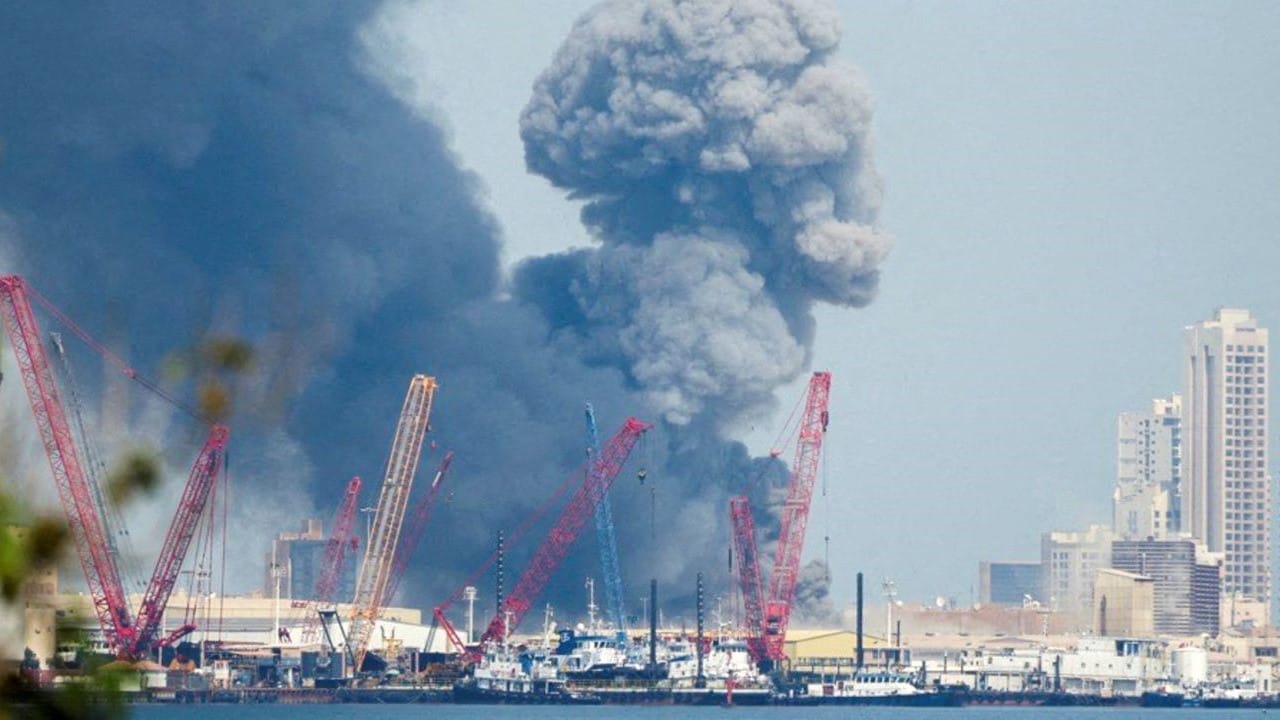
It wasn't just the sound. It was the vibration in the marrow of your bones. When the Iranian ballistic missiles began their descent toward the installations that dot the coastline of the oil-rich monarchies, the world stopped being about geopolitics and started being about the frantic, rhythmic thumping of a human heart trapped in a concrete bunker.
The Geometry of Shadows
Military analysts often speak of "strategic depth" and "regional deterrence." They treat the map of the Middle East like a chessboard where pieces are moved with surgical precision. But on the ground, those pieces have names. They have families in Ohio and cousins in Kerala. They are the baristas in Manama and the mechanics in Kuwait City.
When Tehran signaled its intent through the roar of rocket engines, the abstract concept of a "regional conflict" became a terrifying, physical reality. This wasn't a skirmish in a remote mountain pass. These strikes targeted the nervous system of global commerce and security. Bahrain isn't just a small island; it is the home of the US Navy’s 5th Fleet. Kuwait isn't just a desert state; it is the logistical backbone of American operations in the hemisphere.
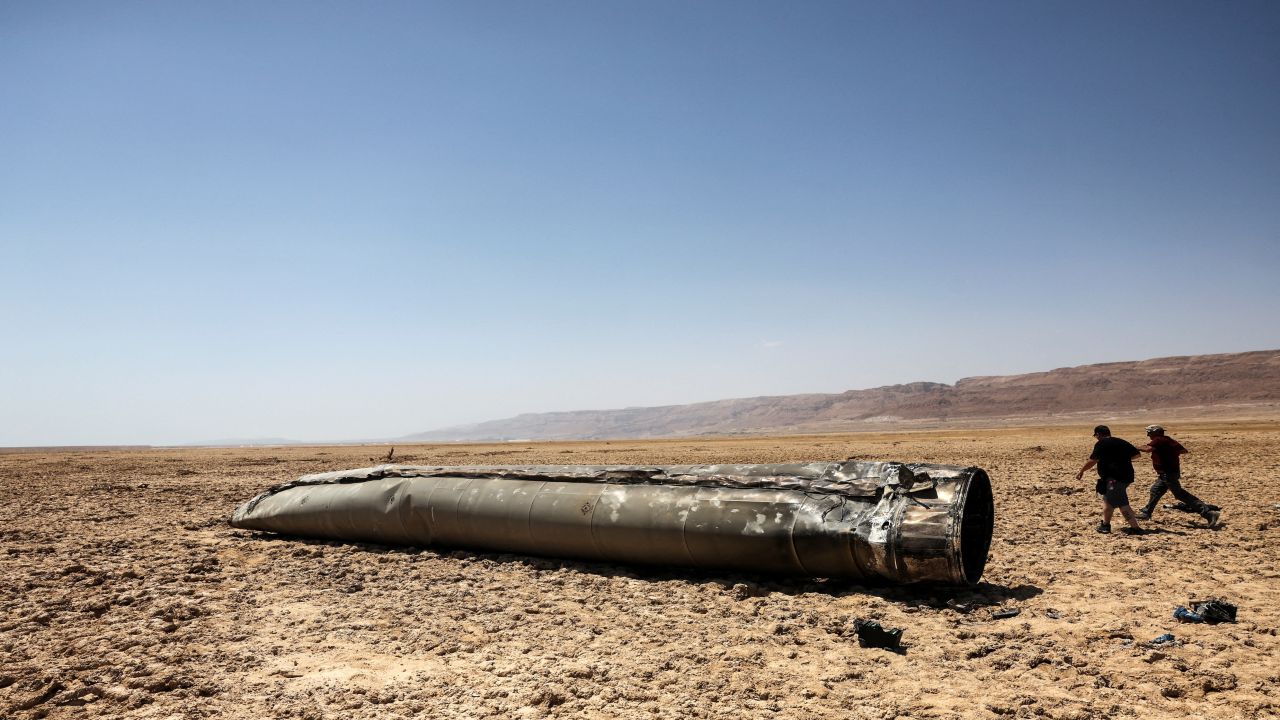
The technical reality is staggering. Modern ballistic missiles, like the ones launched from Iranian soil, travel at velocities that defy the casual imagination. We are talking about objects screaming through the upper atmosphere at several times the speed of sound. Imagine a telephone pole made of high-grade steel and volatile chemicals falling from space, aimed directly at your roof.
A Hypothetical Walk Through the Panic
Consider a person we will call Elias. He is a third-country national working in a maintenance hangar near Kuwait’s northern border. He isn't a soldier. He is a man who sends 70% of his paycheck to a small village to pay for a sister’s education. When the sirens—a rising and falling wail that sounds like a banshee in a wind tunnel—began to scream, Elias didn't think about the Revolutionary Guard or the intricacies of the Joint Comprehensive Plan of Action.
He thought about the weight of the sandbags.
He thought about whether the reinforced concrete above his head was poured correctly in 1998.
The gap between the launch in Iran and the impact in Kuwait is a matter of minutes. In those minutes, the human mind does a peculiar kind of math. You calculate the distance to the nearest shelter. You calculate the time since you last spoke to your mother. You realize, with a sudden and chilling clarity, that your life is currently a variable in a calculation being made by someone you will never meet, hundreds of miles away.
The Invisible Stakes of the Strait
Why these bases? Why now? To understand the strikes, you have to look past the fire and smoke to the water. The Persian Gulf is a blue-green artery through which the world’s energy flows. Roughly 20% of the world’s petroleum passes through the Strait of Hormuz.
When Iran strikes at US assets in Bahrain and the UAE, they aren't just aiming at hangars and barracks. They are aiming at the psychology of the global market. They are whispering a threat into the ear of every nation that relies on that water for its survival. The message is simple: If we burn, the lights go out everywhere.
The precision of the strikes suggests a leap in capability that caught many off guard. This wasn't the scattershot rocketry of decades past. This was a demonstration of a guided, lethal intent. By hitting multiple targets across three different countries simultaneously, Tehran demonstrated that the "umbrella" of US protection has holes.
The Sound After the Blast
The most haunting part of a missile strike isn't the explosion. It’s the silence that follows.
Once the dust settles and the secondary fires are brought under control, a heavy, expectant quiet settles over the base. You look at the crater. You see the twisted rebar reaching out of the ground like scorched fingers. You realize how thin the line is between a "standard deployment" and a historical footnote.
For the residents of Dubai and Abu Dhabi, the strikes shifted something fundamental. These are cities built on the promise of the future—shimmering glass towers, artificial islands, and the relentless pursuit of "the biggest" and "the best." That brand of hyper-modernity relies on the assumption of stability. When the sky glows orange with the light of an intercepted missile, the glass towers feel a little more fragile. The luxury malls feel a little more hollow.
The Logic of the Unthinkable
We often try to demystify these events by looking at "escalation ladders." We assume that both sides are rational actors playing a high-stakes game of chicken. But rational actors are still human. Humans get tired. Humans misinterpret data. Humans make mistakes under pressure.
The danger of strikes in Kuwait, Bahrain, and the UAE is the proximity of the "other." In these densely populated regions, a missile that misses its military target by a few hundred meters doesn't land in an empty field. It lands in an apartment complex. It lands in a school. It lands in a hospital.
The "collateral damage" isn't a statistic. It’s a scorched teddy bear in the rubble. It’s a wedding dress covered in grey soot.
The US military response is always described in terms of "proportionality." But how do you measure proportion when the currency is human terror? If a missile destroys a $50 million radar installation but kills no one, is it equal to a drone that kills three people but costs only $20,000? The math of war is broken. It has always been broken.
The Sand and the Memory
Long after the headlines fade and the diplomats return to their air-conditioned rooms in Geneva or New York, the people on those bases will remember the vibration. They will remember the way the air felt sucked out of their lungs by the pressure wave.
The sand eventually covers everything. It fills the craters. It drifts against the blast walls. It gets into the gears of the machines. But it doesn't erase the knowledge that the world changed on a Tuesday night in the Gulf. The illusion of distance has evaporated.
We live in an age where a finger pressed on a screen in a bunker in the Iranian highlands can shatter a window in a barracks in Manama in less time than it takes to boil an egg. That is the new gravity. It is heavy, it is constant, and it pulls at everyone, whether they are wearing a uniform or just trying to finish a shift and go home.
The fires are out for now. The sky over the Gulf is back to its hazy, humid blue. But every time a heavy truck rumbles past or a jet breaks the sound barrier, thousands of people will instinctively look up. They are looking for the streak of light that hasn't arrived yet. They are listening for the sound of the silence breaking again.