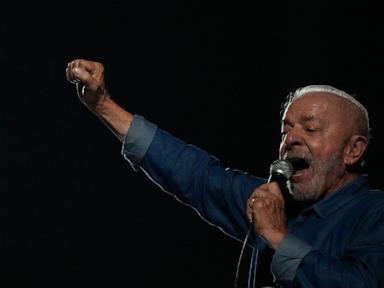
Rain. That is what I remember most about the final Sunday of October in São Paulo. Not the speeches, not the red banners fluttering from concrete balconies along Avenida Paulista, and not even the deafening roar of vuvuzelas that rattled the windows of third-floor apartments. It was the warm, relentless drizzle that plastered wet yellow soccer jerseys to the backs of weary commuters and turned the asphalt into a black mirror reflecting thousands of anxious faces.
By 7:57 PM local time, the Superior Electoral Court (TSE) had tallied enough electronic ballots to declare a winner in the closest presidential race since Brazil’s return to democracy in 1985. Luiz Inácio Lula da Silva—a former metalworker who had once been imprisoned on corruption charges that were later annulled—had defeated the incumbent, Jair Bolsonaro, by a margin of just 2.1 million votes out of more than 124 million cast. Fifty-point-nine percent to forty-nine-point-one. A razor's edge.
Yet, as fireworks erupted over downtown São Paulo, another sound began to hum beneath the celebration. It was the low, anxious murmur of a country realizing that the counting of votes was only the opening act. Thousands of miles away in Florida, Donald Trump was already posting on Truth Social, questioning the integrity of Brazil’s electronic voting machines and echoing the exact doubts Bolsonaro had spent months planting in the minds of his supporters.
To understand what happened in Brazil during that election—and why echoes of Washington, D.C. seemed to vibrate through the humid Brazilian night—you have to look past the headlines and step into the living rooms, buses, and town squares where millions of ordinary people made their choice.
The Invisible Weight of a Bus Ticket
Consider a hypothetical voter, whom we will call Dona Helena, a sixty-two-year-old retired seamstress living on the outskirts of Belo Horizonte in the crucial swing state of Minas Gerais. For Dona Helena, politics is rarely an abstract debate over macroeconomic theory or constitutional law. It is the price of a kilo of black beans at the corner market. It is whether her grandson can afford the bus fare to attend trade school.
In the weeks leading up to the October 30 runoff, Brazil’s election ceased to be a simple contest between two men and became a referendum on daily survival. According to data from the Brazilian Research Network on Food and Nutrition Sovereignty and Security, roughly 33 million Brazilians were experiencing severe hunger in 2022—a figure that had nearly doubled during the economic fallout of the COVID-19 pandemic.
Lula’s campaign understood this visceral reality with surgical precision. Rather than relying solely on television ads, his organizers mounted an old-school, shoe-leather mobilization across the impoverished Northeast and the working-class peripheries of major cities. They reminded voters like Dona Helena of the early 2000s, when Lula’s Bolsa Família welfare program and minimum-wage increases lifted tens of millions into the lower middle class, allowing families to buy their first refrigerators, take their first commercial flights, and put meat on the Sunday table.
On Election Day, that memory proved more powerful than the logistical hurdles placed in voters' paths. Reports emerged from across the Northeast—Lula’s traditional stronghold—that the Federal Highway Police (PRF) had set up hundreds of roadblocks, delaying buses carrying rural voters to polling stations despite an explicit court order banning such operations. Videos circulated on social media showing elderly passengers stepping off stalled buses in the midday heat, walking miles along dusty shoulders just to cast their ballots before the polls closed at 5:00 PM.
They walked because, to them, the ballot box was not a piece of hardware. It was a lifeline.
The Anatomy of Doubt
Meanwhile, in the bustling agricultural towns of the Midwest and the affluent neighborhoods of Rio de Janeiro, an entirely different story was unfolding—one fueled by genuine fear, fierce loyalty, and a deep-seated distrust of state institutions.
For millions of Bolsonaro’s supporters, the prospect of Lula’s return to the Palácio do Planalto represented an existential threat. Many were small-business owners, evangelical Christians, and agribusiness workers who credited Bolsonaro with slashing red tape, defending traditional family values, and keeping the economy moving during a global health crisis. To them, Lula was not a savior of the poor; he was the figurehead of the Workers' Party (PT), an organization tarnished by the sprawling Lava Jato (Car Wash) corruption scandal that had plunged Brazil into a historic recession years earlier.
Think of an election system like a bridge spanning a deep gorge. For decades, commuters cross it without thinking about the steel cables or the concrete pilings beneath their tires. They trust the engineers. Now imagine someone standing at the entrance of that bridge every morning with a megaphone, insisting the cables are frayed and the structure is rigged to collapse—not because an inspection found a crack, but because the person with the megaphone suspects the toll collectors want him gone. Even if the bridge holds, half the drivers will cross it with white knuckles, convinced they survived only by luck.
That megaphone had been blaring in Brazil for over a year.
Brazil’s electronic voting machines, introduced in 1996, had long been praised by international observers and domestic auditors for their speed and security. Because the machines are disconnected from the internet and undergo multiple public stress tests before every election, election officials at the TSE—led by Supreme Court Justice Alexandre de Moraes—maintained that systemic fraud was virtually impossible.
Bolsonaro and his allies argued otherwise. Throughout 2021 and 2022, the president repeatedly claimed, without providing verifiable evidence, that the electronic terminals were vulnerable to tampering and that only a system with printed paper receipts could be trusted. When Brazil’s own Defense Ministry conducted an audit of the voting machines and released a report in November 2022 that found no evidence of fraud or inconsistency, Bolsonaro’s Liberal Party (PL) still filed a formal challenge with the electoral court, demanding the invalidation of ballots cast on older machine models—a move that would have selectively wiped out millions of votes from pro-Lula regions while leaving Bolsonaro’s votes on those exact same machines intact.
Justice Moraes swiftly rejected the challenge, fining the coalition 22.9 million reais (roughly $4.3 million) for bad-faith litigation. Yet by then, the legal ruling mattered far less than the emotional conviction it had cemented among the defeated.
A Transatlantic Playbook
If the script felt eerily familiar to observers in North America, it was because the authors were openly comparing notes.
Long before Brazilians went to the polls, Bolsonaro’s political circle had cultivated close ties with figures in Donald Trump’s orbit, including former White House strategist Steve Bannon and Trump’s former aide Jason Miller. Bolsonaro’s son, Congressman Eduardo Bolsonaro, had visited Mar-a-Lago and attended conservative conferences in the United States, where the narrative of the "stolen" 2020 U.S. election was treated as established gospel rather than an unsubstantiated claim rejected by dozens of American courts.
When the Brazilian results came in on October 30, Trump immediately waded into the fray. In a series of posts on his social media platform, Trump cast doubt on the fairness of the Brazilian vote, suggesting that the process had been compromised and offering moral backing to Bolsonaro’s reluctance to concede.
Watching from afar, it was tempting to view this transatlantic alignment as mere political theater. On the ground, however, the consequences were dangerously concrete.
For forty-four hours after the TSE declared Lula the winner, Bolsonaro remained completely silent. No concession speech. No tweet. No public appearance. In the vacuum left by that silence, thousands of his most fervent supporters mobilized across the country. Truck drivers blockaded more than three hundred highways in over twenty states, halting shipments of fuel, grain, and medical supplies. Outside military barracks in Brasília, Rio de Janeiro, and São Paulo, crowds dressed in green and yellow pitched tents in the rain, praying, singing the national anthem, and pleading with the armed forces to intervene and prevent Lula from taking office.
When Bolsonaro finally stepped before microphones at the Alvorada Palace on November 1, his remarks lasted barely two minutes. He thanked the fifty-eight million people who had voted for him, criticized the protests that blocked roads as harmful to the right to come and go, and authorized his chief of staff to begin the administrative transition process. Notably, he never uttered Lula’s name, never congratulated him, and never explicitly conceded defeat.
It was a masterclass in strategic ambiguity—just enough compliance to avoid an immediate constitutional crisis, and just enough defiance to keep the embers glowing.
The Human Cost of Fractured Reality
The hardest thing to convey to someone who hasn't lived through a deeply polarized election is how quietly it infiltrates the most intimate corners of daily life. It doesn't arrive with tanks in the street; it arrives at Sunday lunch.
During that autumn in Brazil, families stopped talking about soccer. WhatsApp group chats—the lifeblood of Brazilian communication—splintered into warring camps. Cousins blocked cousins over forwarded videos showing alleged ballot-stuffing that turned out to be footage from municipal elections years earlier. Neighbors who had shared coffee over backyard fences for decades suddenly looked at one another across a chasm of mutual suspicion, each convinced the other was actively rooting for the destruction of the nation.
I remember standing near a newsstand in downtown Rio a few days after the vote, watching two elderly men argue over a stack of morning papers. One wore a faded red cap; the other, a yellow polo shirt. Their voices weren't angry so much as exhausted, trembling with a shared, unspoken terror. Each man genuinely believed he was defending democracy. One believed democracy meant honoring the razor-thin majority of ballots certified by the courts; the other believed democracy had been hijacked by an unaccountable judiciary and a corrupt political establishment.
When two citizens cannot agree on what constitutes a valid fact, a society loses its shared floor. Every institution—the courts, the press, the police, the military—becomes suspect the moment its actions disappoint one side.
What Happened When the Januaries Collided
History has a way of collecting debts on deferred crises.
On January 1, 2023, Lula da Silva walked up the ramp of the Planalto Palace in Brasília, flanked by representatives of Brazil’s diverse society—an Indigenous chief, a Black woman waste picker, a child, a person with disabilities—to receive the presidential sash. Bolsonaro was not there to hand it over; two days earlier, he had boarded an air force plane bound for Orlando, Florida, avoiding the ceremony altogether.
Seven days later, on January 8, thousands of Bolsonaro supporters marched down the Monumental Axis in Brasília, overwhelmed a thin line of security forces, and stormed the Congress, the Supreme Court, and the presidential palace. They smashed centuries-old stained-glass windows, slashed modernist paintings, and overturned desks in scenes that mirrored the January 6 attack on the U.S. Capitol down to the smallest tactical detail.
Ultimately, Brazil’s institutions held. Within hours, federal authorities cleared the buildings, arrested over a thousand participants, and reaffirmed the constitutional order. Lula remained in office, forced to govern a deeply divided legislature and a nation whose wounds were nowhere near healed.
Yet the lasting lesson of that Brazilian autumn reaches far beyond Brasília or Mar-a-Lago. Democracies rarely collapse in a single dramatic stroke. More often, they erode slowly, one unanswered doubt at a time, until millions of neighbors look at the exact same ballot box and see two incompatible worlds.
Think back to that rainy Sunday night in São Paulo. Late into the evening, long after the official tally was finalized, I watched a street sweeper in an orange reflective vest pushing a broom along Avenida Paulista, clearing away soggy flyers, crushed beer cans, and torn campaign posters. Above him, the towering digital billboards had already switched back to advertising smartphones and bank loans. Down on the wet pavement, red paper and yellow paper had bled together in the puddles, indistinguishable in the dark.