The air in the Texas Hill Country has a specific weight right before the sky breaks. It smells of cedar, baked limestone, and a sudden, sharp dampness that makes the hairs on your arms stand up. If you have lived here long enough, that smell does not just signal rain. It triggers a low-grade panic.
You look at the creeks. You look at the limestone beds that sit bone-dry for nine months of the year, carved deep into the earth like ancient, empty scars. In this part of Texas, beauty is intertwined with a unique geographical threat. The terrain is essentially a massive concrete funnel. When a storm stalls over the Balcones Escarpment, the thin soil cannot absorb the deluge. Instead, millions of gallons of water slam against rock and rocket downward, transforming sleepy, ankle-deep streams into raging, brown monsters within minutes.
They call it Flash Flood Alley. It is one of the most inland flood-prone areas on the entire planet.
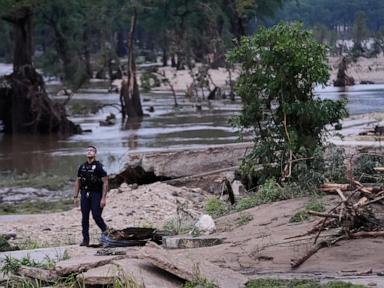
Last year, the monster caught us sleeping. The water rose faster than the administrative machinery could move, washing away homes, bridges, and lives in a blur of midnight debris. Now, as another season of volatile weather settles over the hills, a fractured network of new automated warning systems is facing its first real test. The question keeping local emergency coordinators awake at night is no longer whether the technology works. It is whether a text message can outrun a wall of water.
The Illusion of the Dry Bed
To understand why people stay, you have to understand the allure of the low-water crossing. Drive down any backroad near the Guadalupe, Blanco, or Llano rivers, and you will encounter them: concrete slabs dipping low through creek beds, flanked by painted depth gauges that usually read zero. For generations, crossing them has been a routine chore. You roll the windows down, feel the cool breeze off the water, and drive across without a second thought.
But consider a hypothetical driver named Sarah. She has lived outside Wimberley for a decade. She knows the roads. She knows which dips fill up first. On a Tuesday evening, she is driving home from work under a bruised sky. The rain is heavy, but not terrifying. What Sarah cannot see is the cloudburst fifteen miles upstream—a localized atmospheric bomb dumping eight inches of water onto a rocky plateau in less than two hours.
Sarah approaches her usual low-water crossing. The water is barely licking the tires. She feels safe.
This is the psychological trap of the Hill Country. The danger is almost never local. The water that kills you is born miles away, gathering speed and mass in absolute silence, obscured by darkness and distance. By the time the depth gauge at Sarah’s crossing begins to register the rise, the wall of water is already less than ninety seconds away.
Historically, triggering an alert required human eyes. A sheriff's deputy would have to drive out to a known trouble spot, physically confirm the rising water, radio it back to dispatch, and wait for an emergency manager to manually log into a regional system to blast an alert or dispatch road crews to drop physical barricades. In a disaster where minutes dictate survival, that human chain of communication is tragically slow. Last year, that lag proved fatal.
The Automated Sentinels
In the wake of that disaster, local authorities and river managers pivoted toward automation. The hills are now dotted with new, automated hydrologic monitoring stations—silent, solar-powered sentinels bolted to bridge abutments and concrete piers.
These systems rely on a mix of radar sensors and pressure transducers. The radar units, housed in small, weatherproof boxes suspended over the river channels, bounce high-frequency signals off the water's surface to calculate its exact distance from the bridge structure. They do this continuously, every few seconds, mapping the river's pulse in real time.
When the water hits a pre-programmed critical threshold, the system does not wait for human permission. It bypasses the traditional bureaucratic pipeline entirely. The sensor transmits an encrypted radio signal to a local node, which instantly triggers automated flashing beacons at the physical low-water crossing. Simultaneously, the data feeds directly into regional emergency networks, pushing targeted, geo-fenced cellular alerts to every phone within a specific radius of the watershed.
On paper, it is a flawless digital shield. In practice, the wilderness has a way of degrading digital certainty.
During heavy downpours, high winds can agitate the river surface, creating turbulent chop that mimics a rapid rise, causing sensors to misread the data. Conversely, debris logs, swept-up lawn furniture, and thick mats of river vegetation can jam beneath a sensor, blinding its radar eye or pinning down its mechanical floats. If a gauge falsely reports a clear channel when a wall of water is actually bearing down, the systemic failure becomes catastrophic.
Moreover, the physical infrastructure itself is vulnerable to the very force it is meant to measure. A flash flood in the Hill Country does not just lift water; it tears up centuries-old cypress trees by their roots, using them as battering rams. If an early-stage flood crest knocks out the solar array or snaps the telemetry antenna off a monitoring station, the system goes dark precisely when its data is needed most.
The Gap Between Alert and Action
Even when the technology functions perfectly, emergency managers face an entirely different obstacle: human behavior.
Receiving a loud, buzzing notification on a smartphone does not automatically translate into rational self-preservation. Behavioral scientists have long documented a phenomenon known as normalcy bias. When faced with an unprecedented crisis, the human brain instinctively attempts to normalize the situation, convincing itself that the danger is exaggerated.
People look at the text message, then look out their window at a dry street, and conclude the system is malfunctioning. They think of their families, their pets, or their jobs. They decide to risk the drive.
Then there is the issue of alert fatigue. If a regional system covers too broad a geographic area, residents in a dry town will repeatedly receive terrifying alarms meant for a neighboring valley ten miles away. After the third or fourth false alarm, the thumb instinctively swipes the notification away. The urgency is lost.
This is why the new systems are trying to transition toward hyper-local, contextual alerting. Instead of blanket county-wide warnings, the goal is to use cellular tower triangulation to target only the specific devices traveling along a threatened corridor. The message needs to be blunt, descriptive, and actionable. Not just "Flood Warning in Effect," but "Flash flood crest arriving at Blanco River Loop within 15 minutes. Move to high ground immediately."
The Weight of the Next Storm
We are walking a tightrope between technological capability and geographic reality. The automated gauges offer an undeniable advantage, providing critical minutes that simply did not exist during last year’s disaster. They remove the hesitation of human decision-making from the initial stages of a crisis.
But a sensor cannot physically stop a car from driving around a barricade. It cannot force a sleeping homeowner to wake up, heed the vibration on their nightstand, and climb to the roof.
As the humidity climbs and the clouds stack up along the horizon once more, the new warning systems stand ready. The solar panels are wiped clean. The backup batteries are charged. The digital algorithms are primed to catch the very first millimeter of an unnatural rise.
The wires are waiting to scream. But the true test of the system will always take place in the quiet space between the phone buzzing in a dark room and a foot pressing down on the gas pedal at the edge of a rising creek.