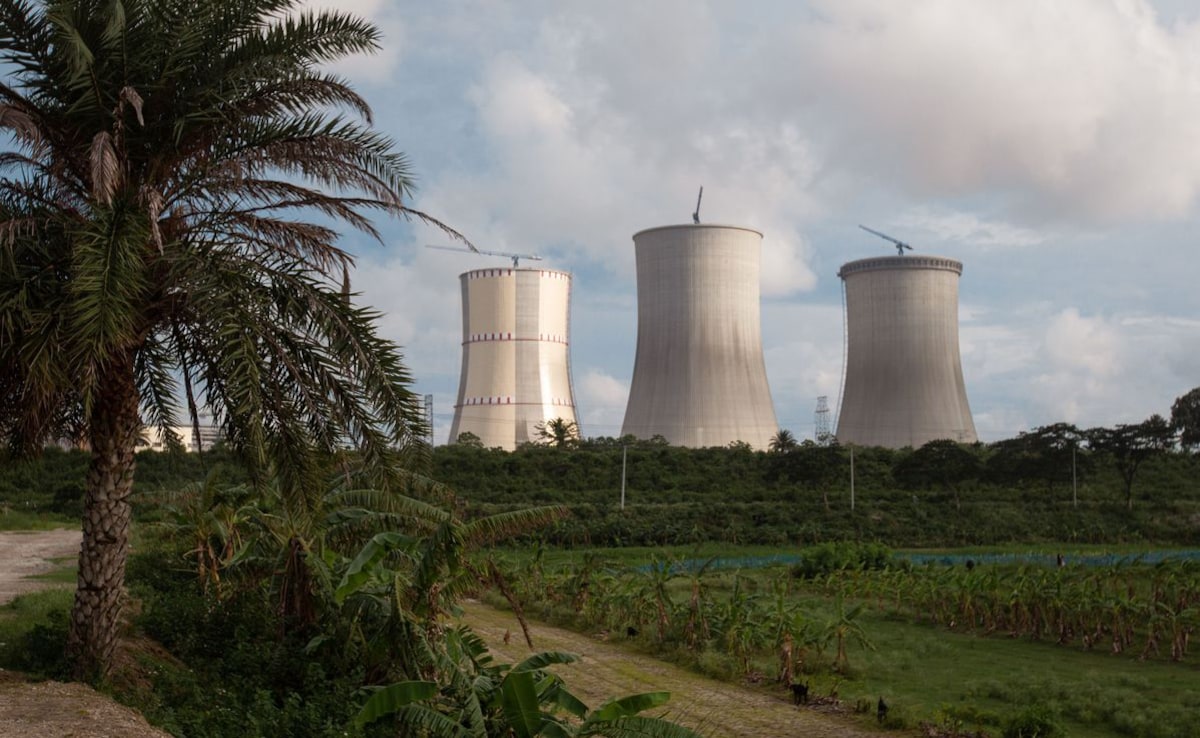
In the village of Rooppur, the air used to taste like kerosene and desperation. For decades, the rhythm of life in rural Bangladesh was dictated not by the sun, but by the fickle whims of a crumbling power grid. When the lights flickered and died—a phenomenon known locally as "load shedding"—the world simply stopped. Children squinted over notebooks by the dim, oily yellow of a lamp. Shopkeepers shuttered their doors. The humid heat of the Padma River delta became a physical weight, unmoving and suffocating without the hum of a fan.
But the earth is shifting beneath the silt.
A few days ago, a heavy, metallic click echoed through a massive concrete containment dome on the banks of the Padma. It wasn't a loud sound, but its significance was deafening. This was the moment the first uranium fuel rods were lowered into the heart of Unit 1 at the Rooppur Nuclear Power Plant.
Bangladesh, a nation often defined by its vulnerability to rising tides and tropical storms, has officially stepped into the nuclear era.
The Weight of a Single Pellet
To understand why a country like Bangladesh would bet its future on the atom, you have to look at a single ceramic pellet of uranium. It is no larger than a pencil eraser. Yet, that tiny cylinder contains the same energy potential as a ton of coal or 149 gallons of oil.
For a nation of 170 million people squeezed into a landmass smaller than Iowa, space is a luxury. You cannot carpet the entire delta in solar panels without sacrificing the rice paddies that feed the population. You cannot rely on wind when the geography offers only seasonal gusts.
Consider a hypothetical woman named Aditi. She runs a small garment workshop in the outskirts of Ishwardi. For years, her business lived and died by the schedule of the grid. When the power cut out, her sewing machines fell silent. Her deadlines evaporated. To stay afloat, she bought a diesel generator. It was loud, expensive, and spat black soot into the lungs of her workers.
Aditi represents the "invisible stakes" of the Rooppur project. For her, 2,400 megawatts isn't a statistic from a press release. It is the difference between a business that grows and a business that merely survives. It is the difference between breathing clean air and coughing through a shift.
A Fortress Against the Monsoon
Building a nuclear plant in a delta is an act of defiance. The Rooppur plant is a VVER-1200, a Russian-designed Generation III+ reactor. The engineers didn't just build a power plant; they built a fortress. The structure is designed to withstand the impact of a falling airplane, a massive earthquake, and the kind of catastrophic flooding that haunts the dreams of those living in the Ganges basin.
The critics often point to the cost—upwards of $12 billion, largely financed by Russian loans. It is a staggering debt. But the math of poverty is even more expensive. When a nation’s industry is crippled by energy shortages, the lost GDP over a decade far outstrips the price tag of a reactor.
The process of loading fuel is a delicate dance of physics and patience. Each fuel assembly is a grid of tubes holding those tiny, potent pellets. Once the core is fully loaded and the lid is bolted shut, the magic of fission begins. Atoms split. Heat rises. Water turns to steam, and turbines begin a high-speed spin that will eventually push electricity through thousands of miles of wire, reaching even the most remote huts in the mangroves.
The Ghost of 1961
There is a sense of historical justice in this moment. The idea for a nuclear plant at Rooppur wasn't born in a modern boardroom; it was first proposed in 1961. For over sixty years, the project was a ghost, a promise deferred by war, poverty, and political upheaval. Generations of Bangladeshi engineers grew up hearing about Rooppur as a "maybe," a dream that felt as distant as the moon.
Watching the fuel arrive—delivered with the pomp and security of a visiting head of state—was the exorcism of that ghost.
The transition is not without its anxieties. Nuclear power carries a weight that coal and gas do not. There is the question of spent fuel, which the Russian government has agreed to take back for reprocessing, and the terrifying memory of disasters elsewhere. Yet, for a country on the front lines of climate change, the fear of the atom is increasingly outweighed by the fear of the rising sea.
Bangladesh is one of the most climate-vulnerable spots on the map. Burning more coal to power its development is a slow-motion suicide pact. Nuclear offers a different path: massive, carbon-free baseload power that doesn't depend on the sun shining or the wind blowing.
The New Delta
Imagine the Padma River at night, a year from now.
The water reflects the glow of the two massive cooling towers, structures that have become the new landmarks of the region. Inside the plant, young Bangladeshi technicians—many trained in Moscow and Mumbai—monitor screens that hum with the pulse of the atom.
Outside, in the villages, something fundamental has changed. The shopkeepers don't reach for the kerosene lamps anymore. The garment workshops run late into the evening, the rhythmic clatter of machines steady and unbroken.
This isn't just about electricity. It is about a psychological shift. For the first time in its history, the nation is no longer just reacting to the elements or begging for a break from the grid. It is commanding the fundamental forces of the universe to light its way forward.
The fuel is in. The core is warming. The long dark is finally beginning to recede.
The child sitting at a desk in a remote village today doesn't know about VVER-1200 specs or debt-to-GDP ratios. She only knows that when she flips the switch, the light comes on. And it stays on.