The heat did not arrive with a sudden roar. It seeped in through the window frames on a Tuesday in July, thick and sweet like overripe fruit, coating the lungs before breakfast. By noon, the mercury had climbed past the hundred-degree mark, pinning neighborhoods to their porches and turning asphalt soft enough to hold the imprint of a sneaker.
In a third-floor apartment in Chicago, Elena pressed her palm against the kitchen wall. It radiated heat like a brick oven left open overnight. Her refrigerator hummed a desperate, frantic pitch, its compressor straining against a kitchen temperature that felt more like an equatorial jungle than the Midwest. On the counter, a bowl of peaches was already softening into bruises.
She did not know it yet, but across three time zones, millions of people were touching their walls, checking their thermostats, and feeling that exact same knot of dread tighten in their stomachs.
Power grids do not fail because of a single catastrophic explosion. They die a thousand paper cuts of exhaustion.
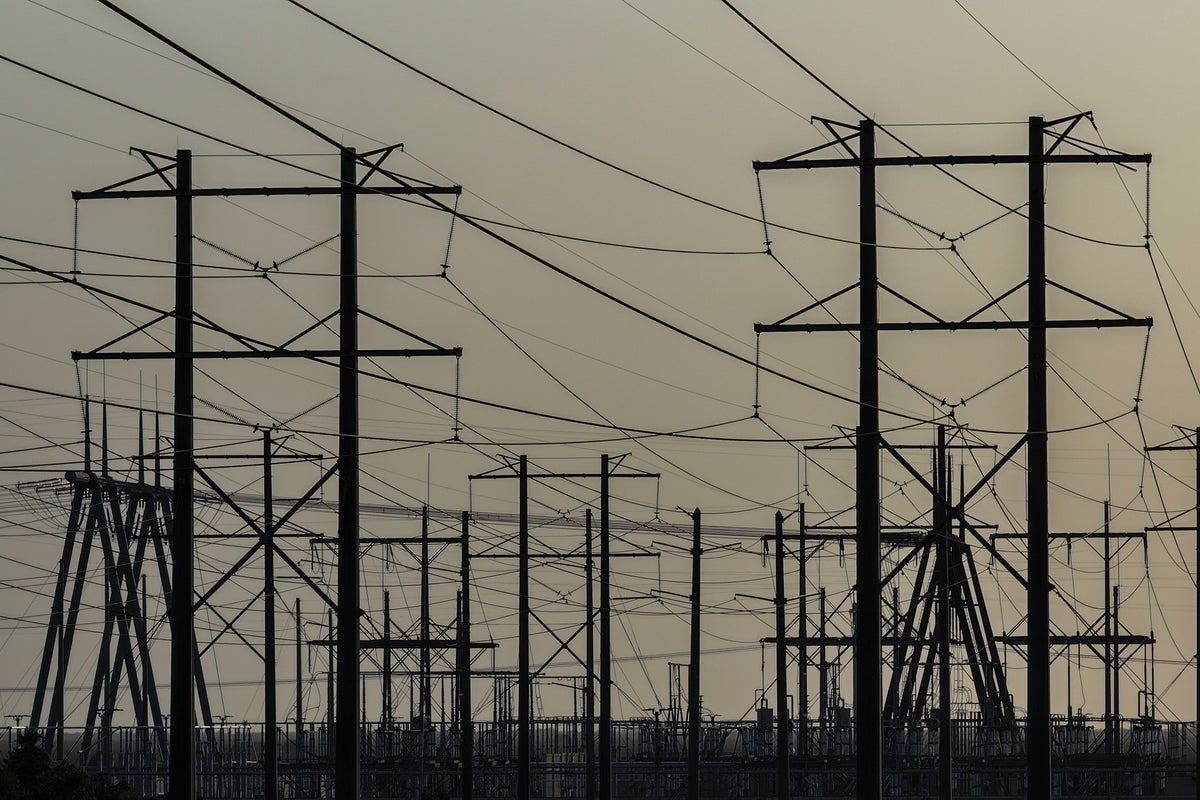
When a heat wave blankets the United States, stretching from the baking plains of Texas up to the typically temperate shores of the Great Lakes, the national demand for electricity spikes into uncharted territory. Every residential air conditioner, every commercial cooling tower, every industrial fan draws a massive gulp of power simultaneously. It is an invisible, synchronized inhalation that pulls hard on cables, transformers, and substations that were engineered decades ago for a climate that no longer exists.
Consider what happens inside a high-voltage transformer when the ambient air refuses to cool down at night. Normally, metal breathes. It sheds heat into the evening breeze, resting before the sun returns. But during a prolonged heat dome, the night offers no relief. The thermometer stays pinned at eighty-five degrees at midnight. The transformer stays hot. The cooling oil inside begins to degrade, losing its insulating properties.
Voltage drops.
System operators sitting in dark, glowing control rooms watch monitors flash amber, then red. They see the demand curves shooting past their peak projections like runaway freight trains. They face an impossible arithmetic: how to distribute a finite supply of megawatt-hours to a populace that needs electricity not just for comfort, but for survival.
(Note: All technical mechanics regarding transformer thermal limits and grid load balancing reflect standard engineering principles documented by the North American Electric Reliability Corporation.)
This is the hidden crisis of modern infrastructure. We built a society that runs on cool air, and now the air itself is turning against us.
When the power fails in freezing weather, people bundle up. They light candles, crawl under extra blankets, and wait out the storm. But when the power fails during a heat wave, the rules flip entirely. Darkness becomes a trap.
Think about the elderly residents living on the upper floors of brick apartment complexes without cross-ventilation. Think about the hospitals relying on diesel generators that must be refueled in hundred-degree glare. Think about the simple, brutal reality of wet-bulb temperatures, where the human body can no longer cool itself through perspiration because the air is too saturated with heat and moisture.
When the grid trips, the sanctuary vanishes.
Federal authorities and energy regulators issue power outage warnings with clinical detachment. They speak in kilowatt-demands and reserve margins. They talk about rolling blacklocks as if they were scheduling train arrivals. But numbers on a spreadsheet fail to capture the sensory reality of a grid on the brink.
It smells like scorched dust and melting rubber near neighborhood substations. It sounds like the collective drone of millions of compressors fighting a losing battle. It tastes like dry air and panic.
Elena walked to her window and looked down at the street. The traffic lights were still blinking green and red, casting long, lazy reflections across the shimmering pavement. For now, the power held. The lights stayed on. The fan spun its blades in futile circles, churning the stagnant indoor atmosphere.
Yet the warning issued that morning by grid operators hung over the city like a shroud. A request to raise thermostats to seventy-eight degrees. A plea to turn off heavy appliances during the peak hours of afternoon. Small, polite civilian duties asked of a population sitting on a powder keg of thermal energy.
Most people complied. They turned down their laundry cycles, closed their blinds, and lived in dim, humid rooms. They did this because they understood, on a primal level, that the system is only as strong as its weakest link. If everyone demands maximum comfort at the exact same second, nobody gets comfort at all.
We are living through a slow-motion collision between twentieth-century infrastructure and twenty-first-century weather. The grid was designed for stability, predictability, and a moderate baseline of human consumption. It was not designed to carry the weight of a boiling continent.
As the sun finally dipped below the horizon, offering no drop in temperature, the city held its breath. The hum of the refrigerator in the corner changed tone, dropping into a deeper, more labored register. Elena reached out, turned off the overhead light, and sat in the gathering dusk, waiting to see if the night would hold.