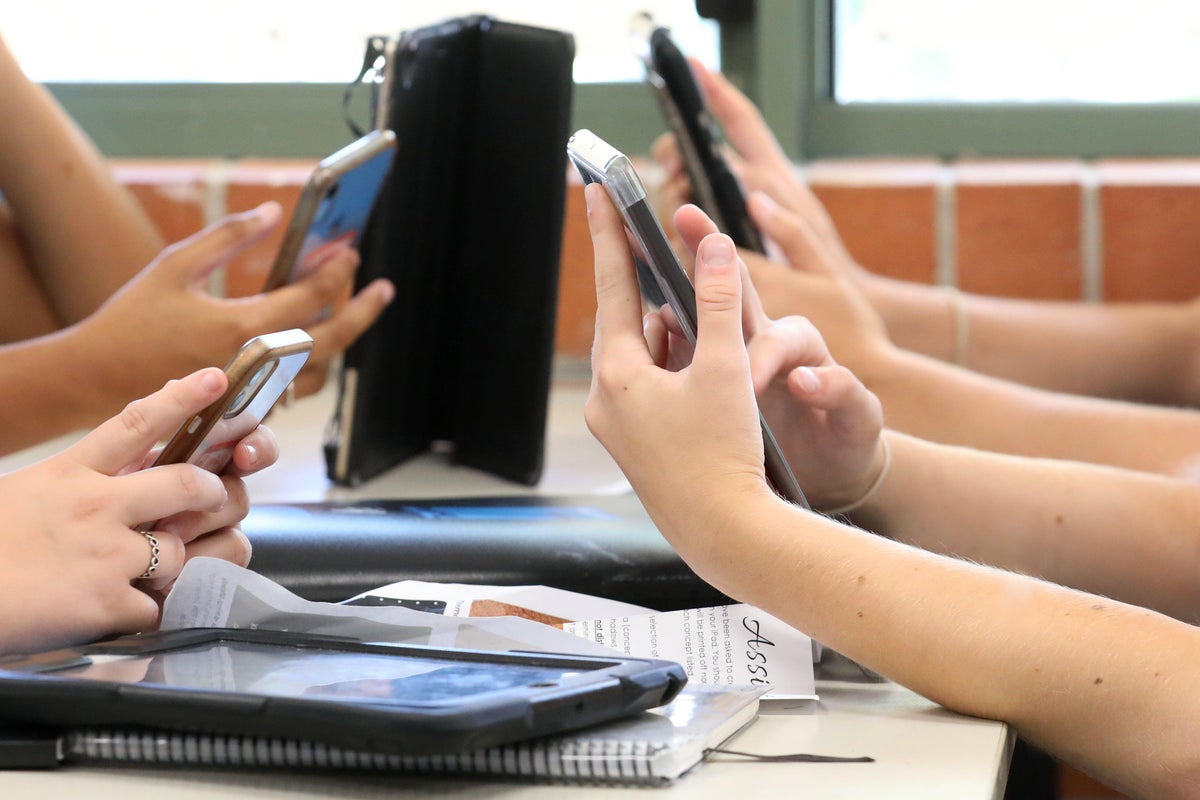
Kids cannot read anymore. That is the stark reality facing classrooms across the globe, and the latest country to draw a line in the sand is New Zealand. Prime Minister Christopher Luxon implemented a nationwide ban on mobile phones in schools to combat plummeting literacy rates. It is a drastic move. It is also completely necessary.
For years, educators blamed systemic issues, socioeconomic gaps, or shifting curricula for the decline in basic reading and writing skills. While those factors matter, they ignore the glowing screen sitting in every student's pocket. The data shows a terrifying correlation between the rise of the smartphone and the freefall of academic performance.
This isn't just about kids texting under their desks. It is about cognitive destruction. New Zealand's policy aims to reclaim the classroom, but fixing a generation's reading habits requires more than just locking devices in lockers.
The Shocking Reality of the New Zealand School Phone Ban
The government didn't pass this law on a whim. They did it because the numbers are horrifying.
Recent data from the Education Review Office in New Zealand revealed that nearly one-third of 15-year-olds can barely read or write. Think about that. These are teenagers on the verge of adulthood who struggle with basic literacy. The Programme for International Student Assessment (PISA) tracks these metrics globally, and New Zealand’s scores have been in a steady, agonizing decline for over a decade.
So, what changed? The timeline of this academic slide matches up perfectly with the ubiquity of smartphones in schools.
The policy is straightforward. Students must turn off their phones and leave them in bags or lockers for the entire school day. It applies to primary, intermediate, and secondary schools. No scrolling at lunch. No checking notifications between classes.
Predictably, some parents complained. They want constant contact with their children. But schools aren't war zones; they are learning environments. The government stood its ground, arguing that the educational crisis demands extreme measures.
How Smartphones Rewired the Teenage Brain Against Reading
Reading requires sustained attention. It demands deep focus, patience, and the ability to visualize a narrative or process complex arguments. Smartphones train the brain to do the exact opposite.
When a kid spends hours on TikTok or Instagram, their brain gets a hit of dopamine every few seconds. They get used to rapid-fire stimuli. If a video doesn't grab them in two seconds, they swipe away.
Put a book in front of that same kid. Reading is slow. It takes effort. The brain, conditioned by hours of algorithmic optimization, rebels. The child gets bored, restless, and frustrated. They lose the ability to concentrate on a single page, let alone an entire chapter.
Tristan Harris, a former design ethicist at Google and co-founder of the Center for Humane Technology, has spoken extensively about how tech companies intentionally design apps to hijack human attention. Schools cannot compete with billions of dollars of engineering designed to keep eyes glued to a screen.
When phones are allowed in class, even in a bag on vibrate, the brain suffers from what psychologists call "brain drain." Research from the University of Texas at Austin found that the mere presence of a smartphone reduces available cognitive capacity. Your brain actively works to ignore the phone, leaving less mental power for learning.
The International Shift Toward Phone-Free Classrooms
New Zealand isn't an outlier here. They are actually late to the party.
France banned mobile phones for students up to age 15 back in 2018. The United Kingdom issued strict guidance to schools to implement bans. Several states in Australia have identical rules in place. In the United States, states like Florida and Indiana passed laws restricting phone use during instructional time, with many districts opting for total bans.
The results from these international experiments are starting to roll in, and they paint a clear picture.
A study by the London School of Economics looked at schools in four English cities that implemented phone bans. The researchers found a significant improvement in student test scores, with the lowest-achieving students benefiting the most. Banning phones gave these struggling students their attention spans back.
It turns out that removing the distraction narrows the achievement gap. Wealthier students often have access to private tutoring and resources outside of school to compensate for lost learning time. Poorer students rely entirely on the classroom. When the classroom is chaotic and distracted, they lose the most.
The Massive Lie of Educational Tech
We were sold a lie a decade ago. Tech advocates claimed that giving every child an iPad or a laptop would revolutionize education. They said digital literacy would pave the way for future success.
It did the opposite. It created a gateway for perpetual distraction.
Many schools that replaced physical textbooks with digital screens saw reading comprehension drop. Reading on a screen is fundamentally different from reading on paper. On a screen, we skim. We look for keywords, we hop around, and we get distracted by links. We don't absorb the information deeply.
A meta-analysis published in the Educational Research Review analyzed data from over 170,000 participants. The conclusion was definitive: reading digital texts leads to lower comprehension compared to printed texts.
By forcing phones out of the equation, schools are trying to push back against this digital deluge. They are trying to make the classroom a sanctuary for the mind.
What Happens When the Screens Turn Off
Teachers in schools that successfully banned phones report an immediate shift in culture.
The first week is always brutal. Kids go through actual withdrawal. They are anxious, irritable, and twitchy. They don't know what to do with their hands.
By week three, something magical happens. The noise level in the cafeteria goes up. Students actually look at each other and talk. They play sports at recess. In the classroom, the constant rustle of bags and the subtle glow under desks disappear. Eye contact returns.
More importantly, reading scores start to stabilize. When a student can't escape into a screen during a quiet reading period, they actually pick up the book. They engage with the material because boredom forces them to. Boredom is the birthplace of creativity and deep thought. Smartphones killed boredom, and in doing so, they killed the drive to read.
Legitimate Concerns and the Implementation Hurdle
Let's be fair. A phone ban isn't a silver bullet. It won't magically solve the literacy crisis overnight.
Enforcement is a logistical nightmare for teachers. If a teacher spends 15 minutes of every hour policing phone use, searching bags, and confiscating devices, no learning happens anyway. For this to work, administration must back teachers completely.
There are also valid exceptions. Some students use smartphones to monitor medical conditions, like glucose levels for Type 1 diabetes. Others have specific learning accommodations. New Zealand’s policy allows for these exemptions, but managing who can have a phone and who cannot creates social friction in the hallways.
Then there is the issue of safety. Parents worry about school shootings or emergencies. They want a direct line to their kid. But security experts argue that during an emergency, kids hiding with phones are more endangered. A ringing phone can give away a hiding spot. Students looking at screens ignore instructions from emergency personnel.
Beyond the Ban: How to Actually Fix Literacy
Banning the phone removes the barrier to learning, but it doesn't do the teaching. New Zealand schools still have to fix how they teach reading.
For years, many Western countries adopted the "whole language" or "balanced literacy" approach. This method taught kids to guess words based on context clues or pictures, rather than sounding them out. It failed spectacularly.
To fix literacy, schools must pair phone bans with a return to structured literacy rooted in the science of reading. This means explicit instruction in phonics, phonemic awareness, and vocabulary building.
If you're a parent or educator dealing with a phone ban or trying to help a struggling reader, the work doesn't stop when the school bell rings. You have to take action at home.
- Establish hard tech boundaries at home. If kids spend six hours unmonitored on screens after school, the benefits of the school ban disappear. Implement a "no phones in the bedroom" rule after 8 PM.
- Bring back physical print. Buy physical books, magazines, and newspapers. Let your kids see you reading paper. Modeling the behavior is incredibly powerful.
- Build reading stamina slowly. If a child can only focus for five minutes, don't force them to read for an hour. Start with ten minutes of uninterrupted reading a day and increase it by two minutes each week.
- Embrace the friction. Your kids will fight you. They will say they need their phone for homework, for socializing, for life. Stand firm. Their ability to think, focus, and contribute to society depends on their literacy.
New Zealand’s move is aggressive, but polite requests failed. The data is clear, the damage is real, and the screens have to go.