Prague's iconic skyline just got a serious sonic upgrade. On Monday, June 15, 2026, the majestic St. Vitus Cathedral finally shed a century-old musical embarrassment. For nearly a hundred years, the largest and most significant church in the Czech Republic lacked an instrument capable of filling its massive Gothic nave. The old organ, completed back in the 1930s, was simply too small and notoriously unreliable.
That changed when Prague Archbishop Stanislav Přibyl blessed a brand-new, monumental masterwork during an inauguration mass. The ceremony featured the Czech Philharmonic blasting Antonín Dvořák’s “The Lužany Mass” along with pieces by Handel and Haydn. It's a massive deal for locals and tourists alike. Honestly, it fixes a historic blind spot in one of Europe’s most visited architectural treasures.
If you plan to visit Prague Castle anytime soon, you're no longer just looking at history. You're going to hear it.
The Century Old Acoustic Problem
To understand why this inauguration is making waves across Europe, you have to look at the cathedral's troubled acoustic history. St. Vitus wasn't built in a day. Construction started in 1344 and wasn't officially wrapped up until 1929. When the previous organ was slapped together in the early 1930s, the planners had grand ambitions to build the largest instrument on earth.
They failed.
Money ran short, shortcuts were taken, and the resulting instrument was basically an acoustic lightweight. It couldn't punch through the deadening, porous sandstone walls of the cathedral, which swallow sound waves like a sponge. To make matters worse, decades of political turmoil sidelined any chance of a fix. During World War II and the subsequent 40 years of totalitarian communist rule, maintaining a church organ was the absolute lowest priority for the state. The instrument routinely broke down, leaving the monumental space feeling empty during major services.
A Masterpiece Born in Spain with Czech Soul
The new organ is a beast. Built by the world-renowned German organ builder Gerhard Grenzing in his workshop in El Papiol near Barcelona, Spain, the instrument is a structural marvel. It features four keyboards and over 6,000 pipes. These pipes range from a tiny 7 millimeters to massive tubes towering over 7 meters high.
But Grenzing didn't just build a generic instrument and ship it off. He actually toured Czech churches to study regional acoustic traits. When he realized how much the porous sandstone of St. Vitus muted sound, he made frantic, last-minute design alterations to the pipes to ensure the tone would ring crisp and true.
The design looks stunning too. Automotive designer Peter Olah took charge of the visual aesthetics, drawing inspiration from Panská skála, a famous Czech natural rock formation known as the "stone organ" due to its vertical basalt columns. Olah integrated one-meter-long crystal elements crafted in local Czech glassworks into the facade. The result looks like it's floating on the western wall of the cathedral, reflecting the light pouring through the massive rose window.
How Regular Citizens Funded the Music
The most incredible part of this story isn't the engineering. It's the cash. The entire project cost over 135 million Czech koruna, which translates to roughly 6.5 million US dollars. The state didn't foot this bill.
Regular people did.
A massive crowdfunding campaign launched back in 2017 by the St. Vitus Organ Foundation brought together thousands of ordinary citizens. The fundraising campaign heavily mirrored the legendary 19th-century public drive that built Prague's National Theatre under the historic slogan "The Nation for Itself."
People got incredibly creative to make this happen. One elderly woman sold off a prized historic coin to contribute. Another donor showed up at the foundation office with a literal plastic bag stuffed with Australian dollars. The most popular method was a pipe adoption scheme. Grandparents bought individual pipes to permanently attach the names of their grandchildren to the cathedral's structure. It gave the entire nation a sense of literal ownership over the sound.
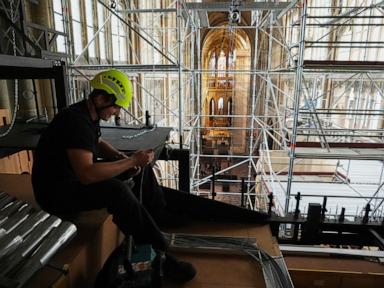
Once completed in Spain, workers carefully disassembled the massive frame, packed it into a fleet of trucks, and drove it across Europe to Prague. The reassembly inside the cathedral took place a year ago, kicking off an agonizingly slow 900-hour "voicing" phase. Chief voicer Andre Lacroix spent months squeezed inside the wooden frame with a small hammer, tapping and tuning each individual pipe to match the room's quirky physics. To get the perfect silence needed for tuning, the cathedral cut its tourist hours short for a year, closing at 4:00 PM so the team could work in total isolation until midnight.
What to Do Next if You're Visiting Prague
If you're traveling to Prague this summer, you picked the perfect time. The inauguration mass is over, but the musical rollout is just starting.
- Catch the Organ Octave: The Academy of Classical Music is running a special "St. Vitus Organ Octave" concert series right now to honor the donors.
- Book the Summer Festival: The 15th annual St. Vitus Organ Evenings festival runs through June, July, and August. Iconic international artists like American organist Cameron Carpenter are booked to play sets featuring Bach and Widor.
- Get Your Tickets Early: Do not just show up at the gate expecting to stroll in for a concert. Because St. Vitus sits inside the high-security Prague Castle complex, evening concert entry requires booking explicit concert tickets in advance via the official festival site (varhannifestival.cz) to clear the courtyard checkpoints after normal closing hours.