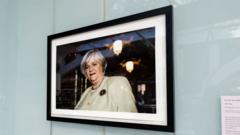
Walk through the corridors of power in Westminster long enough, and you realize that art on the walls isn't just about decoration. It's about legacy, political tribalism, and occasionally, deliberate provocation. Westminster has just welcomed a brand new addition to its permanent art collection. A striking portrait of Ann Widdecombe now hangs within the parliamentary estate, arriving just as MPs stream back through the doors for the new term.
You might wonder why a painting of a retired politician causes such a stir. Widdecombe isn't just any former Member of Parliament. She is one of the most polarizing figures in modern British political history. From her fierce opposition to abortion and equal marriage to her television stints on Strictly Come Dancing and Celebrity Big Brother, she has spent decades refusing to blend into the wallpaper.
Parliamentary artwork choices usually lean toward the safe, the historical, or the universally respected. This acquisition breaks that mold entirely. It forces everyone from hardened backbenchers to casual political observers to confront a very specific brand of traditional conservatism right as they walk the halls.
The Politics Behind Westminster Portrait Choices
Who gets immortalized in oil and canvas inside the Palace of Westminster? The process is rarely straightforward. Committees, heritage curators, and cross-party groups spend months debating commissions, purchases, and donations. Choosing to showcase someone as divisive as Widdecombe tells you a lot about how the parliamentary estate curates its living history.
Art in politics acts as a mirror. Sometimes it reflects the collective values of the nation. Other times it throws a punch.
Widdecombe served as the Conservative MP for Maidstone from 1987 until 2010. She later served as a Member of the European Parliament for the Brexit Party. Throughout that multi-decade run, she never once shied away from an ideological brawl.
- She voted against the lowering of the age of consent for gay men in 1994.
- She pushed hard for the reintroduction of the death penalty.
- She campaigned fiercely against European Union integration long before it became mainstream Conservative policy.
Putting her face on a prominent wall means Parliament is embracing its own turbulent past. It's an admission that our lawmakers aren't just polite technocrats. They are ideological combatants. When MPs return from their constituencies to face division bells and heated debates, walking past that canvas serves as a sharp reminder of old ideological battlegrounds.
Navigating the Public Reaction
Public art always invites sharp commentary. The unveiling of this portrait has already split opinion sharply down the middle across social media and political circles.
Admirers view the portrait as a long-overdue tribute to a formidable parliamentarian who spoke her mind without fear or favor. They see her as a rare breed of politician—someone who cared more about personal conviction than cabinet office or party pleasing. In an era where modern politicians often sound like focus-grouped marketing products, Widdecombe’s unfiltered approach feels like an artifact from a different planet.
Critics, however, see the placement as a provocative nod to reactionary politics. Opponents point to her long record on social issues, arguing that celebrating her legacy inside the seat of modern British democracy sends the wrong signal. Human rights campaigners and progressive MPs have already whispered complaints about normalizing viewpoints that most modern Britons left behind years ago.
This friction is precisely why the portrait works as a piece of political art. It refuses to let anyone remain neutral. You either respect the grit or you roll your eyes at the ideology.
The Intersection of Westminster and Pop Culture
You cannot talk about Widdecombe without mentioning her strange, unexpected second act in British pop culture. Long after leaving the House of Commons, she became a household name for entirely different reasons.
She famously waddled across the dancefloor on Strictly Come Dancing in 2010. She survived week after week purely on public affection, despite receiving consistently abysmal scores from the judges. Later, she entered the Celebrity Big Brother house, where her traditional views frequently clashed with younger housemates, sparking fiery national debates about generational divides.
These television appearances transformed her political persona into something approaching national eccentric status. To a whole generation of younger Britons, she isn't primarily known as the former Minister of State for Prisons. She is the woman in the sparkly ballroom dress who flat-out refused to compromise her personal rules for television entertainment.
Curators commissioning or accepting this portrait had to know this dual identity would follow the artwork. When MPs and parliamentary staff look up at the canvas now, they aren't just seeing a fierce parliamentary debater. They are seeing a pop culture phenomenon who managed to cross the bridge from dusty Commons tea rooms to Saturday night television screens.
What This Means for Future Parliamentary Art
The decision to install this portrait sets a fascinating precedent for how Parliament treats its living history. In the past, portraits leaned heavily toward safe prime ministers and elder statesmen. Now, the criteria seem to be shifting toward impact, cultural footprint, and sheer memorability.
If Parliament is willing to enshrine someone as culturally and politically contentious as Widdecombe, the floodgates open for other unconventional figures. Westminster is packed with empty wall space and hundreds of colorful characters who shaped the late twentieth century.
Expect future curation committees to face intense lobbying from different political factions wanting their own ideological champions immortalized in oil. The art selection process just became a new front in the culture wars.
Take a close look at the debates surrounding parliamentary heritage today. You will see that everything from statues to portraits carries heavy symbolic weight. Governments and parliamentary authorities change hands, but the art on the wall stays put, silently judging everyone who walks beneath it.
Check the visitor guides next time you tour the parliamentary estate. Ask the staff which paintings draw the most pointed comments from working MPs. You will quickly find that the quietest corners of Westminster often hold the loudest stories. Stand in front of the new canvas yourself if you get the chance. Form your own opinion on whether it belongs in the heart of British democracy.