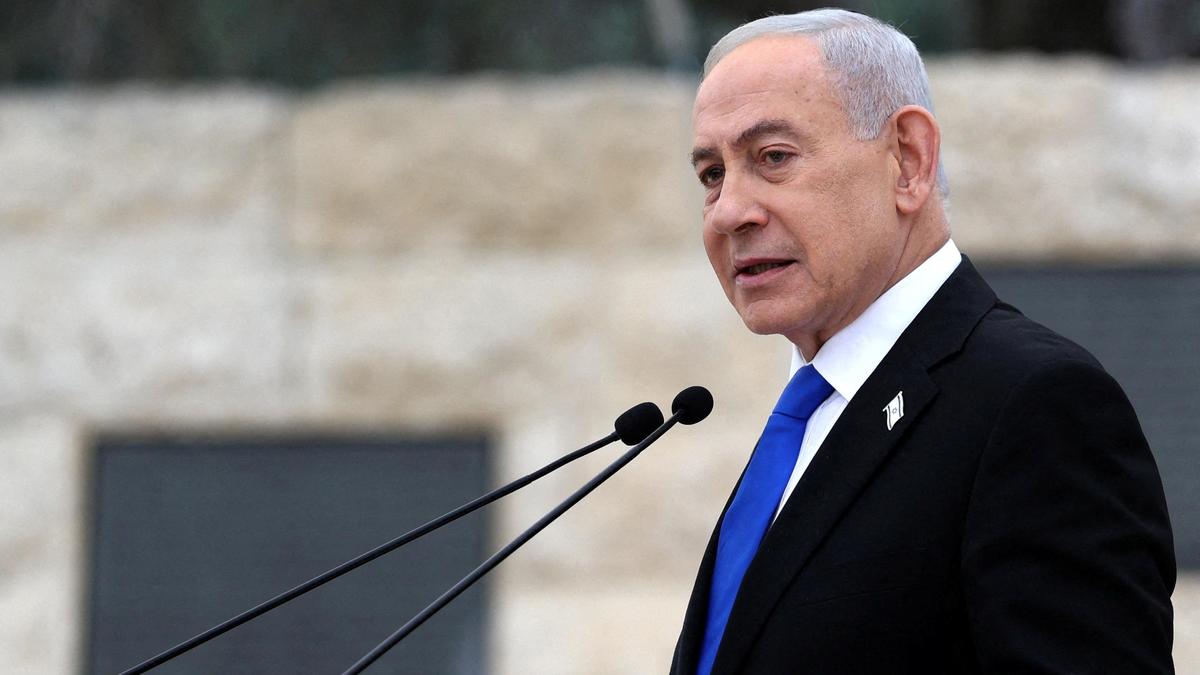
Don't let the talk of ceasefires fool you. Israeli Prime Minister Benjamin Netanyahu just threw a massive wrench into the narrative that the conflict with Iran is winding down. In a blunt interview with 60 Minutes on May 10, 2026, he made it clear that as far as Israel's concerned, the mission isn't even close to being accomplished. The reason? Enriched uranium.
Netanyahu isn't just talking about monitoring or "containing" the threat anymore. He's demanding the physical removal of nuclear material from Iranian soil. He basically told the world that as long as that uranium sits in Isfahan or buried in mountain bunkers, the war continues.
The physical removal mandate
When Major Garrett asked how exactly you get highly enriched uranium out of a country that's been at your throat for decades, Netanyahu’s answer was almost jarringly simple. "You go in, and you take it out." It sounds like something from an action movie, but he's dead serious.
We're talking about roughly 970 pounds of nearly bomb-grade uranium. That’s not a small amount. For Netanyahu, this isn't a negotiation point; it’s a prerequisite for peace. He’s pushing a "zero-uranium" policy that goes way beyond the old nuclear deals we used to argue about. He doesn't want inspectors; he wants moving trucks—or commandos.
The Trump disconnect
There's a weird tension building between Jerusalem and Washington right now. While Netanyahu is sounding the alarm, President Trump has been telling anyone who'll listen that Iran is "militarily defeated." Trump seems eager to wrap this up, pointing to his Space Force surveillance as proof that we have eyes on every gram of that material.
- Trump's view: We've got them pinned. If they move, we blow them up.
- Netanyahu's view: If it's still in their hands, they're still a threat.
Netanyahu even claimed Trump told him privately, "I want to go in there." But publicly? Trump’s under huge pressure to end the "Iran war" and get gas prices back down from that $4.50 national average. It’s a classic case of the commander-in-chief wanting a win while the ally on the ground sees a half-finished job.
Why the nuclear material is the real sticking point
It’s easy to focus on the drone strikes or the naval blockade in the Strait of Hormuz, but the uranium is the only thing that actually changes the long-term math. Netanyahu pointed out that while Israel has "degraded" a lot of Iran’s military, the core of the problem—the enrichment sites—still stands.
- The Isfahan Stockpile: Most of the highly enriched uranium (HEU) is believed to be deep underground.
- The Tech Gap: Even if the proxies like Hezbollah are weakened, the knowledge and the material for a nuclear tip remain.
- The Proxy Collapse: Netanyahu argued that if the regime falls, the "scaffolding" of the Houthis and Hamas goes with it. But that only happens if the regime doesn't have a nuclear trump card to play at the last second.
Honestly, the most shocking part of the interview wasn't even about the war itself. It was Netanyahu's plan to "wean" Israel off the $3.8 billion in annual U.S. military aid. He wants to bring that number to zero over the next decade. He’s signaling a future where Israel doesn't just act alone because it has to, but because it can afford to.
What actually happens next
The U.S. recently put forward a 14-point peace plan to reopen the Strait of Hormuz. Iran’s response? Trump called it "totally unacceptable." While diplomats bicker over the details of a 20-year enrichment moratorium, the military reality on the ground is getting twitchy.
Iranian Brigadier General Akrami Nia already warned that their forces are on "full readiness" to protect those stockpiles. They’re literally expecting heliborne operations—the exact kind of "go in and take it" mission Netanyahu is hinting at.
If you're looking for a sign that things are cooling down, this isn't it. You should watch the movement of specialized transport units and bunker-buster deployments in the region. If Netanyahu gets his way, the next phase of this war won't be fought with long-range missiles, but with boots on the ground at enrichment sites.
Keep an eye on the 30-day "pause" currently being discussed. If it doesn't include a specific timeline for the HEU transfer, expect the ceasefire to evaporate before the month is out.
Netanyahu's 60 Minutes interview overview
This video provides the direct context of Netanyahu's recent comments regarding the necessity of removing nuclear material to end the conflict.