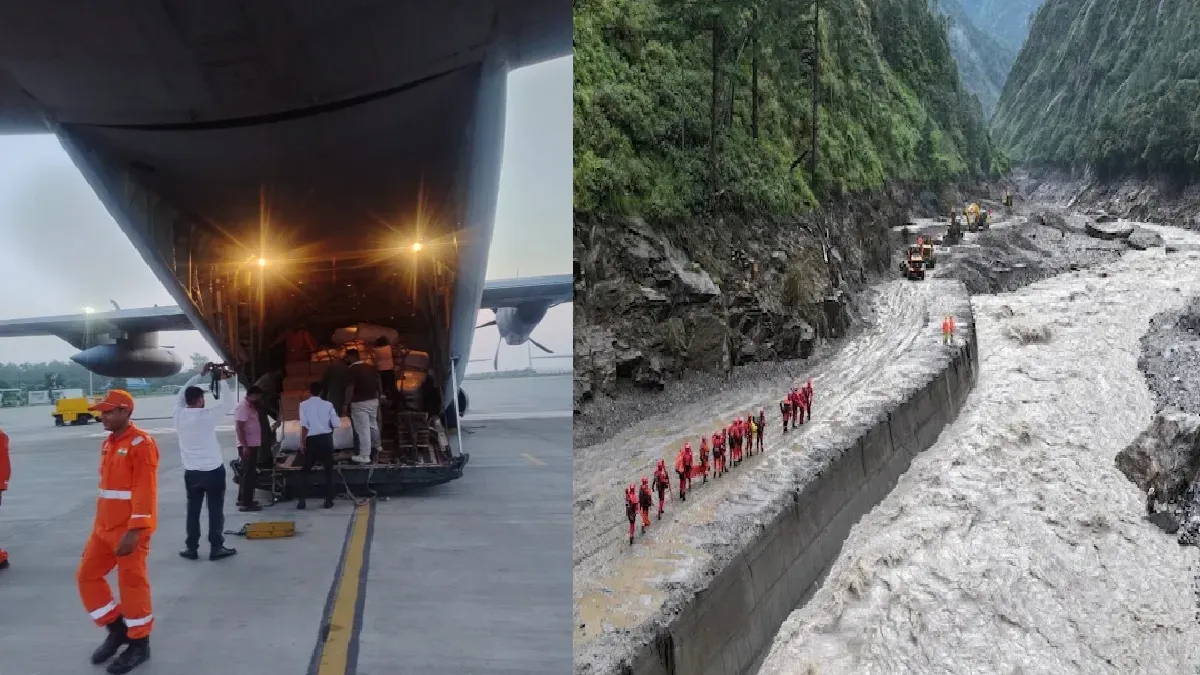
Disaster response in South Asian agrarian economies operates on a razor-thin margin between administrative liquidity and systemic failure. When seasonal monsoon flooding hits the Kathmandu Valley and surrounding river basins, the immediate policy reaction typically relies on symbolic executive gestures paired with urgent supply chain interventions. The simultaneous announcement that Nepal’s Prime Minister and cabinet ministers would donate one month of their salaries to the Prime Minister’s Disaster Relief Fund, alongside an agreement to procure twenty-five thousand metric tons of chemical fertilizers from New Delhi, highlights a dual-track governance mechanism. One track addresses political signaling and morale, while the other manages structural resource dependencies.
The Fiscal Architecture of Executive Relief
Pledging executive salaries to a national disaster fund represents an exercise in fiscal optics rather than macro-budgetary relief. In developing state governance models, symbolic contributions from leadership serve a distinct behavioral function. They signal shared sacrifice and incentivize subordinate bureaucratic tiers to accelerate disbursement authorizations. However, the quantitative impact of ministerial salary relinquishment on national reconstruction remains negligible when measured against the total capital expenditure required for infrastructure repair.
State disaster response funds rely on capital accumulation from multi-lateral development banks, domestic tax reallocation, and international humanitarian grants. When ministers forfeit a monthly stipend, the absolute liquidity generated constitutes a fraction of a percent of emergency operational costs. The mechanism functions primarily as a psychological catalyst to bypass red tape within the Ministry of Finance. Bureaucrats facing ambiguous spending rules during an emergency require high-level political cover to release contingency funds without standard procurement delays. Executive salary donations provide that moral and political authorization, effectively greasing the wheels of bureaucratic inertia.
Supply Chain Vulnerability and Bilateral Fertilizer Procurement
The parallel decision to import twenty-five thousand metric tons of granular fertilizers from India exposes the structural fragility of Nepal's agricultural input market. Nepal lacks domestic synthesis capacity for nitrogenous and phosphatic compounds, rendering its farming sector entirely dependent on external supply chains. During peak monsoon periods, agricultural demand for urea and diammonium phosphate spikes to support post-flood replanting cycles.
Relying on bilateral government-to-government agreements with New Delhi bypasses open-market price volatility and speculative hoarding within regional distribution networks. Yet, this procurement model introduces distinct logistical bottlenecks. Transporting bulk agricultural commodities across mountainous terrain during monsoon conditions—when arterial highways face recurring landslides and bridge washouts—transforms a simple trade agreement into a high-risk logistical operation.
The Import Bottleneck Matrix
- Port-to-Border Transit Risk: Bulk shipments arriving at Indian ports must be transloaded onto rail and subsequently onto heavy-duty trucks capable of navigating Himalayan gradients. Monsoon-induced road closures turn transit times from days into weeks.
- Subsidy Parasitism: Imported fertilizers are heavily subsidized by the state to protect smallholder farmers from global market shocks. This creates an arbitrage opportunity where subsidized inputs are frequently smuggled across open borders to neighboring jurisdictions with higher market prices.
- Timing Inefficiencies: Agricultural inputs possess a strict temporal elasticity. Fertilizer applied weeks after the optimal window yields diminishing returns on crop yield, meaning bureaucratic delays in bilateral procurement directly translate into reduced seasonal harvest output.
Economic Transmission Channels of Monsoon Shocks
Flooding in Nepal does not manifest merely as localized property destruction; it functions as a macroeconomic supply shock that ripples through inflation, foreign exchange reserves, and fiscal deficits. The transmission mechanism operates across three primary vectors.
First, agricultural output contraction drives domestic food inflation. When staple crops such as paddy rice are submerged during early vegetative growth stages, domestic supply curves shift inward. Because consumer food price indices carry heavy weighting in the national inflation basket, rural crop failures translate rapidly into urban cost-of-living pressures.
Second, infrastructure destruction widens the fiscal deficit. Roads, irrigation canals, and hydroelectric facilities require immediate capital injection for stabilization. Because tax revenues contract concurrently due to halted commercial activity, the state is forced to finance reconstruction through external debt or sovereign borrowing from central bank reserves. This degrades the country's sovereign credit metrics and exerts downward pressure on foreign exchange buffers needed to finance essential imports like petroleum and fertilizers.
Third, rural household liquidity evaporates. Smallholder farmers operate without formal crop insurance or deep cash reserves. When a monsoon wipes out an entire harvest, households default on micro-finance obligations, shifting bad debt onto the balance sheets of rural development banks and cooperative credit societies.
Strategic Allocation of Emergency Capital
Governments managing recurring climate shocks must transition from ex-post disaster relief financing to ex-ante risk mitigation. Relying on ad-hoc salary pledges and emergency import negotiations reflects a reactive posture that institutionalizes inefficiency.
To break this cycle, treasury management must shift toward parametric insurance instruments and strategic domestic buffer stocks. Establishing decentralized regional fertilizer warehouses outside flood-prone valleys ensures that inputs remain accessible even when primary transport arteries are severed. Simultaneously, diversifying import channels away from single-source bilateral dependencies mitigates geopolitical and logistical choke points during regional crises.
The immediate imperative remains crisis stabilization through whatever diplomatic and financial levers are available. However, long-term economic resilience requires treating monsoon vulnerability not as an unpredictable act of nature, but as a calculable operational risk that demands systematic capital provisioning long before the first rains arrive.