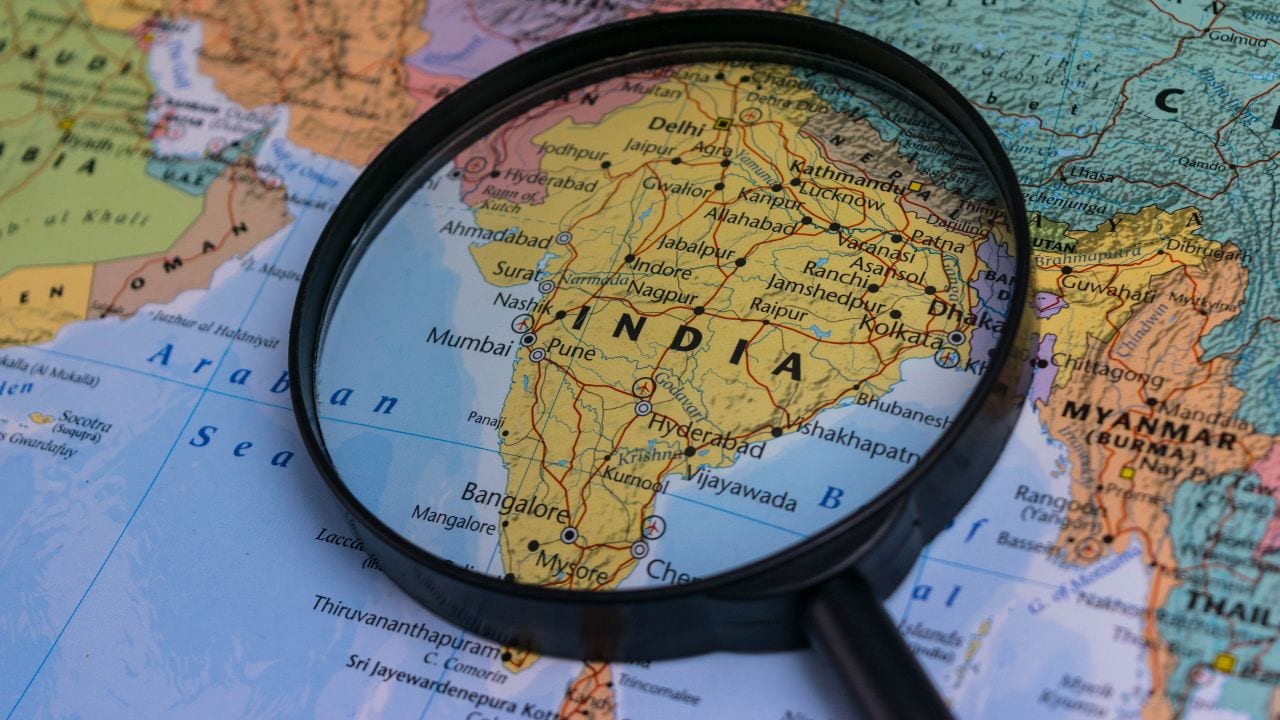
When Nepal Airlines Corporation (NAC) uploaded a seemingly routine network map to its social media channels on April 29, 2026, the digital fallout was instantaneous. Within minutes, the image—which depicted the entirety of Jammu, Kashmir, and Ladakh as part of Pakistan—was no longer just a marketing graphic. It had become a diplomatic liability.
This was not a minor glitch in a vacuum. For a state-owned carrier, the map is an extension of the state's voice. By the time the airline issued its "sincere apology" on Thursday morning, the damage had bypassed the marketing department and landed squarely on the desks of diplomats in Kathmandu and New Delhi. The airline called it a "cartographic inaccuracy." To the millions of Indian travelers who sustain Nepal’s tourism economy, it looked like a calculated provocation.
The Anatomy of a Digital Border Dispute
The map in question did not just slightly nudge a line; it effectively wiped away the Indian administration of the Union Territories of Jammu and Kashmir. For an airline currently pushing to expand its presence in India—specifically targeting an increase to ten weekly flights on the Kathmandu–Delhi route—the timing could not have been worse.
Behind the scenes, the "how" is often underwhelming. According to airline spokesperson Archana Khadka, the error stemmed from a base map sourced online. This is the silent crisis of modern corporate communication. Marketing teams, often disconnected from the geopolitical realities of their boardrooms, pull "royalty-free" assets from global repositories without vetting the specific political alignment of the borders drawn by the original creator.
In the high-stakes theater of South Asian politics, there is no such thing as a "neutral" map. Every line is a statement. When a state-owned entity like NAC uses a map that aligns with Islamabad’s territorial claims, it inadvertently signals a shift in foreign policy, whether intended or not.
Why the Apology Might Not Be Enough
The speed of the retraction—less than 24 hours—suggests a frantic realization of the economic stakes. India is Nepal’s largest trading partner. Beyond trade, the cultural and religious tourism between the two nations is the lifeblood of the Nepalese civil aviation sector.
Public figures in India, including influential voices like Khesari Lal Yadav, were quick to categorize the act as "deliberate." This skepticism is rooted in a history of "map diplomacy" in the region. Only a few years ago, the Kalapani-Lipulekh border dispute between India and Nepal ignited similar nationalist fervor. In that context, an "accidental" map becomes a lightning rod for broader anxieties about Nepal’s perceived drift toward other regional spheres of influence.
The airline’s statement emphasized that the map "does not reflect the official stance of Nepal or Nepal Airlines." While true on paper, the incident highlights a glaring lack of oversight. For a national flag carrier, an internal review shouldn't be the aftermath; it should be the prerequisite.
The Business of Invisible Borders
Airlines operate in a physical world governed by invisible, often contentious, lines. For a regional player like Nepal Airlines, navigating these lines is a core business competency, not an administrative afterthought.
- The Indian Dependency: Lakhs of Nepalese citizens work in India, and Indian investment flows heavily into Nepal's hydropower and infrastructure.
- The Expansion Risk: NAC’s plans to dominate the Kathmandu–Delhi corridor rely on the goodwill of the Indian Ministry of Civil Aviation. Diplomatic friction can lead to delayed permits, slot denials, or "technical" hurdles.
- The Boycott Factor: The #BoycottNepalAirlines trend on X (formerly Twitter) is a reminder of how quickly brand equity can evaporate when national identity is pricked.
The reality is that "cartographic inaccuracy" is an expensive mistake. It forces a brand into a defensive crouch exactly when it needs to be assertive. The airline is now conducting an internal review to ensure materials meet the "highest standards of accuracy." But in the age of viral screenshots, the original map lives forever in the archives of those who wish to see the relationship between Kathmandu and New Delhi strained.
The Global Standard of Cartographic Risk
This is not just a Nepal problem. Global carriers frequently face similar "map traps." Whether it is the naming of the Sea of Japan versus the East Sea, or the depiction of Taiwan, airlines are increasingly forced to employ geopolitical consultants alongside their graphic designers.
For Nepal Airlines, the lesson is one of institutional maturity. As a state-owned entity, every pixel they publish is a policy. Sourcing a map from a random online gallery isn't just lazy; it’s a failure of corporate governance. In a region where borders are written in blood and history, a "base map" is never just a map. It is a minefield.
The airline must now move beyond the apology and demonstrate a rigorous, transparent protocol for its public communications. If it wants to be a serious player in the Indian market, it must respect the sensitivities of that market. Anything less is a flight toward a different kind of disaster.
Check the metadata on your assets before you hit publish. The cost of a free map could be your entire expansion strategy.