Walk down Lower Broadway in Nashville on a humid Friday night, and the noise hits you like a physical wall. Bass thumps through the soles of your boots. Neon signs bleed electric pink and cobalt blue onto the asphalt, reflecting off puddles of spilled beer and condensation from iced drinks. Above the roar of cover bands playing "Friends in Low Places" for the ten-thousandth time, giant faces stare down from the facades of four-story honky-tonks.
Luke Bryan. Jason Aldean. Kid Rock. Miranda Lambert.
To the millions of tourists clutching plastic cups of watered-down whiskey, those giant names bolted to the brick represent a simple, intoxicating promise. They suggest that if you step inside, you are stepping into the living room of country music royalty. You are buying a piece of the myth.
Behind the drywall, however, the myth runs on commercial real estate contracts, aggressive expansion timelines, and lawyers who bill by the tenth of an hour.
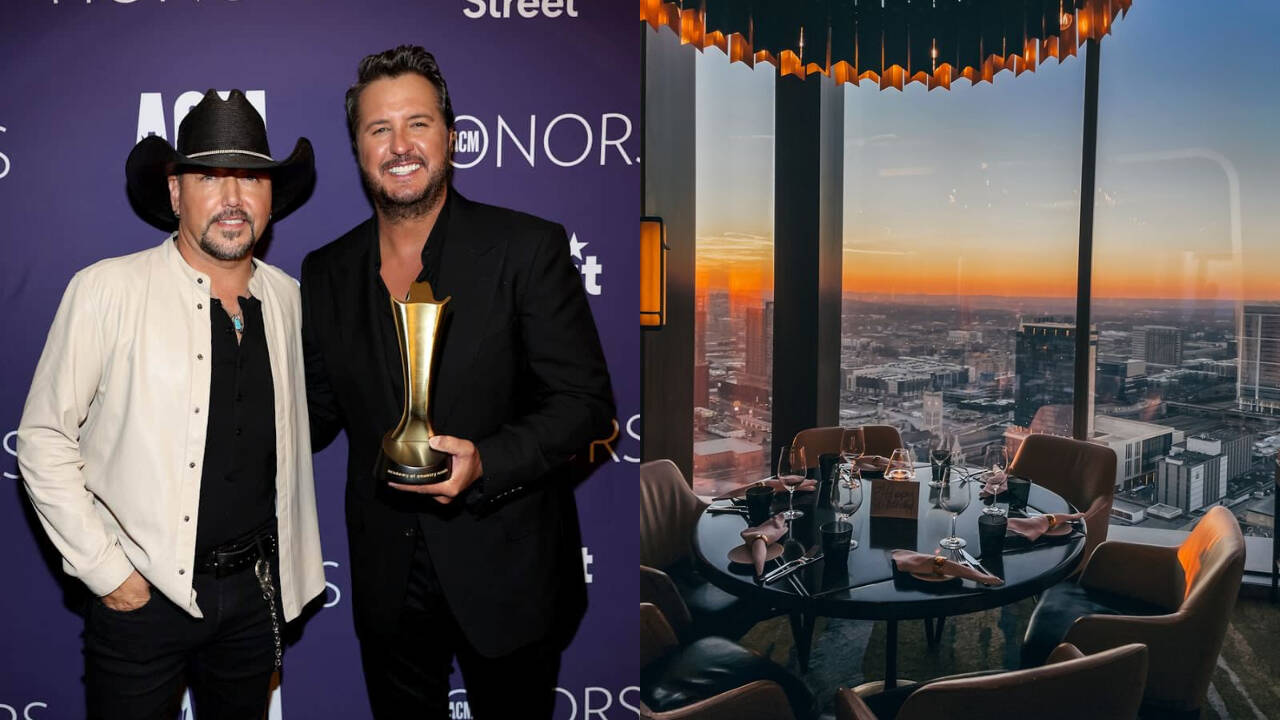
Right now, a quiet, bitter legal brawl is unfolding over one of those celebrity-backed ventures—a Nashville steakhouse that went dark, leaving behind a trail of unpaid bills and a $1.4 million lawsuit aimed directly at the business entities tied to Luke Bryan and Jason Aldean. On paper, it looks like another dry dispute between landlords, hospitality groups, and celebrity investors. Yet if you look closer at the wreckage of that closed dining room, you find a story about what happens when the limitless optimism of star power collides with the ruthless math of the restaurant industry.
The Anatomy of a Celebrity Handshake
To understand how two of the biggest names in modern country music ended up fighting a seven-figure claim over a shuttered steakhouse, you first have to understand how these places get built.
It rarely starts with a singer hunched over a spreadsheet, calculating food waste percentages or commercial grease-trap maintenance schedules. Usually, it starts with a pitch. A hospitality group—often an ambitious operator like TC Restaurant Group, the powerhouse behind several of Nashville's biggest celebrity-branded bars—approaches an artist's management team. The pitch is seductive. The artist brings the name, the built-in fanbase, the social media reach, and the curated memorabilia for the walls. The hospitality group brings the operational muscle, the liquor licenses, the kitchen staff, and the day-to-day grind.
Consider a hypothetical scenario to see how fragile this arrangement really is. Imagine a mid-level supplier—let us call him Marcus—who runs a regional meat and produce distribution company out of Middle Tennessee. When Marcus sees a new steakhouse breaking ground with the names of multi-platinum recording artists attached to the press releases, he does not ask to see the corporate operating agreement. He does not audit the LLC structure that separates the artist's personal fortune from the restaurant's bank account. He sees Luke Bryan and Jason Aldean. He assumes the checks will always clear because, in the public imagination, those names are synonymous with bottomless bank accounts and bulletproof success.
That assumption is the invisible trap of celebrity hospitality.
When the Nashville steakhouse venture—part of a broader push to extend the Broadway bar empire into upscale dining—began to falter, the glow of the marquee could not pay the overhead. Prime downtown real estate in Music City carries some of the steepest commercial rents in the American South. Add to that the post-pandemic surge in beef prices, kitchen labor shortages, and a tourist crowd that often prefers a twelve-dollar burger at a loud bar over a seventy-dollar ribeye in a quiet dining room, and the margins evaporate overnight.
Silence in the Dining Room
I have spent enough years watching independent restaurants open and fold to know the exact smell of a dying dining room. It is not the smell of spoiled food. It is the smell of bleach and cold air conditioning blowing over empty white tablecloths at eight o'clock on a Saturday night. You walk past the host stand, and two teenagers are staring at their phones because the reservation tablet hasn't chimed in forty-five minutes. The kitchen staff stands near the pass, arms crossed, watching the clock instead of the ticket printer.
Once a high-end steakhouse slips into that spiral, recovery is nearly impossible. Every empty chair still costs money. The commercial lease does not care that the tourists stayed three blocks down the street at the rooftop bars.
When the doors finally locked and the paper went up over the windows of the Nashville steakhouse, the fallout shifted from the dining room to the courthouse. A $1.4 million claim emerged from the rubble, targeting the parties behind the venture, including entities linked to Bryan and Aldean. The plaintiffs—seeking recovery for financial obligations left hanging when the restaurant ceased operations—argued that those attached to the venture were on the hook for the unpaid tab.
Bryan and Aldean's camp pushed back immediately and forcefully.
Their defense rests on a fundamental truth of modern celebrity branding: lending your name, likeness, or minority stake to a hospitality concept does not mean you personally signed the lease, ordered the steaks, or guaranteed every dollar of operational debt. In the legal world, the corporate veil exists specifically to draw a hard border between a brand ambassador—or a limited partner—and the operating company that manages the checkbook.
The Illusion of the Name on the Door
Why do fans, landlords, and vendors so frequently misunderstand who actually owns a celebrity restaurant? Because the marketing is explicitly designed to blur that line.
If you walk into Jason Aldean's Kitchen + Rooftop Bar or Luke's 32 Bridge Food + Drink, every square inch of the interior reinforces the illusion that the singer personally picked out the barstools. You see their tour guitars encased in glass. You see menu items named after their chart-topping singles. You see their faces plastered on the cocktail napkins. The entire business model relies on intimacy—convincing a fan from Ohio that they are sharing a drink with their favorite artist.
Yet the moment a business fails, that intimacy vanishes, replaced by the cold, clinical language of corporate law.
This is not unique to Nashville. We saw the exact same dynamic play out decades ago with Planet Hollywood, where action movie icons drew massive crowds until the novelty wore off and the chain plunged into bankruptcy, leaving landlords and suppliers scrambling while the stars walked away largely unscathed. We saw it with Margaritaville, though Jimmy Buffett was a rare exception who truly understood the licensing machine he built. In almost every instance, the public believes the celebrity is the captain of the ship, when in reality, the celebrity is often just the figurehead carved onto the bow.
From a legal standpoint, Bryan and Aldean's pushback against the $1.4 million claim is entirely predictable, and likely well-fortified. Entertainment lawyers who represent artists of that caliber spend their careers building moats around their clients' personal wealth. When an artist enters a hospitality deal, the contracts are meticulously drafted to shield them from operational liabilities. They license their intellectual property; they collect a royalty or a distribution when profits flow; they make occasional surprise appearances to keep the social media algorithm fed. They do not typically sign personal guarantees for seven-figure commercial leases or vendor shortfalls.
Still, legal insulation does not erase the friction. Fighting a $1.4 million claim in court drags famous names into headlines associated with unpaid debts and failed businesses. For artists whose brands are built on blue-collar reliability, straight talk, and small-town loyalty, being tied to a messy financial dispute is an uncomfortable look, even when the law is squarely on their side.
The Math That Breaks Broadway
To grasp why a steakhouse tied to two of country music's biggest stars could collapse in the first place, you have to look at the strange economics of modern Nashville.
Over the last decade, Lower Broadway transformed from a gritty strip of historic music venues into a tightly concentrated corporate entertainment district. Outside investors poured hundreds of millions of dollars into acquiring historic brick buildings, gutting them, and stacking four or five levels of bars, stages, and rooftop decks onto narrow footprints. Property values skyrocketed. Taxes followed.
In that environment, the only business model that reliably prints money is high-volume alcohol sales paired with low-overhead bar food. A drink that costs two dollars to pour sells for sixteen dollars on a rooftop patio. A plate of nachos costs pennies on the dollar. You do not need Michelin-star chefs, dry-aging lockers, or white-glove service. You just need cold beer, loud speakers, and a steady river of bachelorette parties.
An upscale steakhouse operates on the exact opposite physics.
Prime beef is expensive, perishable, and unforgiving. If you buy fifty cuts of prime tenderloin for a weekend rush and a storm keeps the crowds away, you cannot put that meat back on a shelf for next month. You need highly skilled line cooks, sommeliers, and servers who command higher wages and expect steady tips. You need expensive build-outs, heavy linen service, and long table turn times. While a bar flips a customer every forty-five minutes, a steakhouse holds a table for two hours.
Trying to force a fine-dining steakhouse model to survive inside the hyper-inflated real estate market of downtown Nashville is like trying to run a marathon in heavy winter boots. Even with famous names attached to the marketing, the underlying unit economics are brutal. Tourists visiting Nashville rarely plan their trips around a quiet, formal three-course dinner; they come to bar-hop, listen to live music, and stay moving.
What Happens When the Music Stops
The legal battle over the $1.4 million claim will eventually wind its way through motions, depositions, and, in all likelihood, a quiet confidential settlement behind closed doors. Lawyers will argue over corporate structure, veil-piercing theories, and who had actual authority to bind which entity. For Bryan and Aldean, the dispute is an unwelcome distraction from sold-out stadium tours, record releases, and television appearances.
Yet for anyone watching the gold rush of celebrity-branded businesses, the shuttered Nashville steakhouse stands as a sobering warning.
We live in an era where fame is treated as a universal solvent—an ingredient you can pour onto tequila, sneakers, makeup, or restaurants to guarantee instant success. And for a little while, fame does work magic. It buys you the grand opening line around the block. It buys you the glossy magazine spreads and the breathless local news segments.
What fame cannot buy is a second visit from a customer who paid eighty dollars for a mediocre steak in an overpriced dining room. It cannot rewrite the math of a commercial lease when the foot traffic slows down in February.
Late at night in downtown Nashville, after the last call bells ring and the bouncers sweep the sidewalks, the giant neon signs above Broadway finally flicker off. In the gray light before dawn, without the music and the crowds, those buildings are just brick, mortar, and glass—subject to the exact same laws of gravity and accounting as the corner diner down the road.